


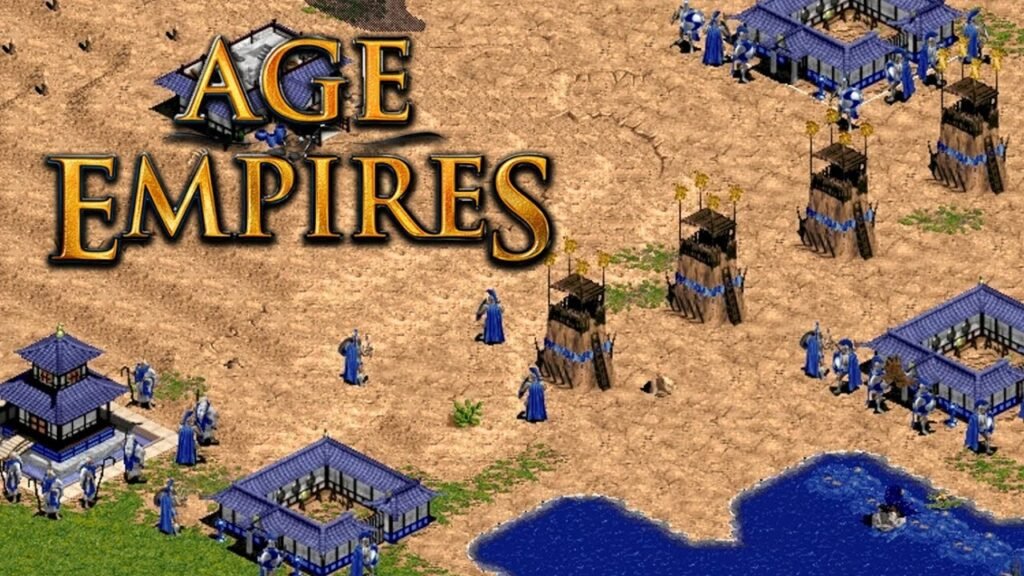
October 15, 1997 marked the release of Age of Empires, a historical real-time strategy game developed by Ensemble Studios and published by Microsoft. The game allowed players to take control of an ancient civilization, guide it from the Stone Age to the Iron Age, build cities, develop technologies, and create armies to fight their opponents. Today, Age of Empires is one of the most famous strategy franchises, but in 1997, it was only just beginning. For Ensemble Studios, it was the team's first major project, and its concept grew out of a desire to combine the large-scale civilization development of Civilization with the dynamic real-time strategy gameplay of games such as Warcraft.
An Idea That Began With Warcraft
Ensemble Studios was founded in 1995. Among the key members of the young team were Tony Goodman, Rick Goodman, and Bruce Shelley, a game designer who had previously worked with Sid Meier on Civilization. Shelley's experience became one of the important factors in shaping the future Age of Empires. The developers saw the growing popularity of real-time strategy games and wanted to create their own title in the genre, but instead of building yet another fantasy world, they decided to turn to history.
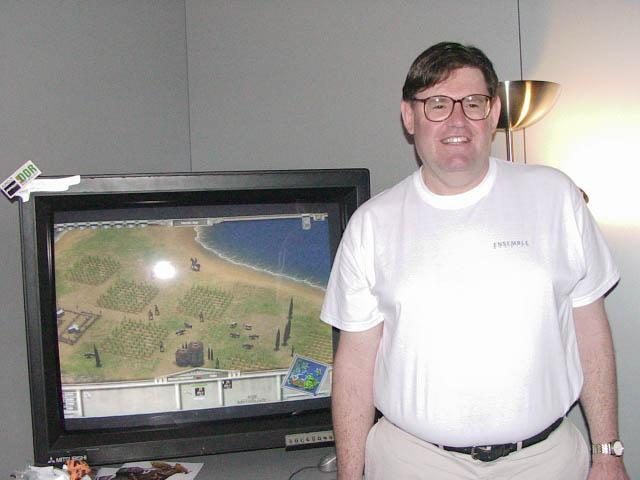
The team was inspired by Warcraft but did not want to simply repeat its formula of orcs, magic, and fictional kingdoms. The developers decided to take the speed and core principles of an RTS and combine them with the development of a civilization across different historical ages. During the early stages, the project was known by the working title Dawn of Man, and its original concept was considerably more ambitious than the final version. The technology tree was enormous, and individual matches could last for many hours, so the team gradually had to scale back its ideas to make the game more accessible and dynamic.
From the Stone Age to the Iron Age
One of the defining features of Age of Empires was its system of historical progression. Players began with a small settlement and a handful of villagers who gathered food, wood, stone, and gold. These four resources formed the foundation of almost everything in the game: they were needed to create new units, construct buildings, research technologies, and build an army. As a result, managing the economy was just as important as fighting battles.
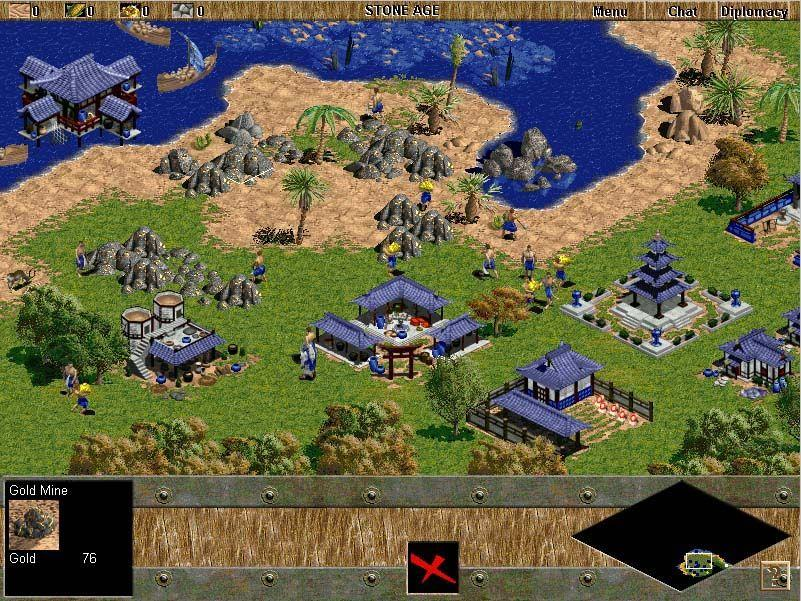
The most important stage of development was advancing to the next historical age. A civilization gradually progressed through the Stone Age, Tool Age, Bronze Age, and Iron Age, with each new age unlocking additional buildings, technologies, and military units. This gave even an ordinary match a sense of developing an entire civilization: at the beginning, there might be only a small settlement with a few villagers, but after some time, it could grow into a developed state with fortifications, a strong economy, and a large army.
12 Civilizations of the Ancient World
The original Age of Empires featured 12 civilizations, including the Egyptians, Greeks, Babylonians, Assyrians, Hittites, Phoenicians, and other peoples of the ancient world. They were not simply different visual versions of the same faction: civilizations differed in their available technologies, units, and bonuses. One might have an advantage when using certain military units, while another could be stronger economically or offer other unique benefits.
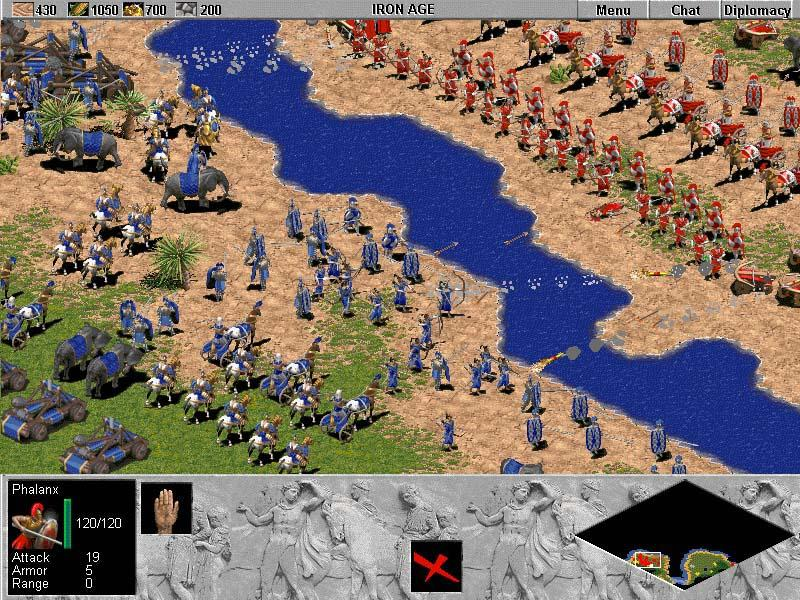
This provided considerable room for experimentation. Players had to consider the strengths and weaknesses of their chosen civilization, search for effective combinations of military units, and adapt their strategy to their opponent. At the same time, the historical setting made each civilization recognizable and helped Age of Empires stand apart from many other RTS games of the period.
War Began With the Economy
Despite the huge number of battles, Age of Empires was never simply a game about creating an army and destroying the enemy. Without a stable economy, even the strongest military force could quickly lose its advantage. Players constantly had to decide where to spend their resources: create additional soldiers, train more villagers, build defensive structures, or save enough resources to advance to the next age.
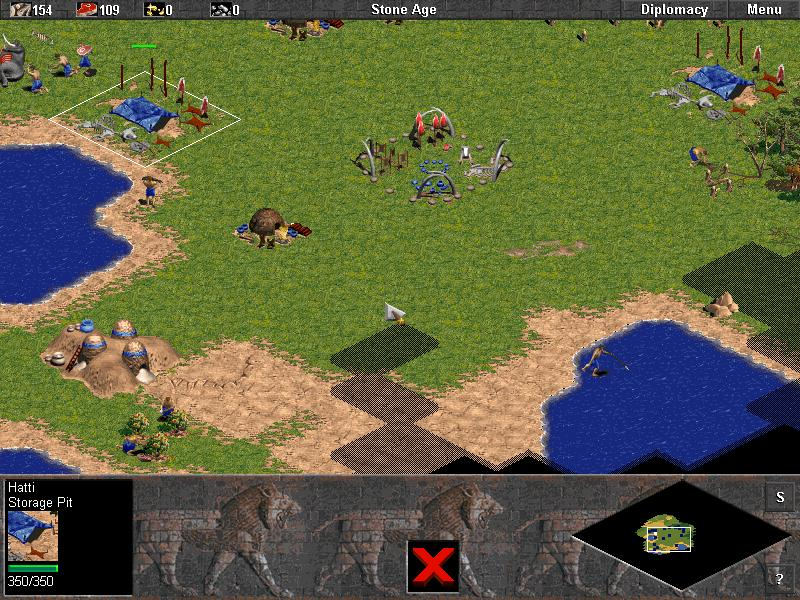
This meant that economic development and warfare were closely connected. A large army required enormous amounts of resources, but investing too heavily in the economy could leave a settlement defenseless against an early enemy attack. Finding the right balance became one of the fundamental principles of Age of Empires and would remain an important part of the entire series.
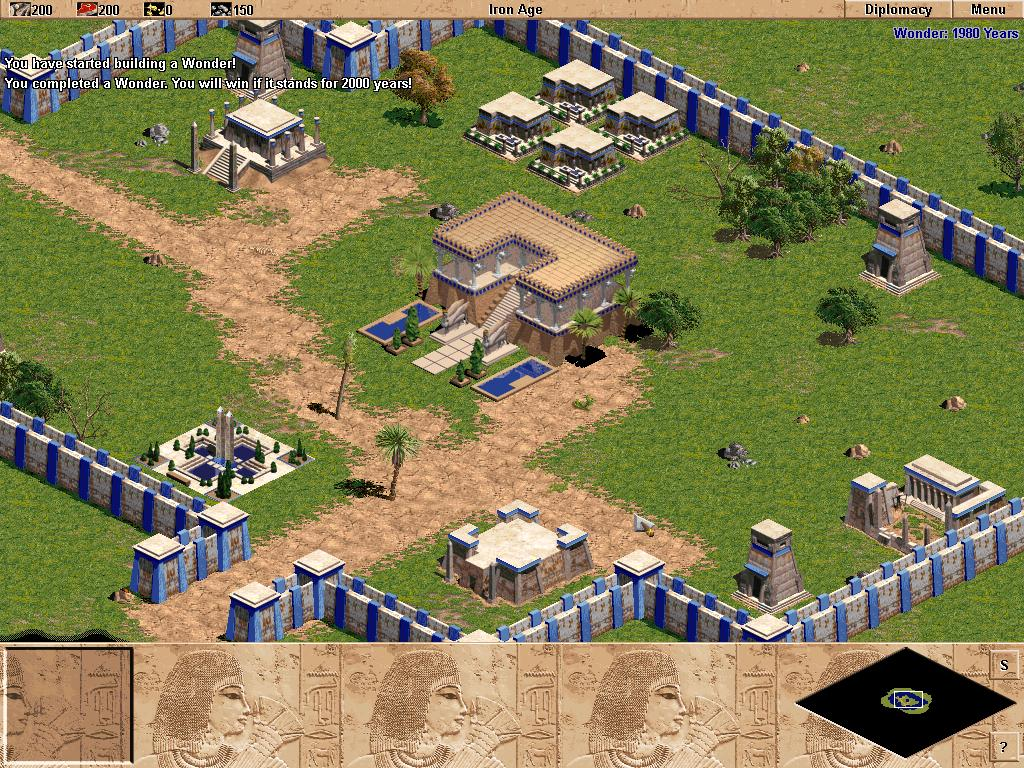
Destroying the enemy was not the only way to win. One of the most interesting alternatives was constructing a Wonder, which then had to be defended for a specific amount of time. This condition could completely change the course of a match: opponents were forced to attack the player who controlled the Wonder, turning a regular strategy match into a massive defensive battle around a single position.
Maps That Had to Be Explored
Randomly generated maps became another important feature of Age of Empires. The locations of resources, forests, bodies of water, and other elements could change from one match to another, meaning players could not simply memorize a single correct sequence of actions. They had to explore the territory, locate necessary resources, monitor their opponents, and adapt their strategy to the specific situation on the map.
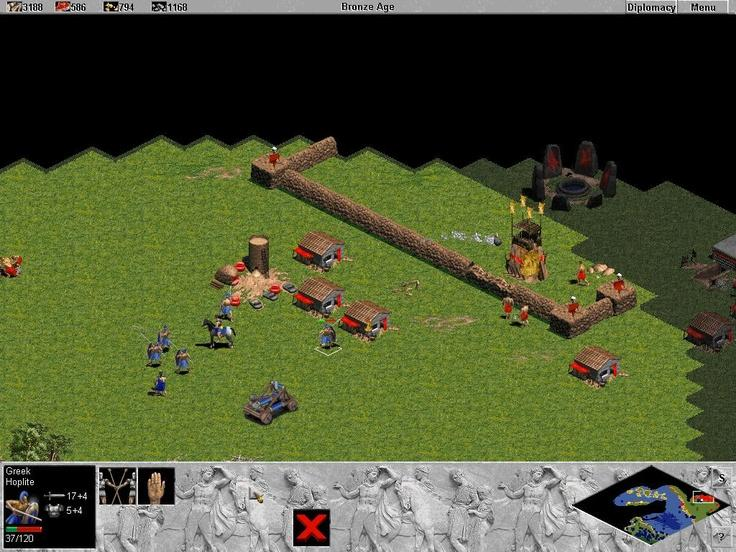
Alongside standard matches against the computer, Age of Empires offered campaigns and multiplayer, where up to eight players could compete at the same time. The developers also included a scenario editor that allowed players to create their own maps and situations. For the late 1990s, this was an important feature, as it gave the community an opportunity to experiment with the game's possibilities and create content beyond its standard modes.
Why the Historical Setting Became Its Defining Feature
In the mid-1990s, many real-time strategy games were built around fantasy or science-fiction worlds, so Ensemble Studios deliberately took a different path. Instead of fictional races, Age of Empires allowed players to control civilizations whose names they already knew from history. Players could watch their settlements develop, create armies inspired by the ancient world, unlock new technologies, and advance through historical ages.
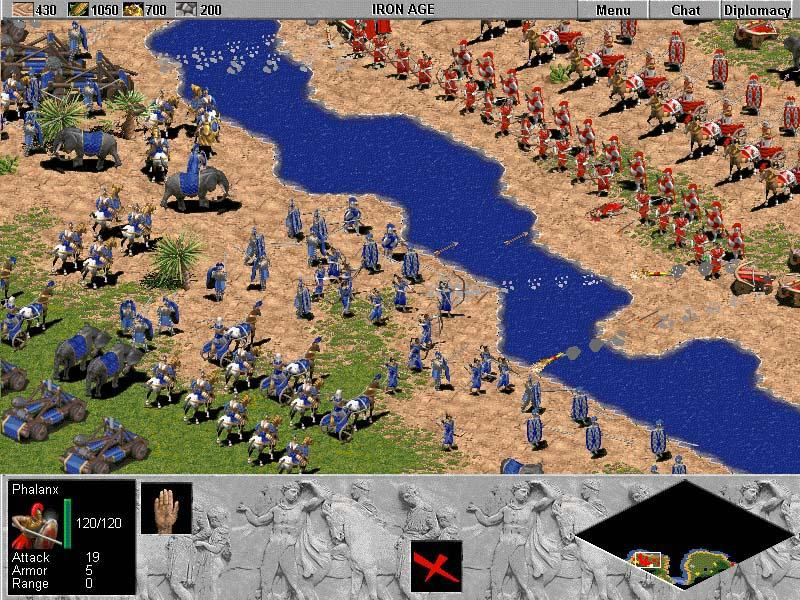
At the same time, Ensemble Studios did not try to turn the game into a complex historical simulator. The priority remained an accessible and engaging strategy game, while history served as the foundation around which its mechanics were built. This combination allowed Age of Empires to find its own place among the huge number of RTS games released during the second half of the 1990s.
The Beginning of a Major Series
Ensemble Studios' gamble paid off. Age of Empires received a positive reception and transformed from the debut project of a young studio into the beginning of a major franchise. Just a year later, the game received the The Rise of Rome expansion, which introduced new civilizations, campaigns, units, and other content. However, the series' biggest breakthrough was still to come.
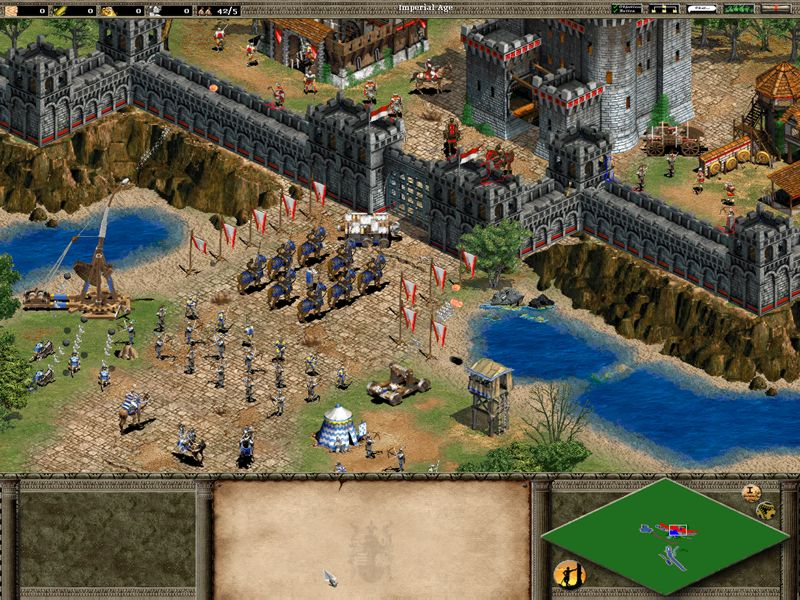
In 1999, Ensemble Studios released Age of Empires II: The Age of Kings. The sequel moved the series into the Middle Ages, significantly expanded upon the mechanics of the original, and eventually became one of the most famous RTS games in history. The franchise became so successful that in 2001 Microsoft announced its acquisition of Ensemble Studios. By that point, games under the Age of Empires brand had already sold approximately 8.5 million licensed copies worldwide.
The Game That Started an Era
On October 15, 1997, Age of Empires offered players a simple but unusual fantasy for its time: instead of merely commanding an army, they could build their own civilization and guide it through centuries of development. Ensemble Studios managed to combine the scale of historical strategy games with the dynamic nature of an RTS, allowing the player to become a builder, economist, and military commander at the same time. Every match effectively told a small story — from a handful of villagers gathered around a town center to a developed state with a powerful army.
That experiment gave birth to Age of Empires. What began as an attempt to combine ideas from Civilization and Warcraft ultimately found its own formula and launched a series that would become one of the most recognizable names in the history of real-time strategy games.
As a reminder: The Evil Within — The game that brought Shinji Mikami back to survival horror.