


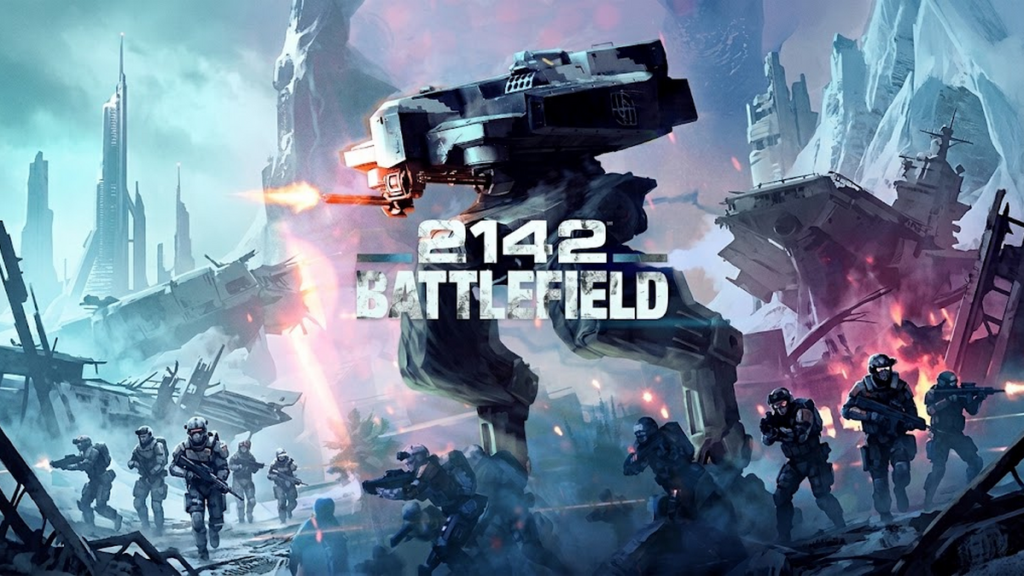
On October 17, 2006, Battlefield 2142 was released on PC — a new entry in the series from DICE that, following the modern conflicts of Battlefield 2, unexpectedly sent players almost a century and a half into the future.
Tanks and helicopters gave way to futuristic combat vehicles, mechs, and advanced weapons, while enormous airborne warships known as Titans appeared above the battlefield.
They became the foundation for one of DICE's biggest experiments at the time — Titan Mode, for which the developers were even willing to change Battlefield's familiar setting.
A War for the Last Habitable Land
The events of Battlefield 2142 take place in the future, when Earth is experiencing a new ice age. Much of the planet has become uninhabitable, forcing humanity to fight for the remaining habitable territories.
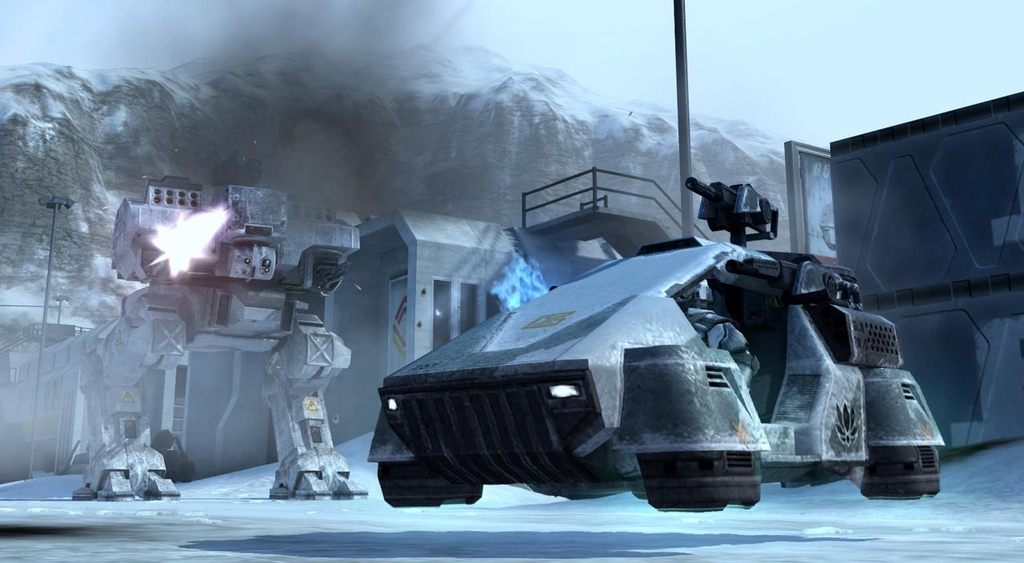
At the center of the conflict are two major powers — the European Union and the Pan-Asian Coalition. Their struggle takes place across Europe and North Africa.
This setting allowed DICE to move beyond the limitations of modern warfare. Battlefields featured combat mechs, futuristic tanks, transport ships, and other advanced vehicles, while the foundation of Battlefield remained familiar — large-scale infantry and vehicle battles and the need to work together as a team.
The Future for the Sake of a New Mode
Moving Battlefield into the year 2142 was not only about experimenting with weapons and vehicles.
One of the main reasons was Titan Mode.
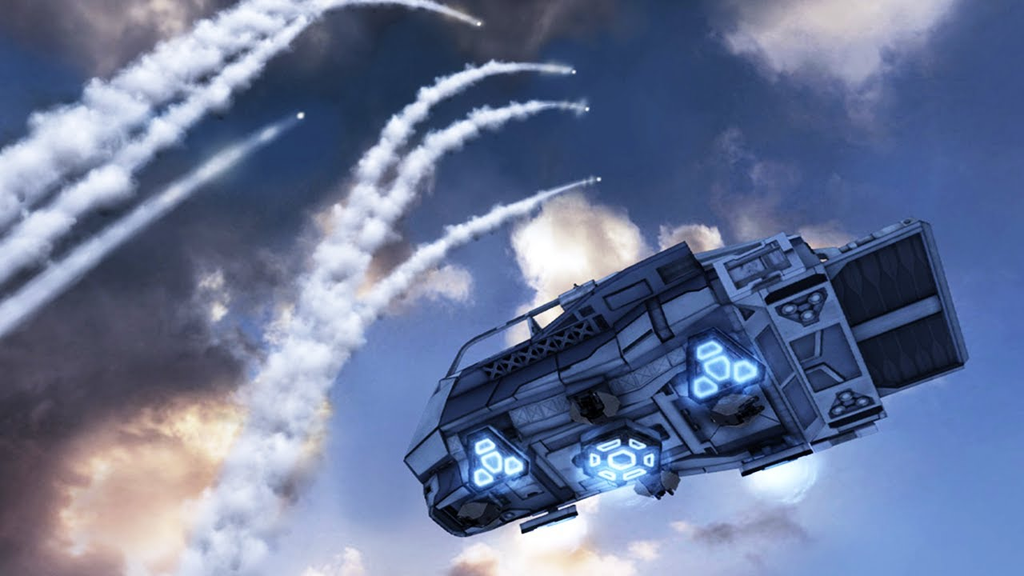
Before release, DICE producer Marcus Nilsson explained that the team believed so strongly in the new mode that the ability to implement it was one of the reasons for choosing a futuristic setting.
For Battlefield, this was a major step. Previous games had largely been built around different variations of Conquest, while DICE now wanted to offer a fundamentally different match structure.
Destroy the Enemy Titan
In Titan Mode, both teams were given a massive airborne warship — a Titan. The objective was simple in theory: destroy the enemy ship before they could destroy yours.
The Titans could not be attacked immediately because of their powerful energy shields. First, teams had to capture missile silos located around the map. These automatically launched missiles at the enemy ship and gradually weakened its defenses.
Once the shield went down, a completely different part of the battle began.
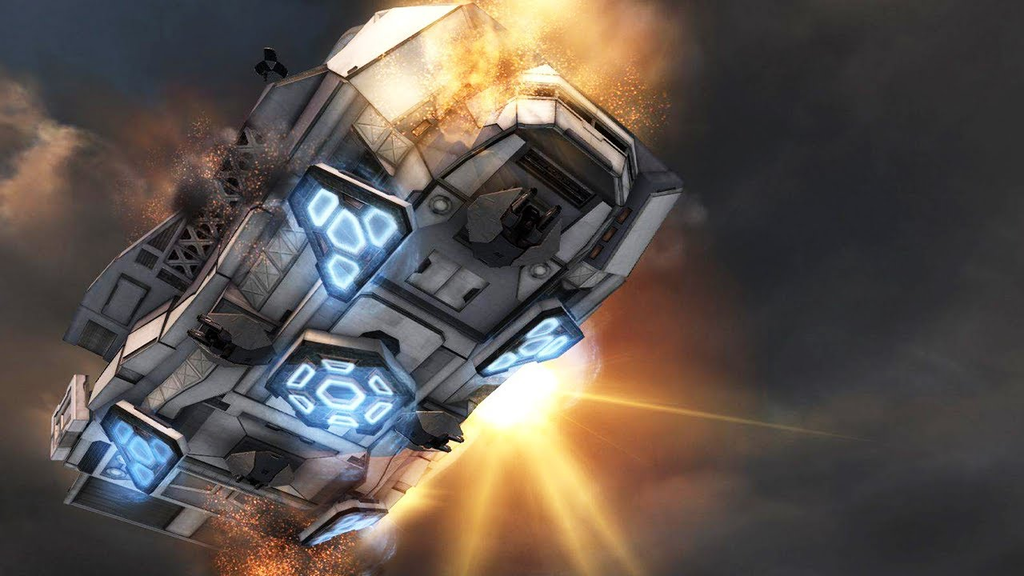
Players could board the enemy Titan using transport vehicles and specialized assault pods. Inside, they had to break through the defenses, destroy four security consoles, and open a path to the reactor core.
Once the reactor was destroyed, the ship was doomed.
As a result, a single match could begin as a traditional large-scale Battlefield battle across an open map and end with intense infantry combat inside the narrow corridors of a massive airborne ship.
Mechs Instead of Conventional Tanks
The futuristic setting also allowed DICE to experiment with vehicles.
One of the symbols of Battlefield 2142 became its combat mechs — large, two-legged machines capable of engaging infantry and other vehicles. Alongside them were futuristic tanks, armored personnel carriers, and air transport.
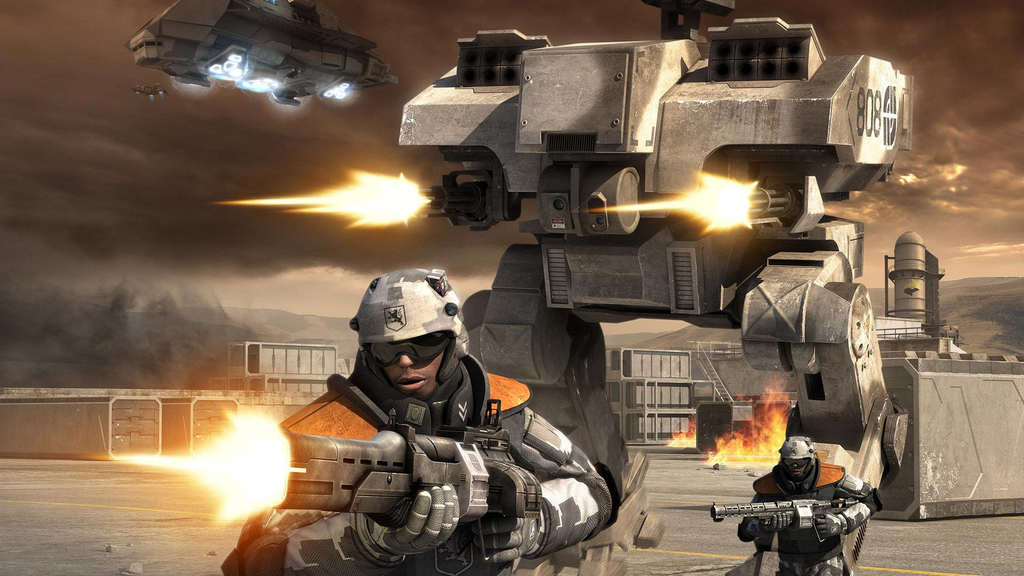
The developers also tried to take the lessons of Battlefield 2 into account. At DICE, they acknowledged that they had underestimated how well players would learn to control aircraft and attack helicopters in the previous game, which sometimes made air power too dominant.
As a result, Battlefield 2142 took a different approach to aerial vehicles. Instead of traditional fighter jets and helicopters, it featured futuristic aircraft whose role was more focused on supporting ground forces.
More Options for Your Soldier
Battlefield 2142 also continued developing the progression system that DICE had introduced in Battlefield 2.
As players increased their rank, they gained access to new weapons and equipment. However, simply unlocking an item was not enough — before each battle, players had to decide which equipment to take with them.
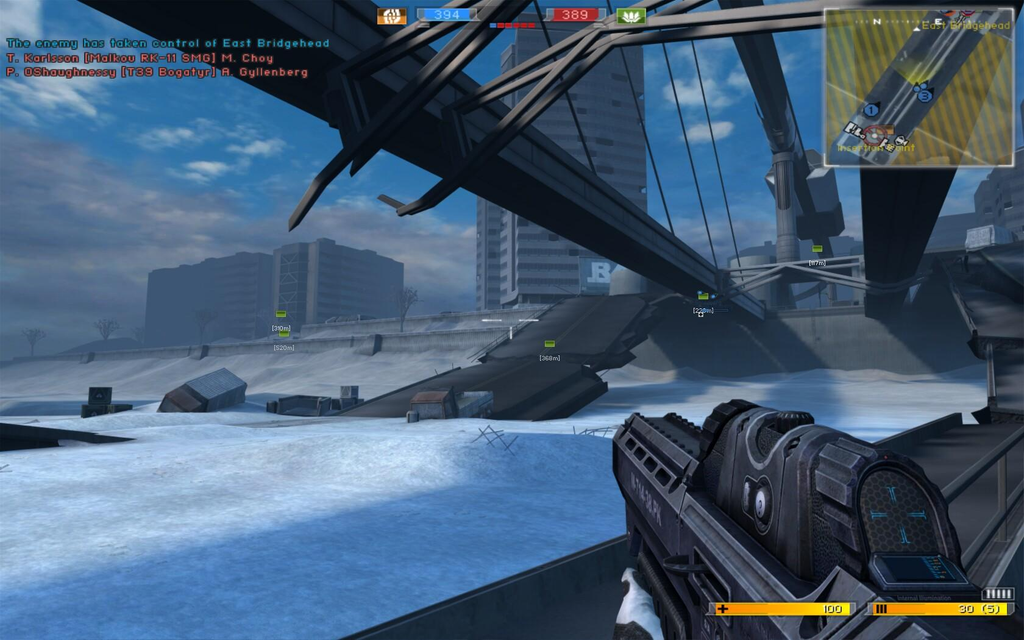
The classes also became more versatile. For example, there was no dedicated medic class: medical equipment and a defibrillator could be unlocked for the Assault class.
At the same time, a single soldier could not carry every piece of equipment they might need. As a result, the progression system did not abandon Battlefield's core principle — victory still required teams to combine different roles and work together.
A Battlefield That Was Not Meant to Replace Battlefield 2
At the time Battlefield 2142 was being developed, its predecessor Battlefield 2 remained extremely popular.
DICE and Electronic Arts did not position the new game as a direct replacement. Battlefield 2142 was intended to become another direction for the series — with the familiar formula of large-scale warfare, but a completely different setting and new mechanics.
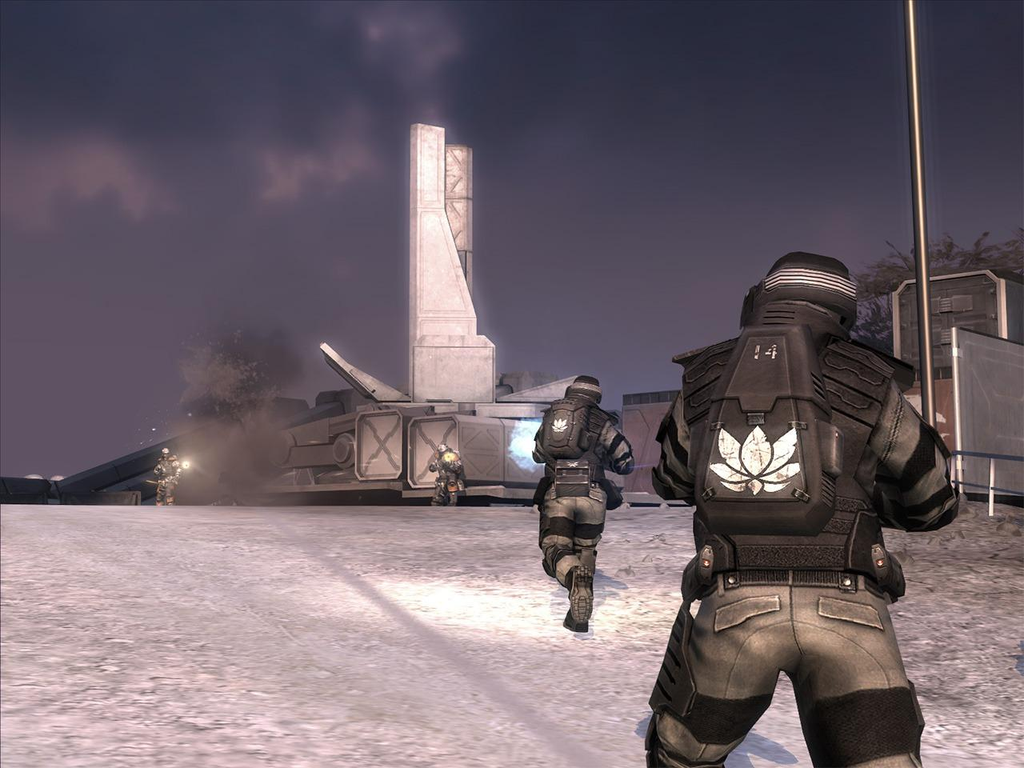
Players could still participate in battles of up to 64 people, use vehicles, form squads, and capture control points. However, the futuristic world allowed DICE to introduce concepts that would have been difficult to explain in a modern military setting.
The best example of this remained Titan Mode.
An Experiment Remembered for Years
Battlefield 2142 became one of the most unusual experiments in the early history of the series. Instead of another conflict set in the past or present, DICE offered its own vision of a future war featuring mechs, airborne warships, and a struggle for the last habitable territories on Earth.
At the same time, the developers did not abandon the foundations of Battlefield — large maps, vehicles, infantry, and teamwork.
The game's most important legacy was Titan Mode, which combined a large-scale battle for control of the map with an assault on a massive enemy warship.
On October 17, 2006, Battlefield traveled to the year 2142 — showing that the series' formula could work not only in wars of the past and present, but also far into the future.
As a reminder: Chivalry: Medieval Warfare — how a Half-Life 2 mod turned into medieval warfare.