


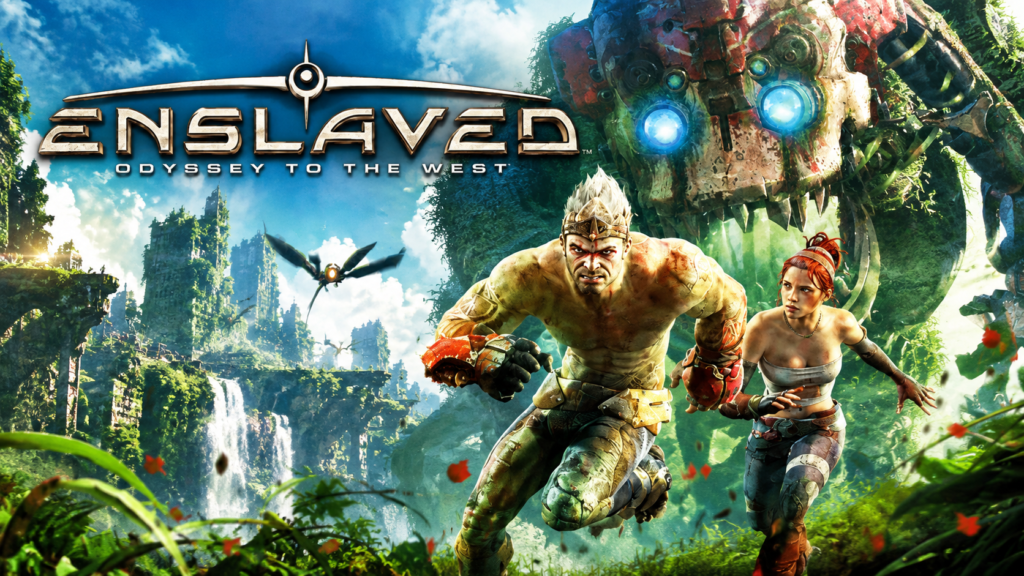
On October 5, 2010, Enslaved: Odyssey to the West was released for PlayStation 3 and Xbox 360. Developed by British studio Ninja Theory, known for Heavenly Sword, the adventure game combined a post-apocalyptic world, platforming, combat, and a cinematic story. The project also involved people from the film industry, including screenwriter Alex Garland and actor Andy Serkis.
At first glance, Enslaved might have seemed like another action game about survival in a ruined world. However, Ninja Theory decided to do something unusual: take inspiration from one of the most famous Chinese legends and move it into a distant post-apocalyptic future.
From Journey to the West to a Post-Apocalyptic Future
Enslaved was inspired by the classic Chinese novel Journey to the West, written around 400 years ago and based on even older folk legends. The Ninja Theory team became familiar with the story largely through the 1980s television series Monkey Magic.
However, the developers did not simply want to transfer the ancient story into a video game. They changed almost everything around its central themes.
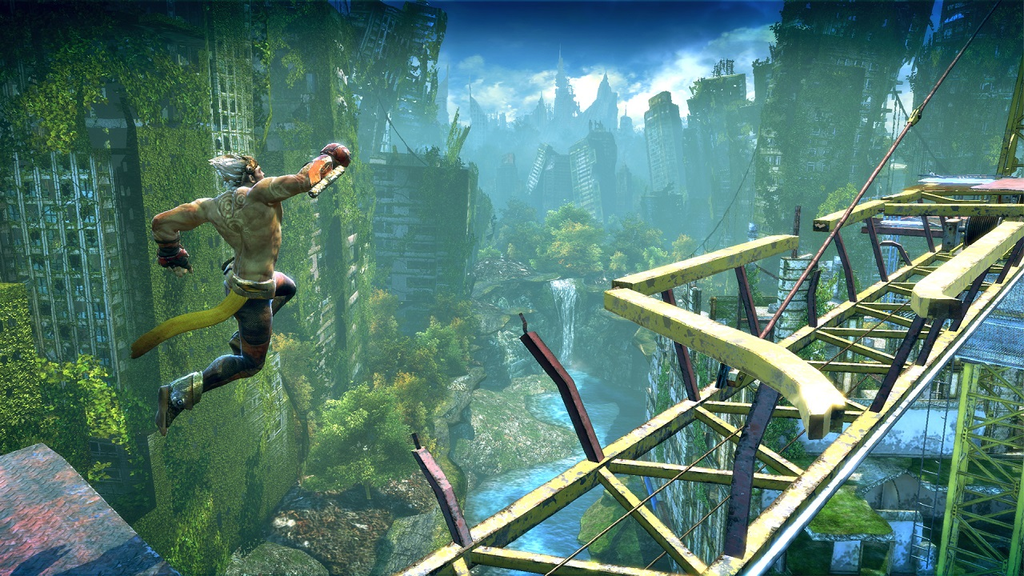
Instead of ancient China, the game takes place in America roughly 150 years after a global war. Instead of demons, there are war machines left behind after the conflict. And the Monkey King was transformed into a strong and quiet fighter named Monkey.
The game's world looks particularly unusual because of the contrast between nature and technology. Ruined cities are gradually being reclaimed by vegetation, while machines created for war continue to operate among the remains of civilization.
This contrast became one of the defining features of Enslaved's visual style.
A Game That Was Originally Supposed to Be Very Different
Enslaved did not immediately begin as the game players eventually received.
After working on Heavenly Sword, Ninja Theory considered developing a sequel for some time, but eventually abandoned the idea. The new project gradually took shape as a much more cinematic adventure.
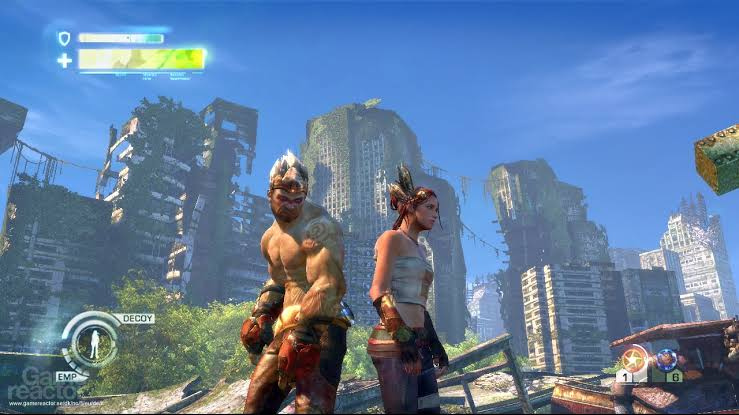
The team wanted to focus not only on combat, but also on the characters and their relationship. One of the inspirations for the interaction between the protagonists was Ico — a game in which the relationship between the characters and the need to help one another played an important role.
This gradually led to the story of Monkey and Trip.
Slavery That Drives the Story
At the beginning of the game, Monkey and a girl named Trip are captured by slavers. They manage to escape, but Trip uses a special slave headband to link Monkey's life to her own.
Now the hero is forced to help her get home.
This situation becomes the foundation of the entire adventure. At first, Monkey and Trip do not trust each other at all. He wants to get rid of the headband, while she uses his strength to ensure her own survival.
However, as their journey continues, their relationship gradually changes.
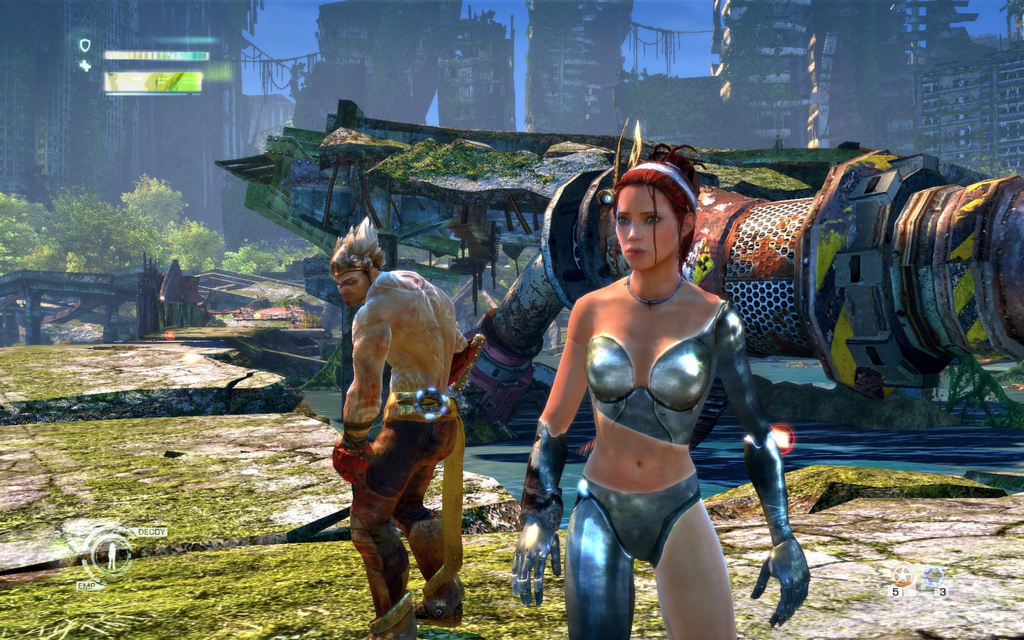
Ninja Theory deliberately made this interaction an important part of the game. Trip was not simply a character the player had to escort from point A to point B. She helped Monkey solve puzzles, and players had to take her presence into account while progressing through the game.
Alex Garland and an Attempt to Make the Game Feel Like a Movie
One of the most unusual decisions was bringing in Alex Garland, author of The Beach and screenwriter of 28 Days Later.
Garland was involved in more than just the dialogue. He worked on the script and scene direction, trying to make the transitions between gameplay and cutscenes feel as natural as possible.

For Ninja Theory, this continued an idea the studio had already explored in Heavenly Sword: a video game could tell a story through acting, camera work, music, and staging, rather than relying solely on dialogue and text.
The original script contained considerably more cutscenes — around two hours of material. It was later reduced to approximately one hour and ten minutes so that the player would not feel overwhelmed.
Andy Serkis Became Monkey
The role of the protagonist went to Andy Serkis, an actor who had already become famous for his performance-capture work, particularly his portrayal of Gollum in The Lord of the Rings.
Serkis had already worked with Ninja Theory on Heavenly Sword, where he played King Bohan. For Enslaved, he once again participated in performance capture and voice acting, this time creating the character of Monkey.

This was particularly important to the studio. Ninja Theory wanted the characters to feel like real actors interacting with one another rather than simply beautifully animated digital models.
As a result, the emotional relationship between Monkey and Trip became one of the game's strongest aspects.
Unreal Engine 3 Instead of an In-House Engine
Another important decision was Ninja Theory's move to Unreal Engine 3.
While developing Heavenly Sword, the studio had created its own engine and development tools. Maintaining and updating that technology required significant resources.
For Enslaved, the team therefore decided to use Unreal Engine 3. This allowed roughly 80 core developers to focus more on design, art, and gameplay rather than maintaining their own technology.
The decision was also important for the scale of the game. Ninja Theory wanted to create a longer adventure than Heavenly Sword, and Unreal Engine 3 allowed the team to build large environments and experiment with gameplay mechanics more efficiently.
Combat, Platforming, and Dangerous Machines
Enslaved was not built around its story alone. Monkey used a special staff that allowed him to attack mechs both at close range and from a distance. In some sections, he could also use a flying platform known as Cloud.
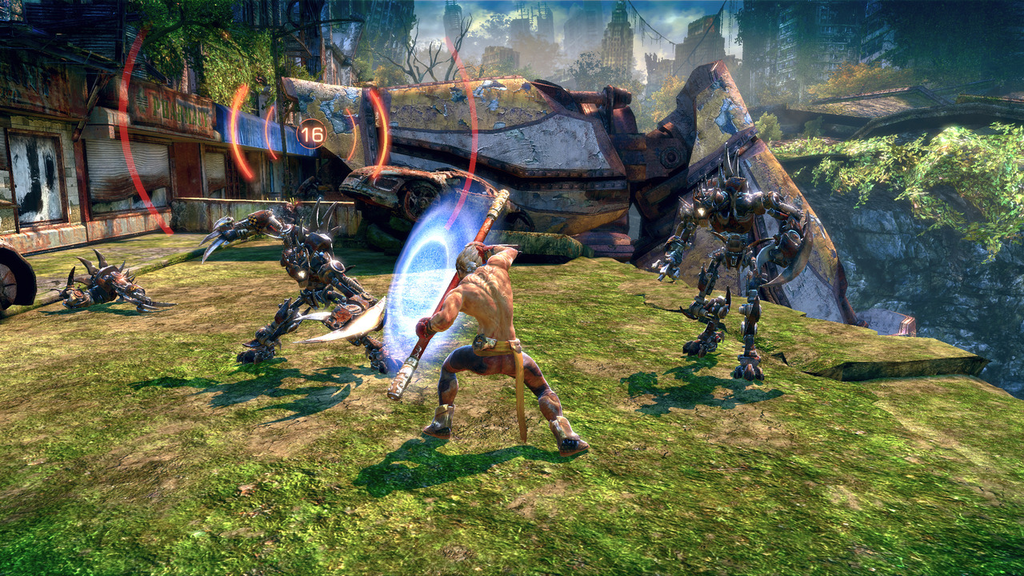
Platforming sections and puzzles played another important role. Monkey could move quickly, jump between the remains of buildings, and use the environment to progress.
But the main threat remained the Mechs. These machines were remnants of an old war. Some could remain inactive for years before suddenly reactivating.
The developers even compared them to landmines left behind after real military conflicts. Because of this, the world of Enslaved was not simply supposed to look destroyed — it was meant to create the feeling that danger was still present even after the war had ended.
A World Where Nature Slowly Reclaims the Planet
One of Enslaved's most striking features was its atmosphere. Instead of the traditional gray post-apocalyptic setting, Ninja Theory created a world filled with greenery, bright light, and vivid colors.
Trees grow among the ruins of skyscrapers, abandoned roads disappear beneath grass, and the remains of civilization are gradually consumed by nature. The studio's artists paid particular attention to color, lighting, and movement in every scene. Unreal Engine 3 gave them greater control over visual effects and image processing.
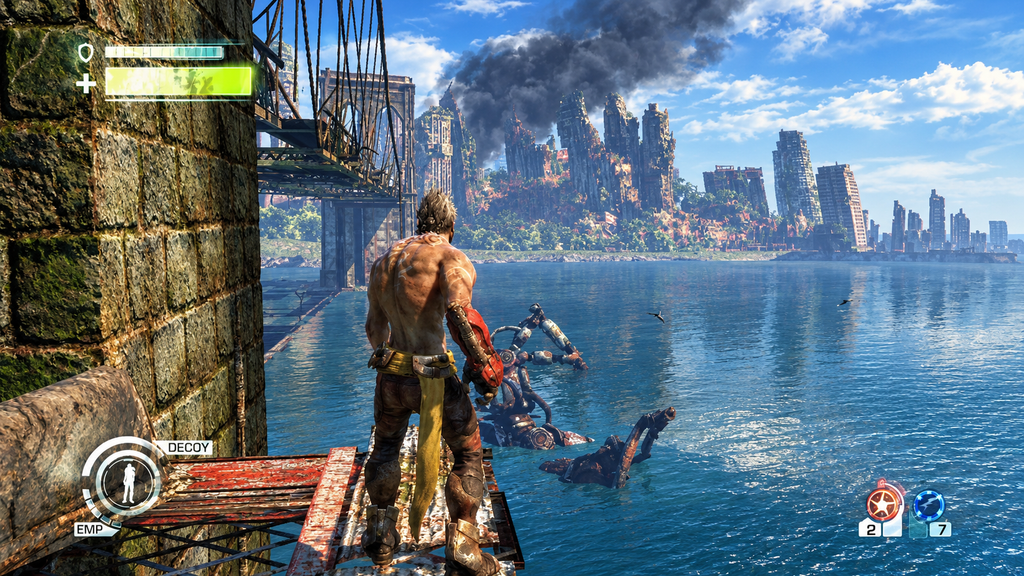
As a result, the game's world became a kind of reversal of the classic post-apocalyptic setting: humanity had lost, but the planet had a chance to recover.
Release and Reception
Enslaved: Odyssey to the West was released in North America on October 5, 2010, for PlayStation 3 and Xbox 360. The European release followed shortly afterward.
The game received positive reviews from critics, who particularly praised its story, characters, performances, and visual style.
At the same time, Enslaved did not become the major commercial hit Ninja Theory had hoped for. Nevertheless, over the years, the game gained a reputation as something of a cult classic.
In 2013, a Windows version was released, along with the additional story expansion Pigsy's Perfect 10, which focused on one of the game's main characters.
A Game Remembered for More Than Its Graphics
Today, Enslaved: Odyssey to the West is interesting not only as an action game from 2010.
It is an example of how Ninja Theory attempted to combine video games with cinematic storytelling long before this approach became common in major AAA projects.
The Chinese legend of the Monkey King received a completely new interpretation: instead of ancient kingdoms, there is a ruined America of the future; instead of demons, there are war machines; and instead of a lone hero, there is a story about two people who are initially forced to cooperate and gradually learn to trust each other.
And it was on October 5, 2010, that players first set out with Monkey and Trip on this unusual Journey to the West.
As a reminder, RAGE is the game with which id Software wanted to change its own rules.