


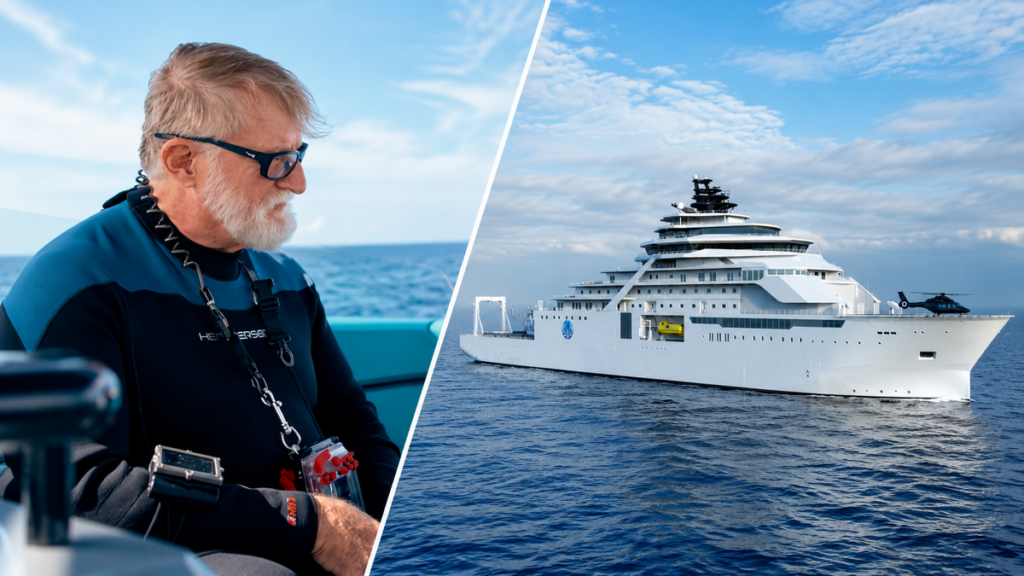
Throughout 2026, Valve co-founder Gabe Newell significantly expanded his investments in marine research and relocated to optimize his tax burden, while his company faced a series of major legal challenges.
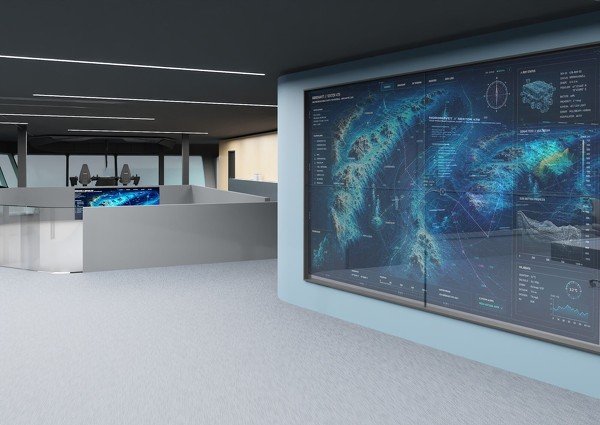
Expanding his research fleet became one of the billionaire's main focuses this year. His company Inkfish, which specializes in deep-sea research, ordered the construction of the 162-meter vessel RV11000 from the Norwegian shipyard VARD. The $815 million ship will function as a full-fledged floating science center capable of operating at depths of up to 11,000 meters, with its launch scheduled for 2030. In parallel, VARD is building the 100-meter RV6000 for Inkfish, with delivery expected in 2028.



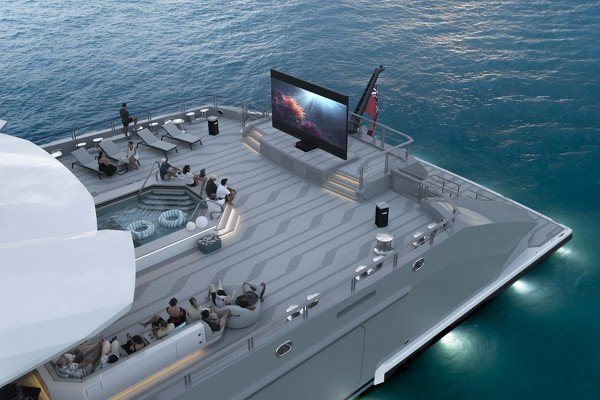
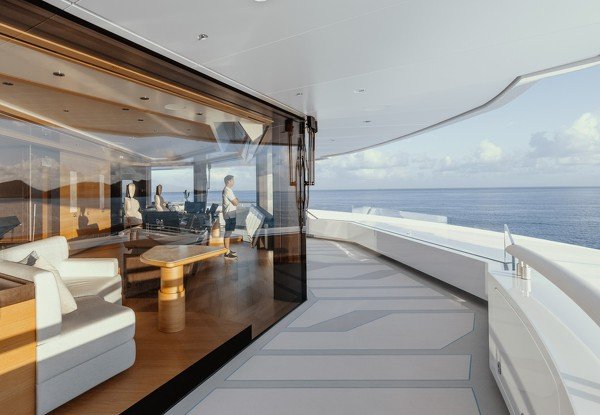
In addition to scientific vessels, in May, the Dutch shipyard Oceanco—which Gabe acquired last year—showcased his new 111-meter gigayacht, the Leviathan, valued at $500 million. The vessel was designed around principles of community equality, lacking the traditional division between guest and crew quarters. Newell's previous yacht, Tranquility, underwent a refit, was renamed Draak, and now serves as a practical support vessel for the Leviathan and Inkfish operations.


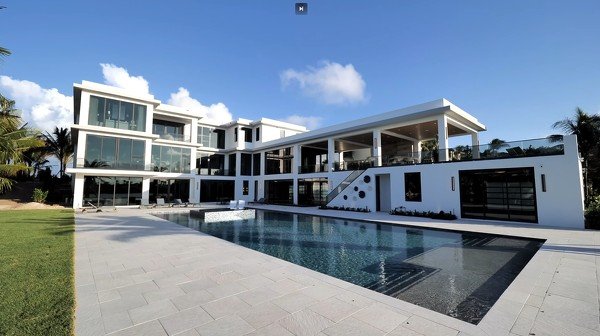
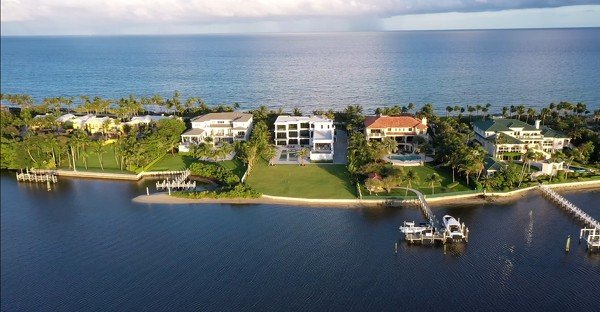
Alongside the expansion of his fleet, Newell changed his residence to preserve his capital. In June, he purchased a Florida estate spanning over 1,800 square meters—complete with a private dock and an underground tunnel to the beach—for $70.8 million. The Valve founder left Washington State due to increased tax burdens on the ultra-wealthy, choosing Florida where there is no state income tax or personal capital gains tax.


Meanwhile, in the corporate arena, Valve faced intense legal pressure across three countries, threatening fundamental changes to Steam's policies. In the United States, the company stands accused of promoting illegal gambling to minors through loot box mechanics. Valve rejects these claims, comparing cases to ordinary collectible cards. Concurrently, courts in the United Kingdom and the Netherlands approved class-action lawsuits against Valve alleging abuse of market dominance and charging an excessive 30% commission from game developers.

Pre-trial proceedings in the US revealed that Valve used aggressive ultimatums with partners, including threatening to remove Rainbow Six Siege from Steam due to a lower price point on the Ubisoft Store. Because Western legal systems rely heavily on precedent, proving Valve's monopoly status in even a single court could trigger a chain reaction. This could lead to substantial financial losses for Steam and force the company to rethink its loot box economy, though the tangible impact of these legal battles will only become clear next year.


As a reminder, Uncharted 2: Among Thieves — How Naughty Dog Turned Drake’s Adventures into a Blockbuster