


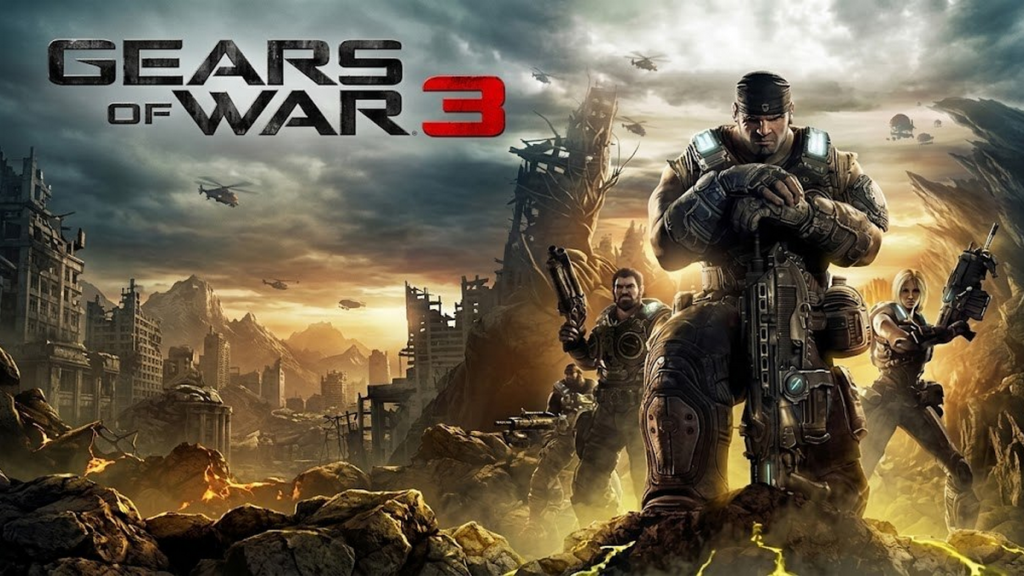
On September 20, 2011, Gears of War 3 was released on Xbox 360 — the third installment in the series from Epic Games, which concluded the original story arc about Marcus Fenix, Delta Squad, and humanity’s struggle for survival on the planet Sera. The game was not simply a continuation of the previous installments, but the final chapter in a story that Epic Games had been telling since 2006.
Work on the third installment began following the success of Gears of War 2, but the road to release turned out to be longer than originally planned. Microsoft and Epic Games initially wanted to release the game in April 2011, but the release was later pushed back to the end of the year. The final date was set for September 20, 2011, with Microsoft announcing a simultaneous worldwide release for Xbox 360.
The key members of the series’ development team returned for the game. Cliff Bleszinski, the series’ designer, and executive producer Rod Fergusson were among those who worked on Gears of War 3, while writer Karen Traviss, who had previously worked on Gears universe novels, was brought in to help develop the story. The developers wanted to make the final installment more personal for the characters and answer the questions that had remained after the first two games.
The story of Gears of War 3 begins 18 months after the fall of the last human city. Marcus Fenix and his comrades find themselves in a world where human civilization is effectively on the verge of extinction. The war against the Locust continues, but this time the heroes must face another threat as well — the Lambent, creatures that have begun rapidly changing under the influence of Imulsion.
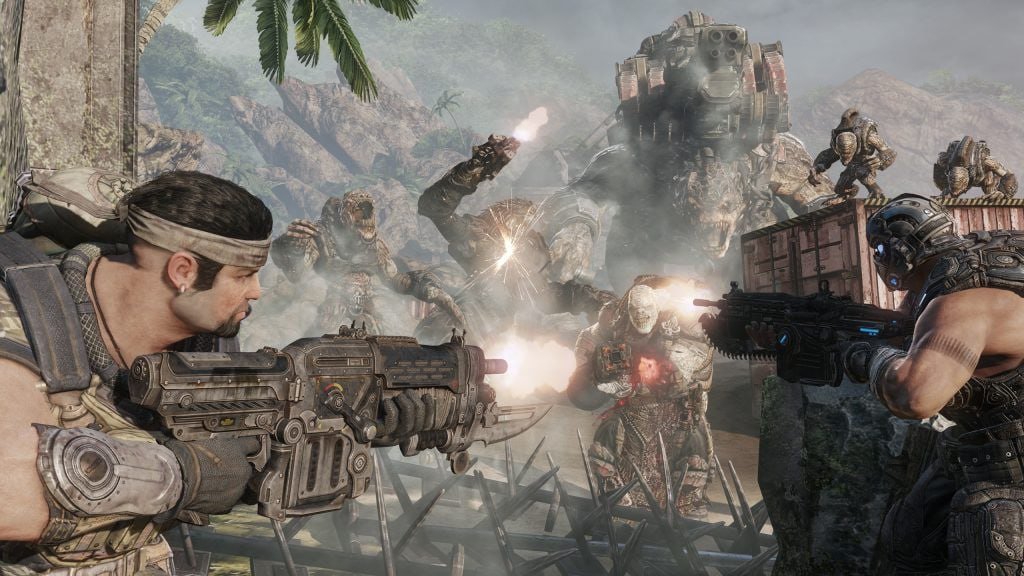
That is why the third installment had a different emotional tone. While the first Gears of War games were largely built around introducing players to the world and the war, Gears of War 3 constantly reminded them that this story was approaching its conclusion. The developers paid more attention to the relationships between the characters, their pasts, and what might remain after the war.
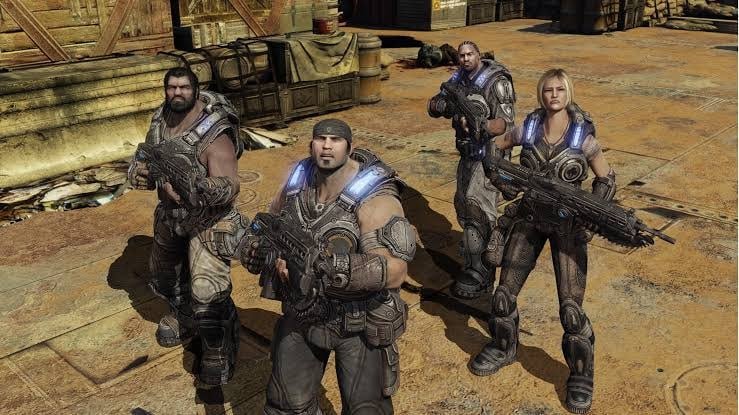
One of the major new features was the ability to play the campaign with four-player co-op. Gears of War was already known for its cooperative mode, but the third installment significantly expanded the concept. Players could take control of different members of the team during the campaign, while a separate Arcade mode introduced a scoring system and allowed players to turn the campaign into a kind of competition between friends.
The multiplayer also received major changes. Horde Mode 2.0 transformed the familiar formula of defending against waves of enemies into a more tactical system. Teams could build fortifications, place turrets, barricades, and other defensive structures, while earning in-game currency for completing objectives and eliminating enemies. Players had to survive up to 50 waves in total.
An even more interesting experiment was Beast Mode. Here, the concept was completely reversed: instead of playing as defenders of humanity, players were given the opportunity to control members of the Locust and Lambent armies. The objective was to attack human positions and destroy their defensive structures. In this way, Epic Games essentially allowed players to look at the familiar conflict from the other side.

Interest in the game before release was enormous. In spring 2011, a multiplayer beta took place, attracting 1.29 million players over four weeks. Participants played more than 11 million matches, while the beta reached players from 145 countries. By May, Gears of War 3 had already surpassed one million pre-orders, which Microsoft described as the fastest achievement of that milestone among Xbox 360 exclusives at the time.
Several weeks before release, the game officially went “gold,” meaning that its main development had been completed. Epic Games also prepared several editions, including the expensive Epic Edition, whose centerpiece was a collectible statue of Marcus Fenix. At the same time, Microsoft and Epic Games announced extensive post-launch support with additional maps and story content.
On September 20, 2011, Gears of War 3 was finally released worldwide on Xbox 360. The game received a very positive response from critics: it currently holds a score of 91 out of 100 on Metacritic based on 96 critic reviews. Reviewers particularly praised the scale of the campaign, co-op, multiplayer, and the amount of content. At the same time, some reviews considered the story’s conclusion less convincing than the other aspects of the game.
Commercially, the launch was also massive. Within its first week, Microsoft and Epic Games announced that more than three million copies had been sold. It was also announced that total franchise sales had surpassed the one-billion-dollar mark.

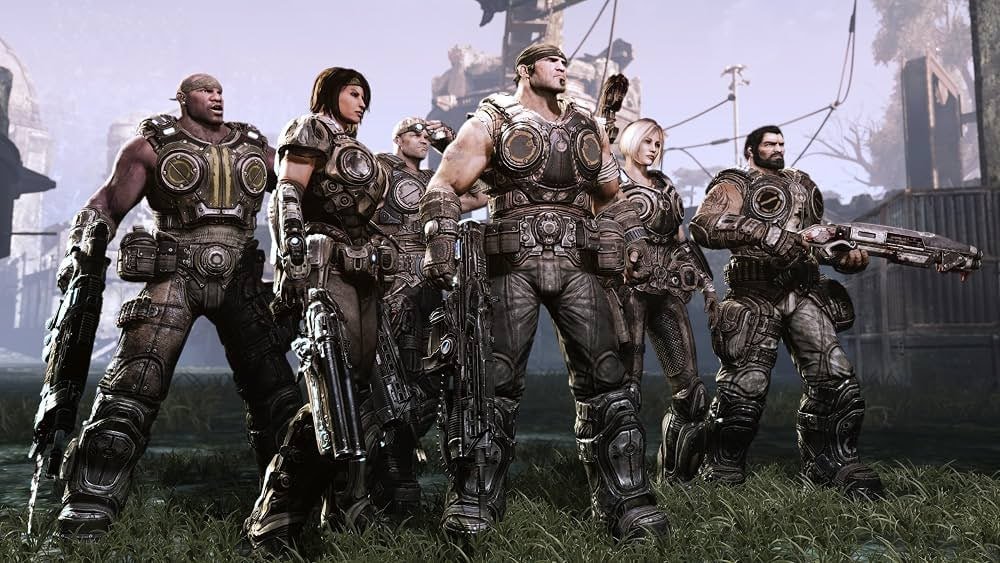
For the Xbox 360, Gears of War 3 became an important part of the console’s final years. It was a game that simultaneously attempted to bring Marcus Fenix’s story to a conclusion while leaving plenty of opportunities for multiplayer gaming after completing the campaign. That is why Epic Games placed such a strong emphasis on Horde 2.0, Beast Mode, co-op, and competitive multiplayer.
As a result, Gears of War 3 became the conclusion of the original trilogy, but not the end of the Gears universe itself. The following years showed that Microsoft had no intention of abandoning the franchise: new installments and other projects eventually appeared. However, the third game remained the finale of the story that began with Marcus Fenix, Dominic Santiago, and the players’ first encounter with Sera in 2006.
Gears of War 3 showed what the finale of a major gaming trilogy could look like: it did not simply continue the familiar formula, but attempted to conclude the story, expand cooperative play, and turn multiplayer into a separate long-term part of the game. Years after its release, its story remains an important chapter in the history of Xbox 360 and Epic Games.
As a reminder, Oddworld: Abe’s Oddysee — the story of an unusual hero who tried to save an entire people