


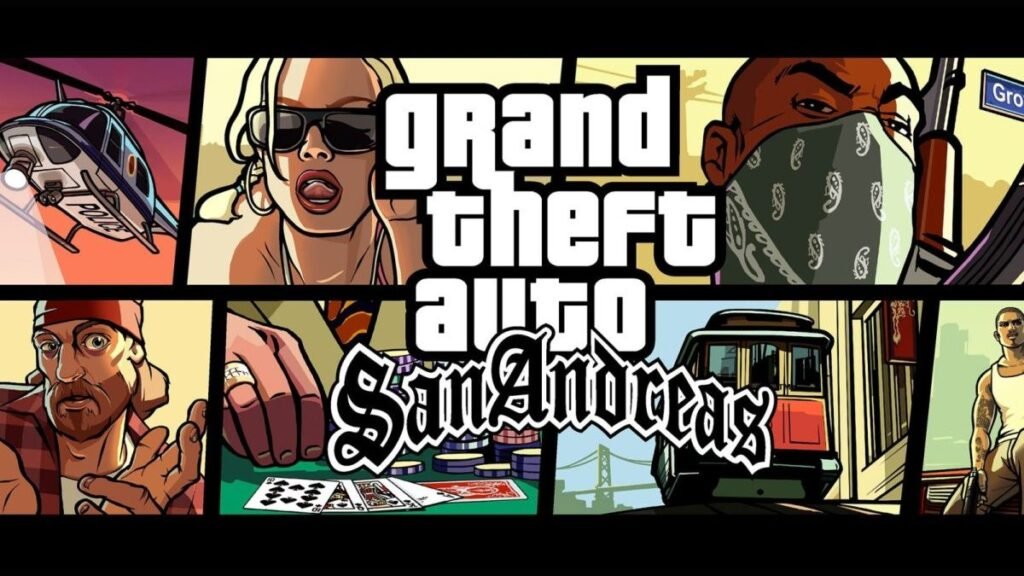
On October 26, 2004, Grand Theft Auto: San Andreas was released on the PlayStation 2 in North America — the third major installment in Rockstar Games' 3D era. Developed by Rockstar North following the immense success of Grand Theft Auto III and Vice City, the team was tasked with not simply repeating a familiar formula, but substantially expanding it.
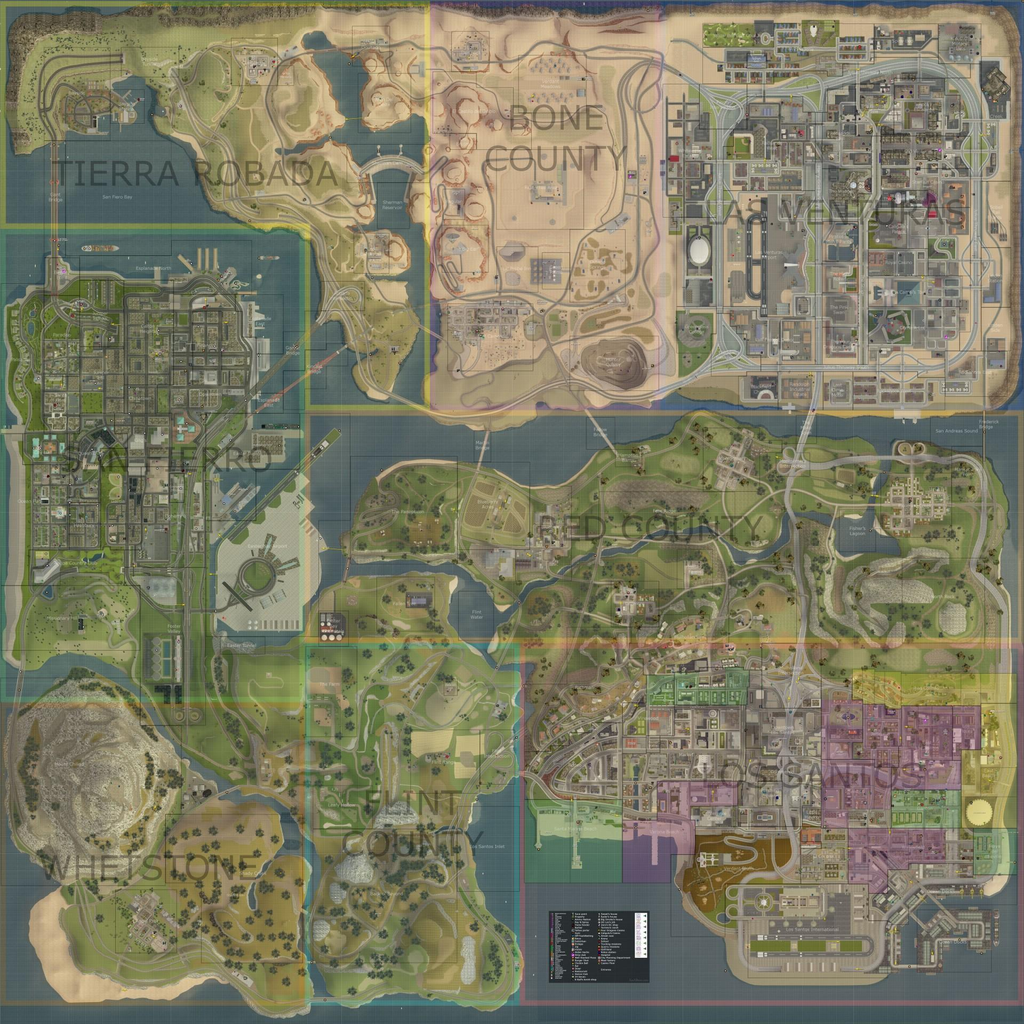
San Andreas delivered a world exponentially larger than its predecessors. Instead of a single city, Rockstar crafted an entire fictional state featuring three major metropolises — Los Santos, San Fierro, and Las Venturas — interconnected by vast stretches of countryside and desert. The game also introduced significantly deeper mechanics for character progression, vehicle customization, exploration, and side activities.
From GTA III and Vice City to an Entire State
Following the 2001 release of Grand Theft Auto III, Rockstar effectively defined the modern standard for 3D open-world titles. A year later, Vice City expanded upon that framework, transplanting the action into a stylized 1980s Miami. The logical next evolution required more than just another city — it called for a dramatically larger geographical scope.
Rockstar officially announced San Andreas on March 1, 2004, revealing that Rockstar North was developing the title with an initial target release window of October that year. Rockstar Games head Sam Houser stated that the team aimed to surpass expectations established by previous titles, while Rockstar North president Leslie Benzies emphasized the goal of redefining the series and elevating the standard of open-world gameplay.
Granted extended development time relative to its predecessor, Rockstar North overhauled fundamental gameplay mechanics and visual presentation. Consequently, San Andreas eclipsed Vice City not only in map size, but also in the sheer depth of its interconnected gameplay systems.
San Andreas, 1992
Set in 1992 within the fictional state of San Andreas, the map comprised three distinct urban centers inspired by real-world American cities: Los Santos (modeled after Los Angeles), San Fierro (San Francisco), and Las Venturas (Las Vegas).
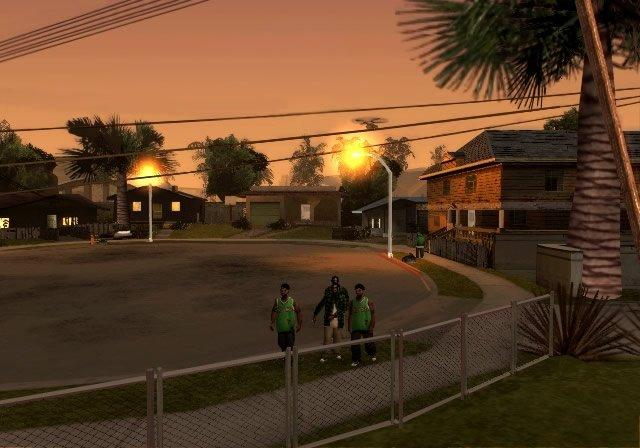
Players took control of protagonist Carl "CJ" Johnson, who returns to Los Santos after five years away following the murder of his mother. In his absence, his family has fractured and his former gang, the Grove Street Families, has lost its territory and influence. CJ's initial return quickly pulls him back into the street conflicts he had sought to escape.
However, the narrative progressively expands well beyond Los Santos. CJ is forced into exile, traversing rural counties, establishing operations in San Fierro, and eventually building an empire in Las Venturas. Through this structure, Rockstar crafted a storyline that systematically guided players across the entire state.
A Dynamic, Evolving World
A defining feature of San Andreas was its introduction of personal progression mechanics on an unprecedented scale. For the first time, players could actively shape CJ’s physical attributes. Exercise, diet, stamina, driving stats, and weapon proficiencies directly impacted performance in various gameplay scenarios.
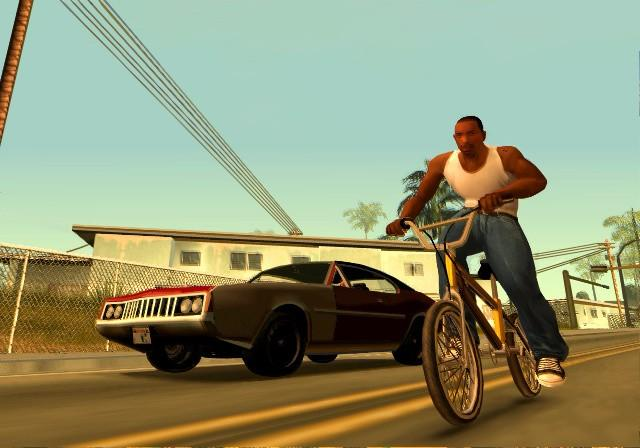
Vehicle options expanded dramatically. Beyond cars and motorcycles, the game added bicycles, fixed-wing aircraft, helicopters, boats, and specialized machinery. This expanded roster was vital not just for gameplay variety, but to provide practical means of traversing the vast world map.
Outside of main missions, the game offered an extensive array of side activities, minigames, and turf wars. This design created a cohesive world rather than a simple collection of narrative checkpoints. Reviewers noted that completing the core story alone required dozens of hours, while a massive portion of optional content remained to be explored independently.
A Focus on Authentic Culture and Atmosphere
While GTA III drew heavily from classic crime cinema and Vice City immersed itself in 1980s pop aesthetics, San Andreas tapped directly into early 1990s West Coast culture.
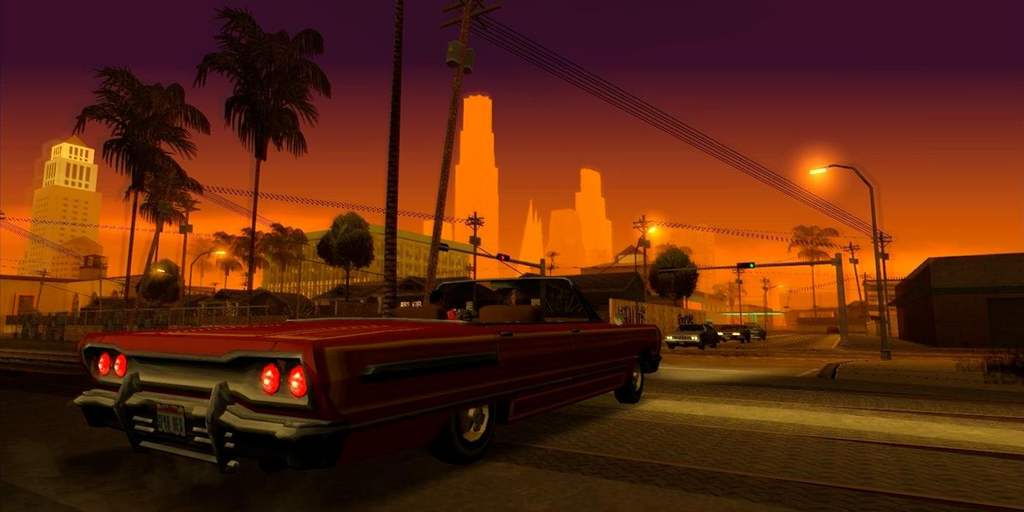
Los Santos and the story of the Grove Street Families relied on visual and narrative themes characteristic of early 90s Los Angeles urban cinema. Rockstar conducted extensive field research and consulted cultural advisors to authentically capture the era's fashion, slang, visual culture, and atmosphere.
Audio design played a pivotal role in this immersion. The game’s multi-genre radio stations made driving across the state an iconic element of the player experience, grounding the environment with period-accurate music and satire.
Release and Critical Reception
Rockstar originally planned to launch San Andreas in North America on October 19, 2004, and in Europe on October 22. The finalized release occurred shortly after: October 26 in North America and October 29 in Europe.
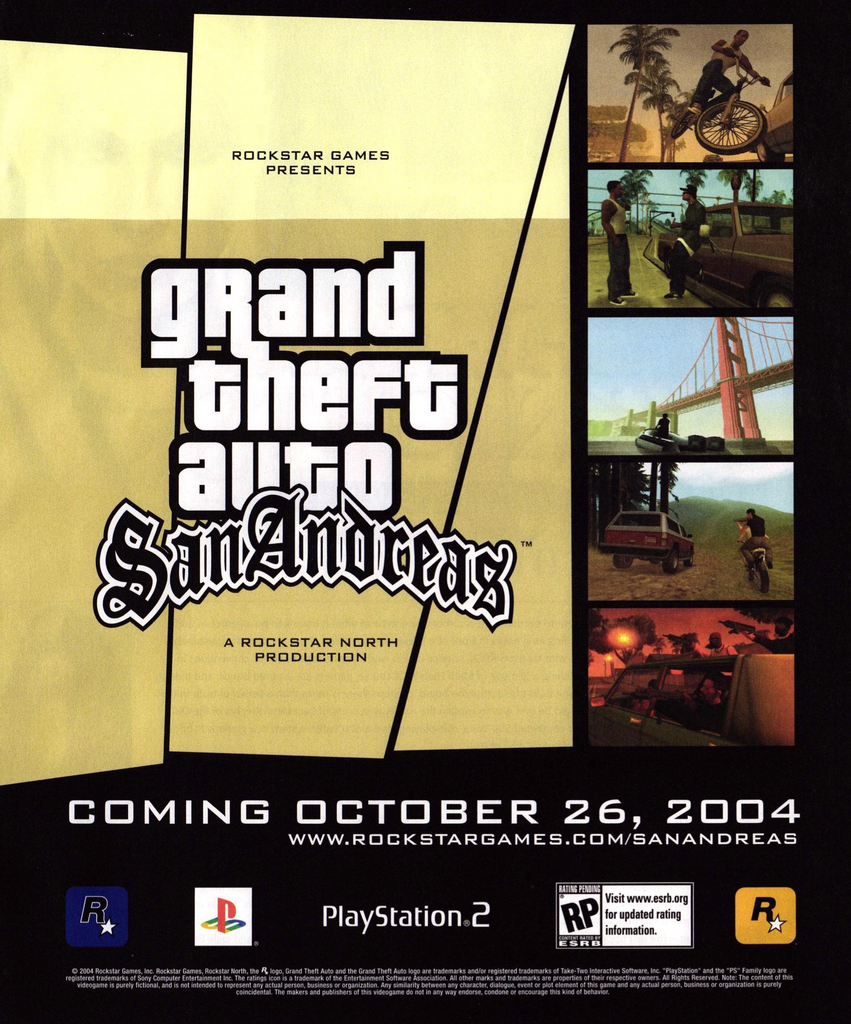
The game achieved widespread critical acclaim. GameSpot awarded San Andreas a 9.6/10, while Metacritic registered a score of 95/100 for the PlayStation 2 version. Critics highlighted the massive scope of the world, the sheer variety of features, and the impressive technical evolution over previous entries.
Commercial success matched the critical reception. Within its first four days, the game generated over $100 million in revenue and sold approximately 2.1 million copies, easily outperforming the launch figures of Vice City.
Defining the PlayStation 2 Era
San Andreas proved pivotal not merely because of its scale, but because it demonstrated how far open-world design could be pushed on sixth-generation console hardware.
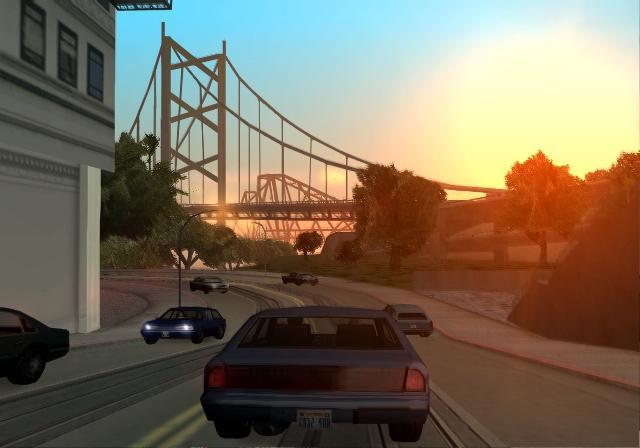
Three cities, rural zones, deserts, mountain ranges, diverse transportation options, and deep RPG-lite progression systems established an unparalleled level of player freedom. Players could follow the narrative campaign or completely step away to explore the state independently.
Ultimately, San Andreas transcended its status as a sequel to become one of the defining titles of the PlayStation 2 era. It proved that a continuation of a franchise could expand beyond incremental map additions to fundamentally redefine the possibilities of open-world game design.
Though San Andreas was later ported to numerous platforms and enjoyed a long lifespan beyond its initial release, October 26, 2004, marked the beginning of a journey into Los Santos, San Fierro, and Las Venturas — creating one of the most iconic landscapes in gaming history.
As a reminder, Tomb Raider — 30 years since the game that turned Lara Croft into a video game icon.