


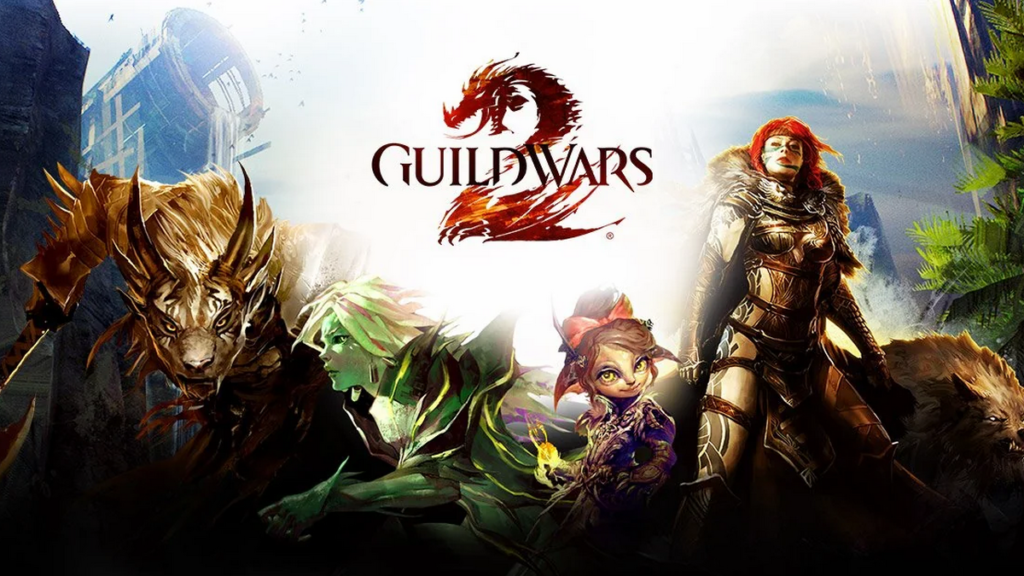
On August 28, 2012, ArenaNet officially released Guild Wars 2 — a sequel to the cult MMORPG Guild Wars. The game became one of the most anticipated MMORPGs of its time and offered players an approach to the open world, quests, and player interaction that was unusual for the genre.

At the time of its release, the MMORPG market already had its established rules. Players were accustomed to traditional quest systems, a clear division of roles into tanks, healers, and damage dealers, as well as regular monthly subscriptions.
ArenaNet decided to challenge almost every one of these rules.
Development of Guild Wars 2 began back in 2006, while the first official details about the game appeared in 2007. ArenaNet wanted to create a larger and more vibrant world than the one featured in the original Guild Wars. It took around five years to create the game. Before release, ArenaNet conducted several beta tests, gradually giving players access to the world of Tyria. And the closer the release came, the more attention was drawn to Guild Wars 2's main feature — a dynamic world.
In traditional MMORPGs, a player would usually look for an NPC with an exclamation mark above their head, accept a quest, complete it, and return for a reward.
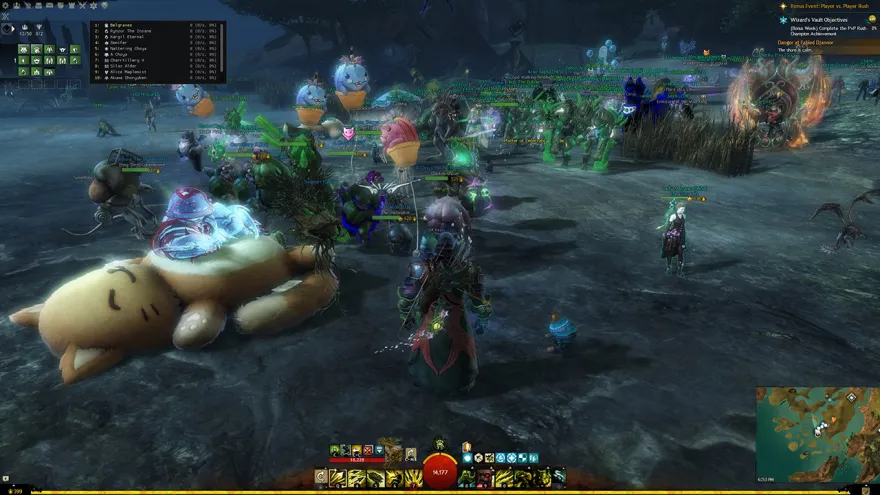
Guild Wars 2 tried to make this process more natural. Throughout the world of Tyria, dynamic events were constantly taking place: enemy attacks, defending settlements, boss battles, and other situations that players could join without first having to accept a quest from an NPC.
Events could change depending on the actions of players, while the scale of some of them adapted to the number of participants. This system became one of the main features of Guild Wars 2.
The idea was simple: the player doesn't look for adventure — adventure finds the player.
Another decision by ArenaNet looked unusual for the genre. Guild Wars 2 had to be purchased, but after that, players did not have to pay a monthly subscription.
At the time, this was a serious challenge to the traditional MMORPG model. ArenaNet was essentially offering players the opportunity to pay for the game itself and then simply play without monthly payments. For 2012, this was a very attractive proposition.
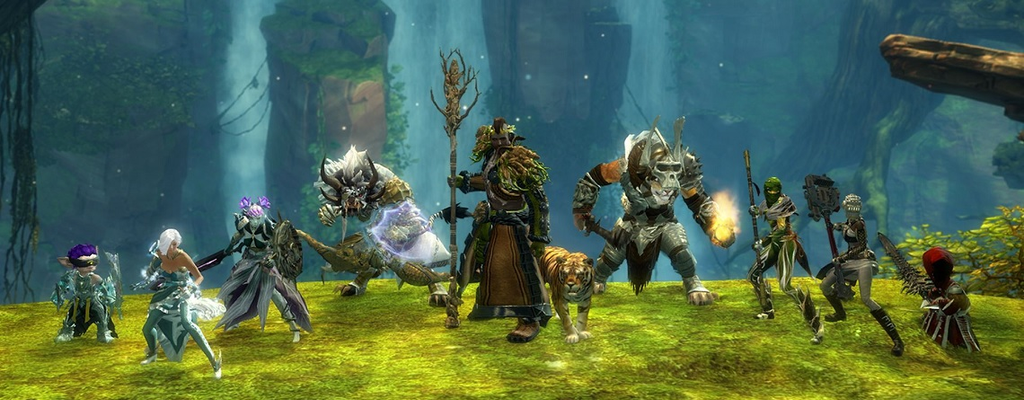
Guild Wars 2 also tried to move away from the traditional role system. The game did not have the classic division between characters who exclusively tank, heal, or deal damage. Each class had significantly more freedom in choosing how to play.
The combat system emphasized movement, dodging, positioning, and active use of abilities. This made combat more dynamic and forced players not simply to watch their ability bars, but to constantly react to what was happening around them.
Another important element was Tyria itself. Players were encouraged not simply to move from one quest to another, but to explore the world, discover hidden locations, participate in events, complete jumping puzzles, and uncover new areas.
The launch version of the game featured huge open areas, dynamic events, a personal story, dungeons, World vs. World, and structured PvP. In this way, ArenaNet tried to create an MMORPG in which every player could find their own way to spend their time.
After several years of development and beta testing, release day finally arrived.
On August 28, 2012, Guild Wars 2 was officially released on PC. Players from around the world were given the opportunity to venture into Tyria. Pre-order customers received early access, while the official launch for everyone else took place on August 28.
The launch was not without the problems typical of a major MMORPG. The huge number of players caused server and access issues. But the scale of interest in the project was obvious.
Guild Wars 2 received very strong reviews. On Metacritic, the game has a score of 90 out of 100 based on 69 critic reviews, with the platform classifying the result as Universal Acclaim.

Critics particularly praised the dynamic events, open world, combat system, and the decision to move away from the traditional monthly subscription.
PC Gamer later called the game an important step in rethinking the genre, highlighting its dynamic events, lack of a strict division into traditional roles, and level-scaling system.
However, not all reviews were unconditionally positive. Some reviewers criticized certain mechanics of the dynamic events and the problems that occurred during launch.
But the overall result was obvious: ArenaNet had managed to offer an MMORPG that stood apart from most of its competitors.
Guild Wars 2 did not destroy the traditional MMORPG model or force the entire genre to abandon subscriptions.
But it showed that a successful MMORPG could operate by different rules.
The absence of a monthly fee, dynamic events, an open world, active combat, and greater freedom for players became important features of the project.
And most importantly — Guild Wars 2 proved that an MMORPG does not necessarily have to make a player spend hours preparing for entertainment. It can simply let them enter the world and start playing.
On August 28, 2012, ArenaNet opened the doors to Tyria.
Many years have passed, but Guild Wars 2 continues to exist and evolve. According to ArenaNet itself, by the game's tenth anniversary, more than 16 million players had entered Tyria.
The history of Guild Wars 2 is the story of how one studio decided to challenge the rules of the genre. And it turned out that players were ready to try something new.
As a reminder, World of Warcraft Classic: How Players Brought Back the Old Azeroth.