


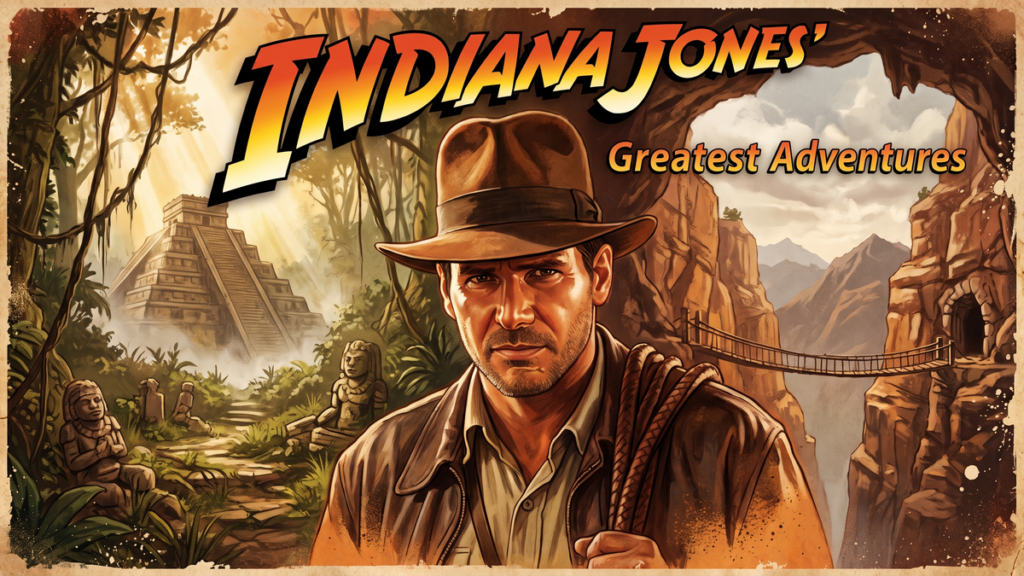
On October 11, 1994, Indiana Jones' Greatest Adventures was released for the SNES in North America. The game was developed by the German studio Factor 5 in collaboration with LucasArts, and published by JVC Musical Industries. In 2026, the project celebrates its 32nd anniversary.
At that time, the cinematic history of Indiana Jones consisted of three films: Raiders of the Lost Ark (1981), Temple of Doom (1984), and The Last Crusade (1989). The developers decided not to limit themselves to a single movie, but rather to combine the archaeologist's most famous adventures into one game.
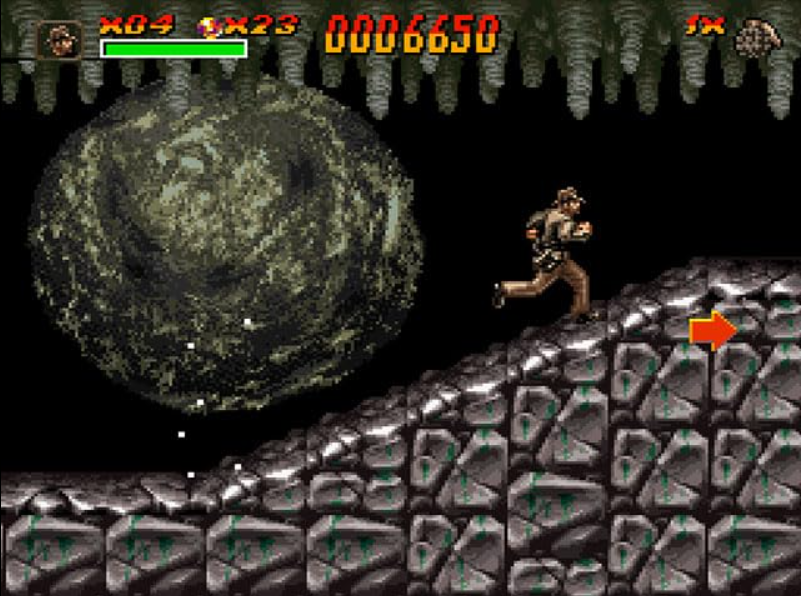
As a result, players received 28 levels dedicated to the events of the entire original trilogy. These included escaping the giant boulder, navigating dangerous dungeons, minecart chases, and the trials on the path to the Holy Grail.

However, it was impossible to play all three stories right away. Initially, only the adventure based on the first film was available, while subsequent parts unlocked as players progressed. A password system was used to return to previously completed stages.
Whip, Traps, and Shootouts: What the Gameplay Was Like
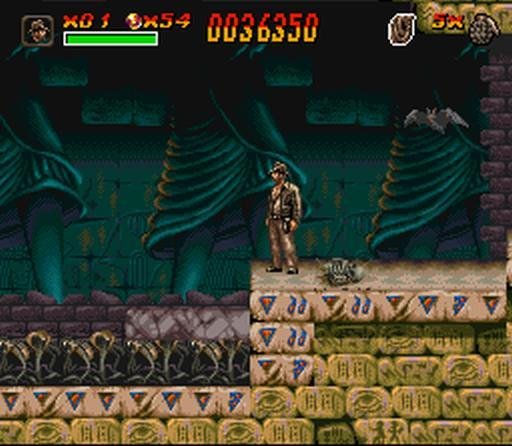
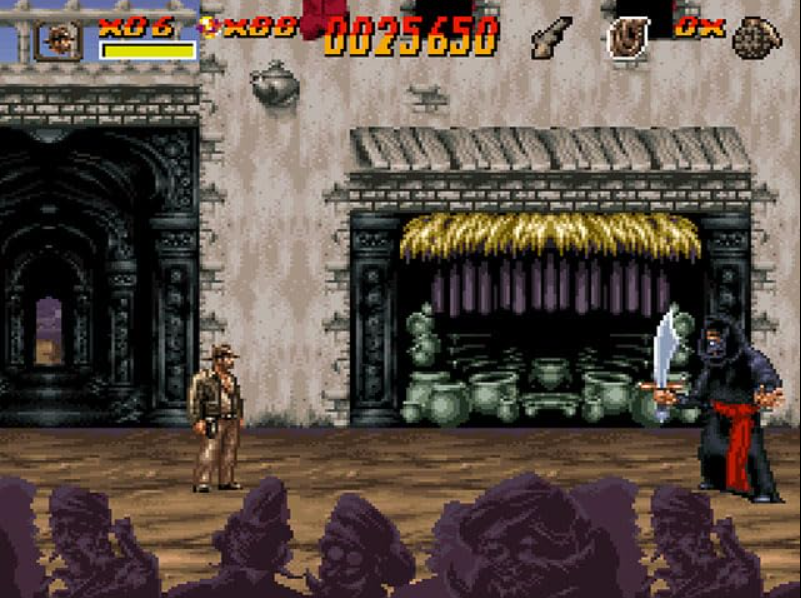
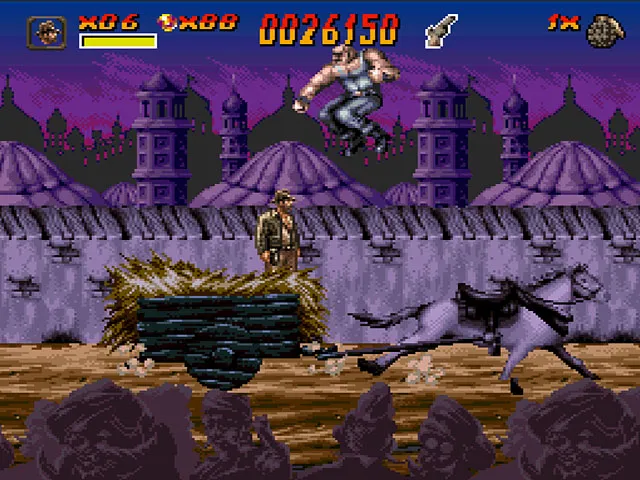
Indiana Jones' Greatest Adventures was a 2D action-adventure platformer with a mostly side-scrolling perspective. The player controlled Indiana Jones, overcoming obstacles, fighting enemies, and trying to survive amidst numerous traps.
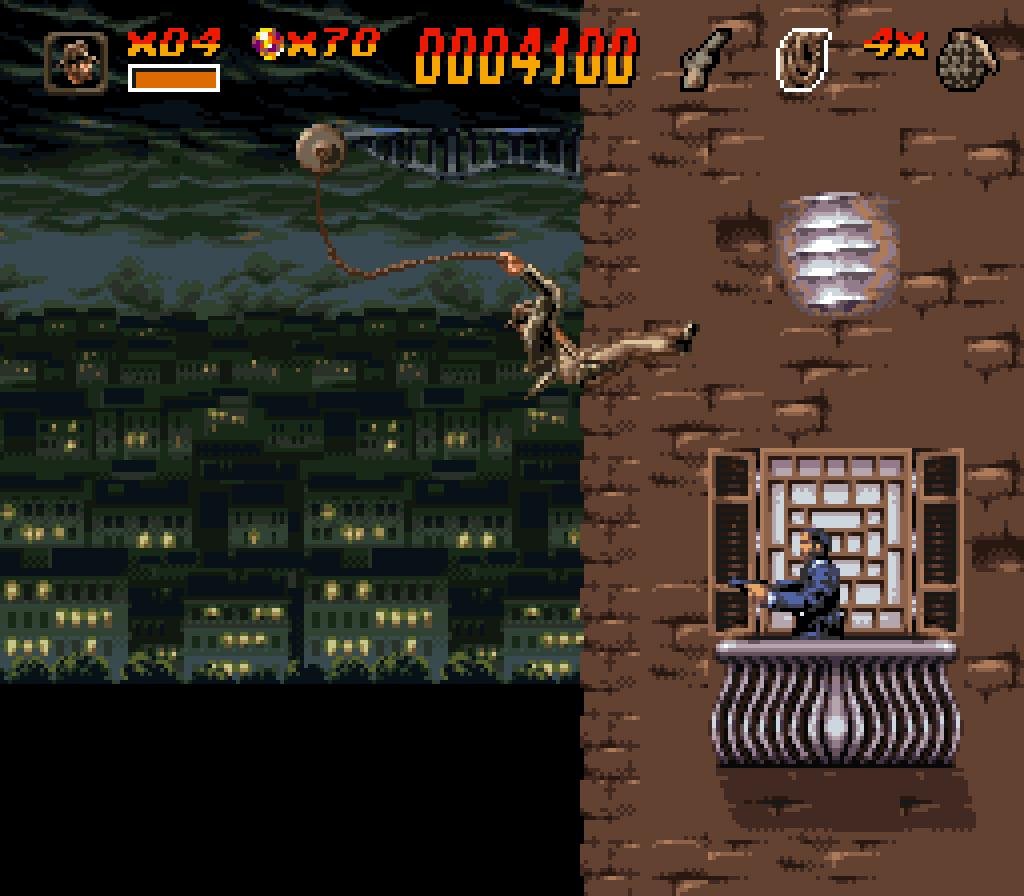
The hero's main weapon, just like in the movies, remained his famous whip. It could be used to attack enemies, as well as grapple onto specific points to swing across chasms. In addition, Indiana could throw punches, roll, and use firearms and grenades.

However, the game was not limited to standard platforming levels. The developers regularly shifted the pace of the adventure, offering players the chance to fly a plane, ride an inflatable raft down mountain slopes, or speed through mine shafts in a cart.
Episodes that recreated iconic scenes from the film trilogy were particularly memorable. For instance, the escape from the giant boulder in the first film became a test of reaction speed, while the minecart ride from Temple of Doom required focus and precise controls.

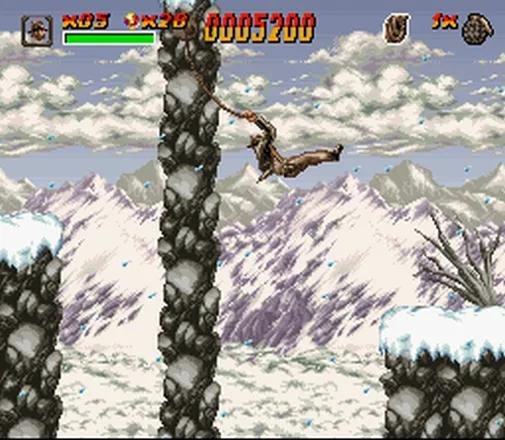
High difficulty was also a significant part of the game. Dangerous jumps, numerous enemies, and the need to react to obstacles in time made a playthrough a serious challenge, even for experienced gamers.
Super Star Wars Technology and the Atmosphere of Big Cinema
One of the standout features of Indiana Jones' Greatest Adventures was its technical foundation. Factor 5 utilized an engine related to the Super Star Wars series, which had already demonstrated the SNES's capabilities in creating dynamic platformers based on popular movies.
Thanks to this, the game featured highly detailed environments for its time, varied animations, and action-packed levels. Certain episodes utilized the Mode 7 graphics mode, which allowed background images to be rotated and scaled, creating an effect of spatial movement.


Special attention was paid to the musical accompaniment. Rudolf Stember served as the game's composer, and the soundtrack included adaptations of John Williams' famous melodies. The music helped convey the atmosphere of the films, even considering the technical limitations of the 16-bit console.
Text inserts and still images were used to tell the story, introducing players to the events of the movie trilogy. In this way, Indiana Jones' Greatest Adventures attempted to blend recognizable cinematic moments with the mechanics of a classic console platformer.
The Sega Mega Drive Version That Never Saw the Light of Day
Interestingly, Indiana Jones' Greatest Adventures could have appeared on more than just the Super Nintendo. The developers were also working on a version for the Sega Mega Drive, known in North America as the Sega Genesis.
The project was in such an advanced stage that it was shown to the gaming press, and some magazines even managed to publish reviews. However, it never reached an official release.
In 2017, Factor 5 co-founder Julian Eggebrecht explained that one of the reasons for the cancellation was the situation with U.S. Gold, a company that was ceasing operations. As a result, the Sega Mega Drive version remained unpublished, despite the work completed by the developers.
For the game's history, this became a fascinating example of how a nearly finished project could fail to reach store shelves due to circumstances entirely unrelated to its gameplay qualities.
A Second Life on the Nintendo Wii
After its original release, Indiana Jones' Greatest Adventures didn't disappear completely. On November 16, 2009, the game became available in North America through the Virtual Console service on the Nintendo Wii, and it reached the European market on April 23, 2010.
This allowed a new generation of players to experience Indiana Jones' adventures without needing an original SNES and a 1994 cartridge.
The re-release also served as a reminder of an era when major cinematic franchises were actively adapted for 16-bit consoles, and developers strived to recreate familiar scenes using platforming mechanics, pixel art, and music.
32 Years Later: What Indiana Jones' Greatest Adventures is Remembered For
Today, Indiana Jones' Greatest Adventures remains a fascinating representative of the 16-bit gaming era. It didn't try to tell a new story about the famous archaeologist; instead, it allowed players to personally experience the most famous adventures from the original movie trilogy.
The game combined platforming, combat episodes, chases, and reaction tests, constantly changing the pace of the playthrough. At the same time, its high difficulty brought back memories of times when even scenes familiar from the movies could turn into a serious ordeal for a console owner.

32 years later, Indiana Jones' Greatest Adventures is interesting not only as just another movie-licensed game but also as an example of the methods 1990s developers used to port major cinematic stories to home gaming systems.
And while technology has changed beyond recognition over these decades, the core idea remains the same: Indiana Jones' adventures always begin where danger, mystery, and another ancient artifact await the hero.
As a reminder, Team Fortress 2 — The Story of the Shooter That Became a Cult Classic Thanks to Humor and Hats