


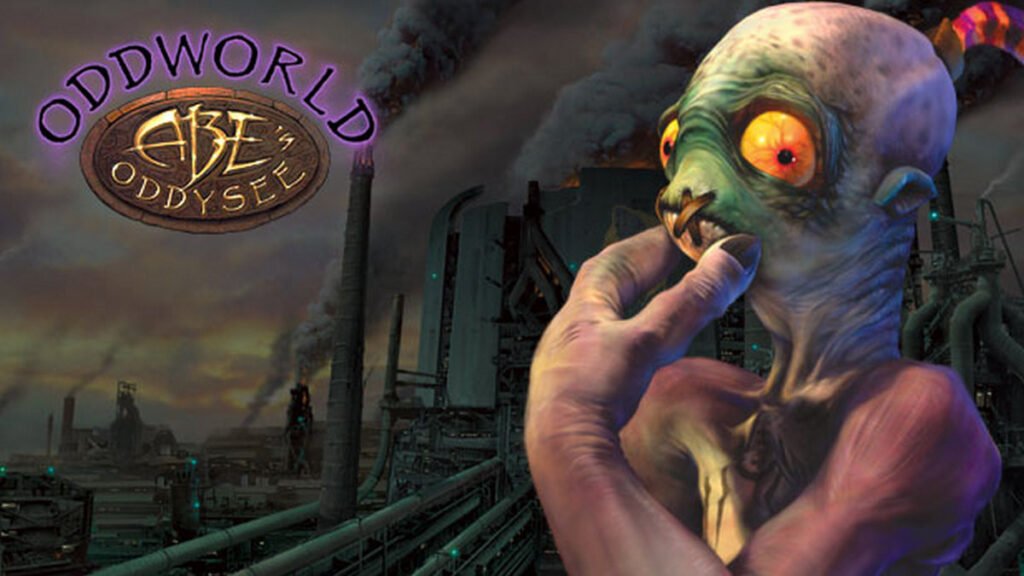
On September 19, 1997, Oddworld: Abe’s Oddysee was released — the debut game from Oddworld Inhabitants studio, which later became one of the most recognizable platformers of the original PlayStation era. It was with this game that the story of Abe began — a clumsy, frightened, but remarkably charismatic Mudokon who, instead of a typical warrior hero, was given a completely different role: to save his fellow Mudokons from being turned into food.
Interestingly, there is a slight confusion regarding the release date. Some catalogs point to September 18, 1997, as the date of the first American release, while Oddworld Library records September 19 as the release date for the game on PlayStation in North America and PAL regions. It was September 19 that the developers called "Odd Friday," so for historical material, this date can be used as the official date to celebrate the release.
Oddworld Inhabitants was founded by Lorne Lanning and Sherry McKenna, and work on the upcoming game began back in January 1995. Initially, the project had the working title Soul Storm. After GT Interactive became interested as a publisher, the title changed several times until the team settled on Oddworld: Abe’s Oddysee. The game's first closed demonstration was shown at E3 1996, and by E3 1997, a version much closer to the final build was presented.
From the very beginning, the main highlight of the project was its hero. At that time, video games often relied on strong, confident, and almost invulnerable characters. Lanning and McKenna wanted to create something opposite — a hero who looks oppressed and insecure, but precisely because of this evokes sympathy from the player. In a 1997 interview, Lanning explained that the team deliberately did not base the character on any specific archetype, but rather tried to create a character that players had never seen before.
Thus Abe was born, a Mudokon working as a janitor at the massive meat processing plant RuptureFarms. All his life, he considered himself an ordinary worker and never even thought about what was happening around him. But one day, he accidentally learns about the plant management's plans: due to falling profits, the company decides to use the Mudokons themselves as a new product. For Abe, this becomes a moment after which returning to his former life is no longer possible.
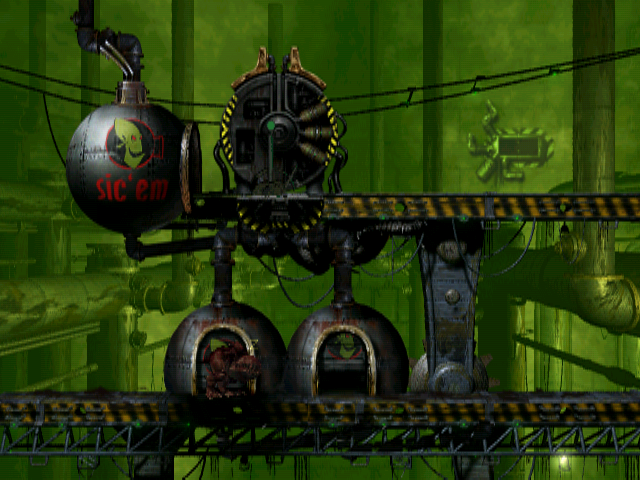
This is where the game transforms from an unusual platformer into a story of escape and rescue. Abe doesn't just try to get out of RuptureFarms — he gradually realizes that he must return for the other Mudokons. And this directly influenced gameplay: saving other characters became one of the key elements of the game, and the outcome depended on how many Mudokons the player was able to save.
This also explains one of the main mechanics of Abe’s Oddysee — GameSpeak. Abe can communicate with other creatures using simple sounds and commands. At first glance, this seems like a humorous feature, but the mechanic was an important part of the design: the developers wanted to make interaction between characters a central part of the adventure. According to Lanning, GameSpeak helped the player become more attached to the characters and feel them to be part of a living world.
Even more interesting was the ability to possess other creatures. Abe could use his abilities to control enemies and force them to help him. Therefore, progression often required observation and an understanding of how characters and the environment interact, rather than quick reactions.
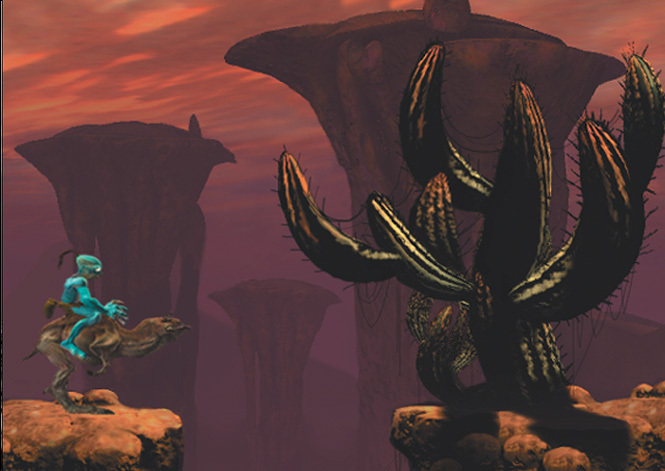
The developers also paid enormous attention to how the game looks and feels. Lanning and McKenna had experience in computer graphics and film, so Abe’s Oddysee actively used a cinematic presentation, seamless transitions between scenes, and detailed character animation. The team consisted of approximately 25 people, with four artists working on graphics. According to the developers, they strove not merely to showcase technology, but to make the characters feel like living inhabitants of this world.
At the same time, during production, intended content had to be cut. For example, creatures called Meeches were originally planned for the game, but due to disc space limitations, the team was forced to cut them. This is one example of how much the technical limitations of the original PlayStation impacted the developers' ambitions.
As a result, Abe’s Oddysee became more than just another platformer. The game combined platforming, puzzles, stealth, NPC interaction, and cinematic presentation. At the same time, it didn't try to make progression as comfortable as possible: the player had to experiment, memorize enemy behavior, and think ahead.
After release, the game received significant critical acclaim. GameSpot rated it 8/10, and Metacritic gave it 85/100. The official Oddworld website also lists a whole series of awards and nominations, including nominations for graphics, sound, and music, as well as honors for direction and voice acting.
Commercial success allowed Oddworld Inhabitants to continue the planned story. The very next year, Oddworld: Abe’s Exoddus was released, directly continuing Abe's adventures. Over time, the character became the central figure of an entire franchise, while Abe’s Oddysee itself remained the starting point for the Oddworld universe.
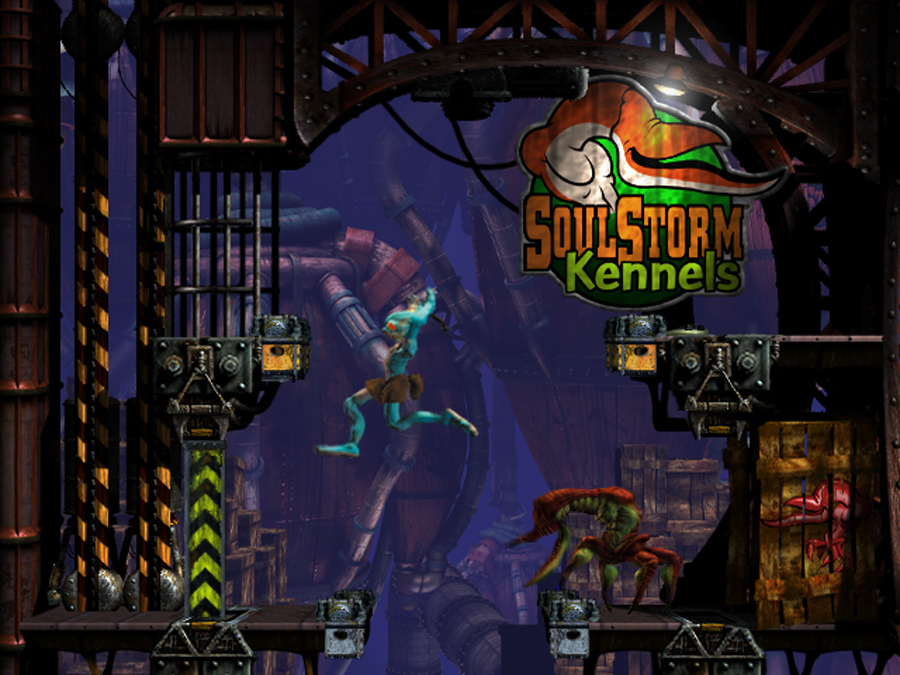
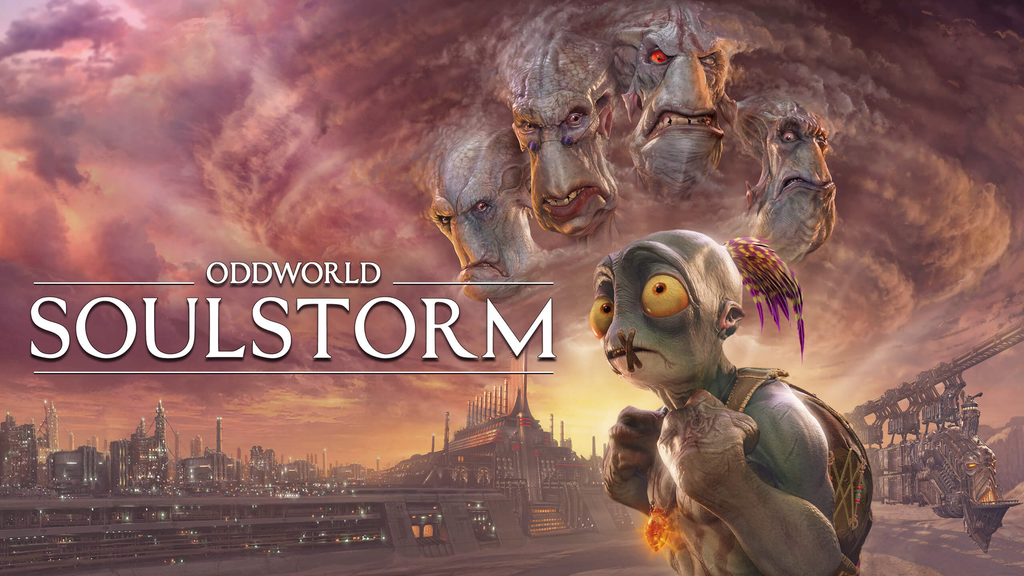
Many years later, the original game found new life. In 2014, a full remake, Oddworld: New ’n’ Tasty!, was released, reimagining Abe's first adventure with modern 3D graphics. And in 2021, Oddworld Inhabitants released Oddworld: Soulstorm — a reimagining of the story continuing events after the fall of RuptureFarms. The developers themselves noted that they wanted to tell a significantly deeper and darker version of the story that they couldn't fully realize in the original.
Oddworld: Abe’s Oddysee became an example of how an unusual idea can stand out even among a vast number of platformers. Instead of yet another hero who simply defeats enemies, players were offered a timid worker who gradually transforms into the leader of a rebellion. And instead of a standard set of power-ups and enemies — a world where communication, helping others, and attentiveness could be more important than strength.
It was this uniqueness that made Abe one of the icons of the PlayStation era. Nearly three decades after its release, his first adventure still remains one of the most notable stories of how a small and completely unheroic character can challenge an entire system.
As a reminder, Borderlands 2: how Gearbox turned frantic gunplay into one of the most vibrant RPG shooters.