


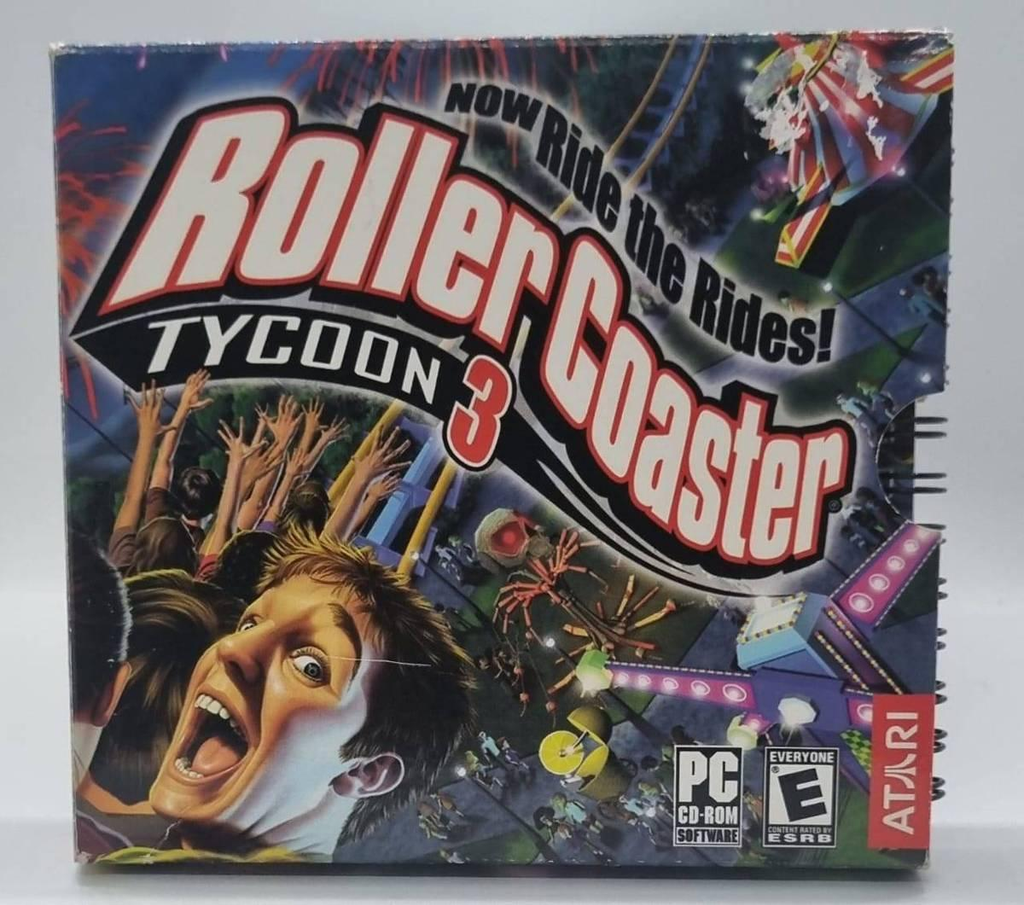
On November 2, 2004, RollerCoaster Tycoon 3 was released on PC — the third main installment in the famous theme park simulation series. The game became an important milestone for the franchise, as it fully transitioned from isometric graphics to a three-dimensional world for the first time. Players could not only build their own parks, but also actually ride the attractions they created and experience them from a visitor’s perspective.
The game was developed by British studio Frontier Developments, while the creator of the first two installments, Chris Sawyer, served as a consultant on the project. The team faced a difficult task: modernize a series that already had a huge audience while preserving the simplicity and freedom that players loved.
After the Success of the First Two Games
The history of RollerCoaster Tycoon began in 1999. The first game offered an unusual concept for its time: instead of managing a city or transportation network, players were given their own amusement park. They had to build attractions, lay out paths, install shops, hire staff, and keep visitors happy.
By the time the third installment was announced, the series had already become a major commercial success. In March 2004, when Atari announced the development of RollerCoaster Tycoon 3, the first two games had sold more than 7 million copies combined.
However, the second installment did not deliver the same kind of technological leap that many expected from a sequel. RollerCoaster Tycoon 2 largely expanded on the established formula, so the third game was planned as a much bigger change.
That change was full 3D.
Frontier Gets the Chance to Change the Series
Atari entrusted the development of the third installment to British studio Frontier Developments. The studio already had experience working on simulation games and was familiar with Chris Sawyer’s approach to the series.
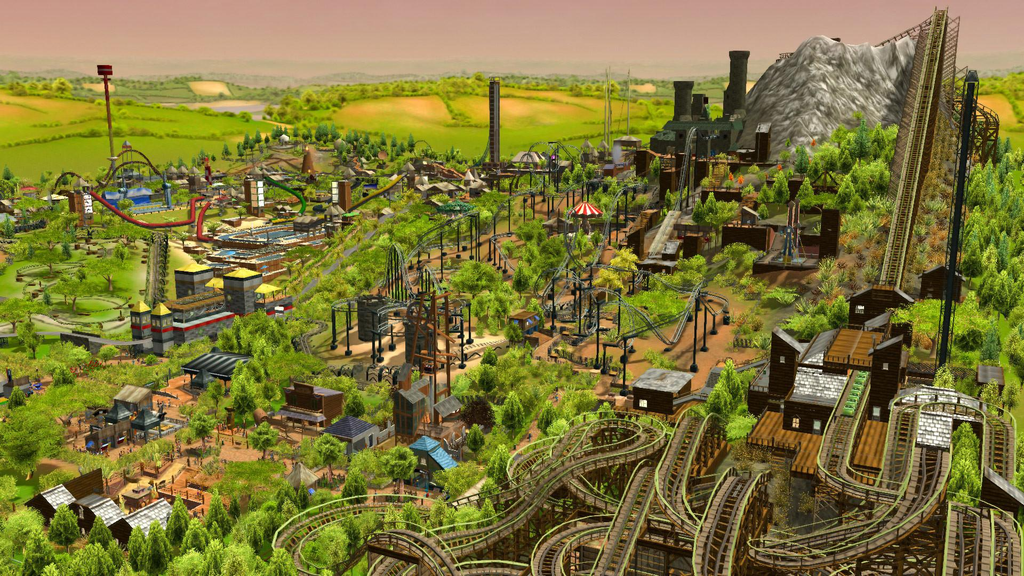
In early 2004, Atari officially announced the project and immediately highlighted its main feature — a fully three-dimensional world. Players could freely move the camera around the park, view it from different angles, and zoom in on individual attractions.
But Frontier did not stop at simply introducing new graphics. The team wanted players to feel like more than just park managers — they also wanted them to experience their own parks as visitors.
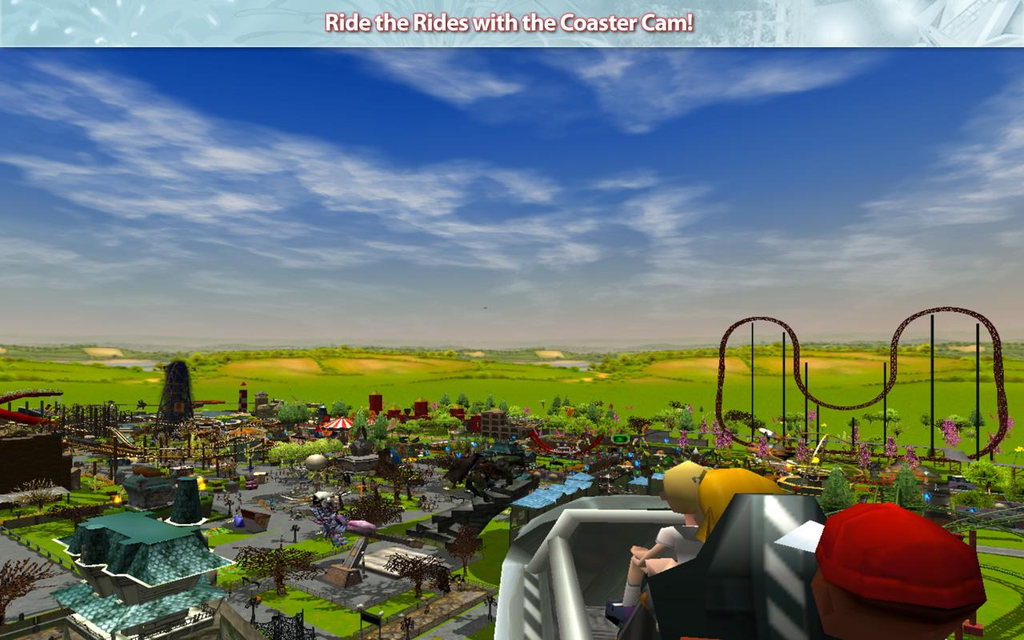
That was why CoasterCam was introduced, allowing players to sit on the roller coasters they had built and ride them from a first-person perspective.
This became one of RollerCoaster Tycoon 3’s defining features. Players could now do more than simply observe an attraction from the outside — they could actually experience it themselves.
Visitors Became More Lifelike
The transition to 3D allowed Frontier to significantly expand the behavior of park visitors, known in the series as peeps.
In RollerCoaster Tycoon 3, they received more variations in appearance, age, and behavior. Visitors could arrive in groups, move around the park, use attractions, buy food and drinks, and react to what was happening around them.
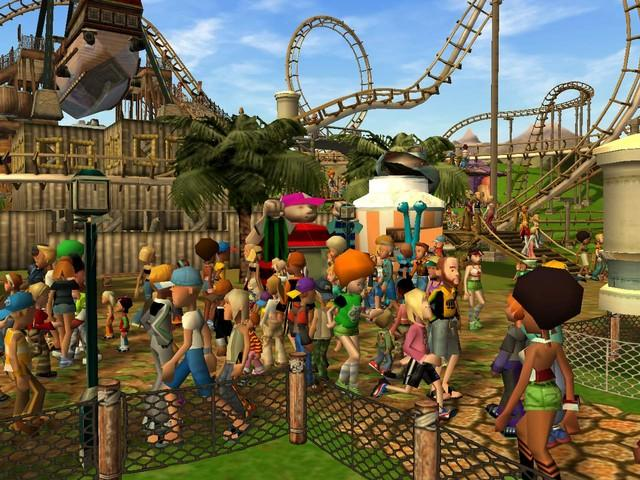
The park itself also became much more detailed. The game featured more than 170 attractions, including roller coasters, water rides, shops, and various decorative objects.
A full day-and-night cycle was also introduced. This affected not only the park’s appearance but also made the world feel much more alive visually.
Your Own Park Without Limits
One of the most anticipated new features was sandbox mode.
In previous games in the series, much of the experience revolved around completing scenarios and meeting specific objectives. RollerCoaster Tycoon 3 finally allowed players to completely ignore financial restrictions and simply build the park of their dreams.
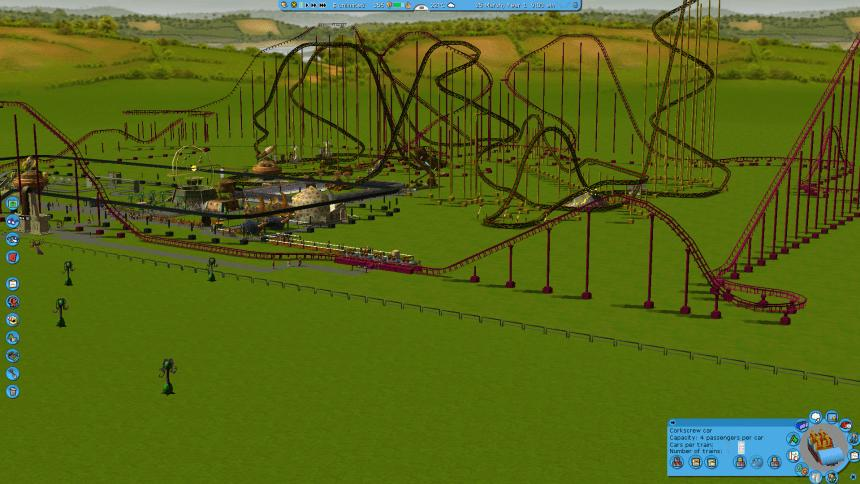
Traditional scenarios remained available for players who enjoyed management challenges. The base game included 18 scenarios, each with its own conditions and objectives.
This allowed Frontier to appeal to two different types of players at once: those who wanted to complete challenging economic objectives and those who simply wanted to create massive parks.
Fireworks You Could Create Yourself
Another major new feature was the Fireworks MixMaster.
Players could create their own fireworks shows and synchronize them with music. For a series that had previously focused heavily on economics and construction, this was another step toward creative park design.
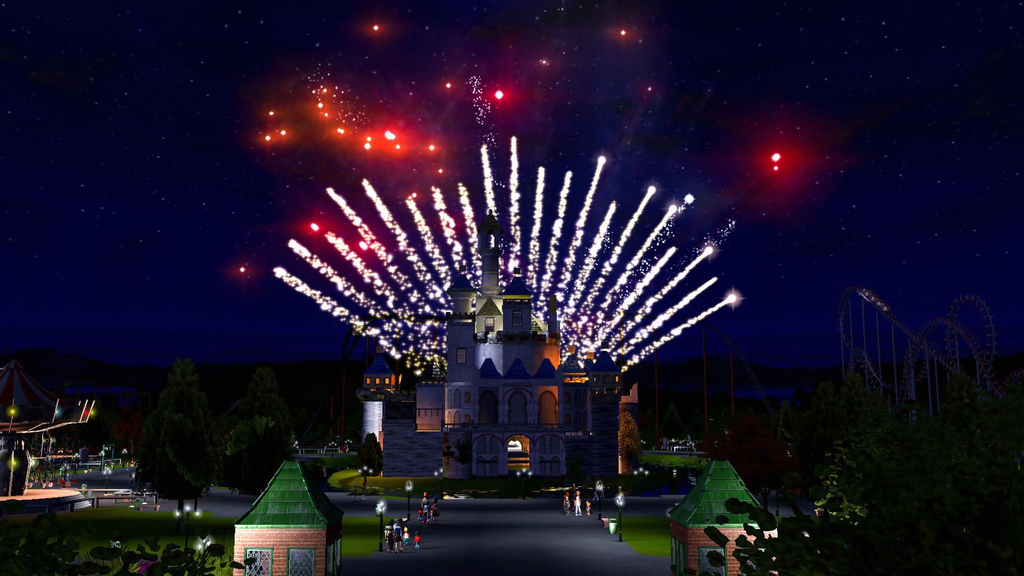
RollerCoaster Tycoon 3 essentially allowed players to create not just a park, but an entire show — complete with custom attractions, decorations, visitor routes, and nighttime fireworks.
A Major Leap That Came at a Cost
Despite Frontier’s ambitions, the game’s launch was not perfect.
Critics praised the transition to 3D and the amount of new content, but they also pointed out technical issues. RollerCoaster Tycoon 3 had noticeable bugs at launch, while large parks could significantly reduce performance. GameSpot gave the game 7.8/10, praising its graphics, amount of content, the ability to ride attractions, and create fireworks shows.
Despite these issues, the game received an overall positive response. It holds a Metacritic score of 81/100 based on 39 critic reviews.
Frontier continued supporting the project after launch, releasing updates and expansions.
Soaked! Came First
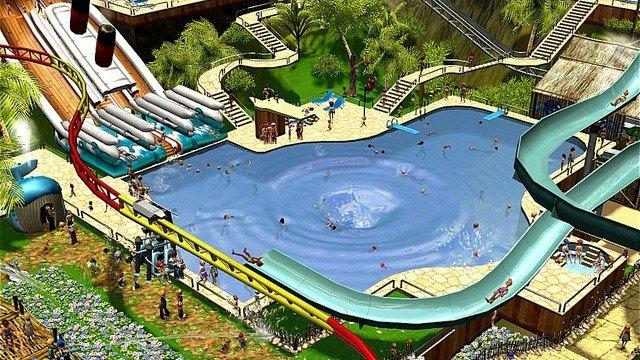
In June 2005, the first major expansion, RollerCoaster Tycoon 3: Soaked!, was released.
It expanded the park concept with water-based attractions. Players received swimming pools, water slides, and new rides. The expansion also helped address some of the original game’s issues.
Later, in October 2005, the second expansion, Wild!, was released. It added animals and new features related to zoos.
As a result, RollerCoaster Tycoon 3 gradually became a much larger simulation experience than it had been at launch.
Commercial Success
Despite the problems with the initial version, RollerCoaster Tycoon 3 became a major commercial success.
In November 2004, the game quickly climbed Amazon’s sales charts and soon became the best-selling PC game on the platform. According to NPD, it ranked 9th among the best-selling computer games in the United States in 2004, before rising to 5th place the following year.
In 2013, Frontier reported that RollerCoaster Tycoon 3 had sold approximately 7 million copies on PC and Mac during the nine years following its release.
In 2015, Frontier CEO David Braben stated that total sales of the game had surpassed 10 million copies.
For a game released in 2004, that represented an exceptionally long commercial lifespan.
A Game That Outlived Its Generation
RollerCoaster Tycoon 3 did not remain exclusively a PC game from the mid-2000s.
A Mac version was released in 2005, while the game reached iPhone and iPad in 2015. In 2020, Frontier and QLOC released RollerCoaster Tycoon 3: Complete Edition, which included the original game and both expansions. It later arrived on modern consoles as well.
In 2024, Atari regained publishing rights to RollerCoaster Tycoon 3 after acquiring the game from Frontier. The company described it as one of the most successful projects in the franchise.
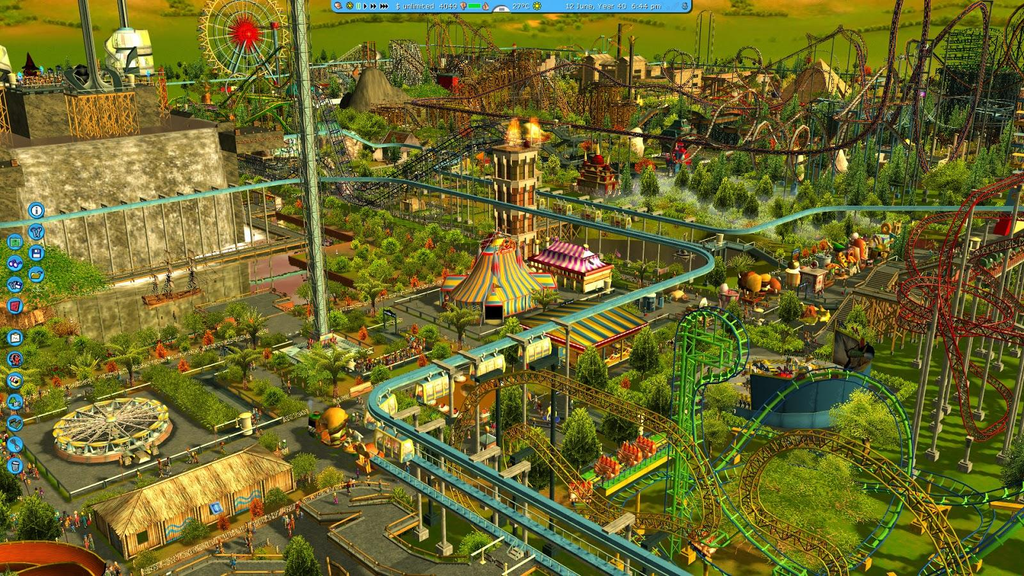
The influence of RollerCoaster Tycoon 3 can also be seen in Frontier’s later history. Ten years after its release, the studio began working on Planet Coaster, a new theme park simulation game. Frontier’s experience working on RollerCoaster Tycoon 3 helped the studio return to the genre.
The Legacy of RollerCoaster Tycoon 3
RollerCoaster Tycoon 3 became an important milestone in the history of the series. Frontier did not simply move the established formula into 3D — it changed the way the game itself was experienced.
The park could now be viewed from any angle, visitors became more detailed, players could ride their own roller coasters, create fireworks shows, and build enormous parks in free-play mode.
At the same time, the game preserved the core idea of RollerCoaster Tycoon: the player receives the tools, and it is up to them to decide what their park will become.
On November 2, 2004, RollerCoaster Tycoon 3 demonstrated that a classic simulation game could successfully enter a new technological era without losing its core appeal. That is why, more than two decades after its release, the game remains one of the best-known entries in the series and an important chapter in the history of construction and management simulations.
As a reminder, Uncharted 3: Drake’s Deception — how Naughty Dog created one of the most ambitious adventures of the PS3 era.