


On September 4, 2013, Outlast was released — the first major game from the Canadian studio Red Barrels. At launch, it was a relatively small indie project that offered a very simple concept: send the player into an eerie psychiatric hospital, take away their weapons, and leave them virtually defenseless against enemies.

Today, Outlast is considered one of the most famous modern survival horror games. It is recognized even by people who have never played it: a dark hospital, a night-vision camera, batteries, chases, and the need to hide have become defining icons of the genre. But the path to this outcome began long before its release.
Red Barrels was founded in 2011 by Philippe Morin, David Chateauneuf, and Hugo Dallaire. Prior to this, the developers worked at major companies and had experience creating AAA titles. Notably, Morin worked on Uncharted: Drake’s Fortune at Naughty Dog and later returned to Ubisoft Montreal.
After working at major studios, the team decided to try creating their own game. The founders had long wanted to make a horror title, but implementing such an idea within big publishers was difficult. In 2011, the developers left Ubisoft and began working on their own project, with horror quickly emerging as one of the primary ideas.
Interestingly, one of Outlast's most important mechanics came after watching Chris Cunningham's "Rubber Johnny" music video set to Aphex Twin's music. It was the night vision and distorted imagery that gave the team a direction that later became one of the game's core features.

In the early 2010s, survival horror was gradually evolving. Major franchises like Resident Evil leaned increasingly toward action, while indie developers sought to bring back a sense of helplessness to the genre.
One such example was Amnesia: The Dark Descent. Outlast followed a similar path but banked on a more cinematic presentation.
The protagonist, Miles Upshur, is an investigative journalist who arrives at Mount Massive Asylum after receiving anonymous information about illegal experiments. He is neither a soldier nor a special agent. He has no gun, knife, or other weapon — only a camera.
This exact detail formed the bedrock of the game’s design. The camera allowed seeing in the dark via night vision, but required batteries to operate. They had to be constantly scavenged, meaning that the simple ability to see one's surroundings became a resource to manage. At the same time, enemies could not simply be defeated. In most dangerous situations, all the player could do was run, hide, and wait. Fear stemmed not from the enemy being strong, but from the player being weak.
Red Barrels relied on more than just jump scares. The asylum served as a massive tool for atmospheric worldbuilding. Dark corridors, blood, bodies, noises behind doors, screams of patients, and a constant sense that danger could lurk around the next corner worked in unison.
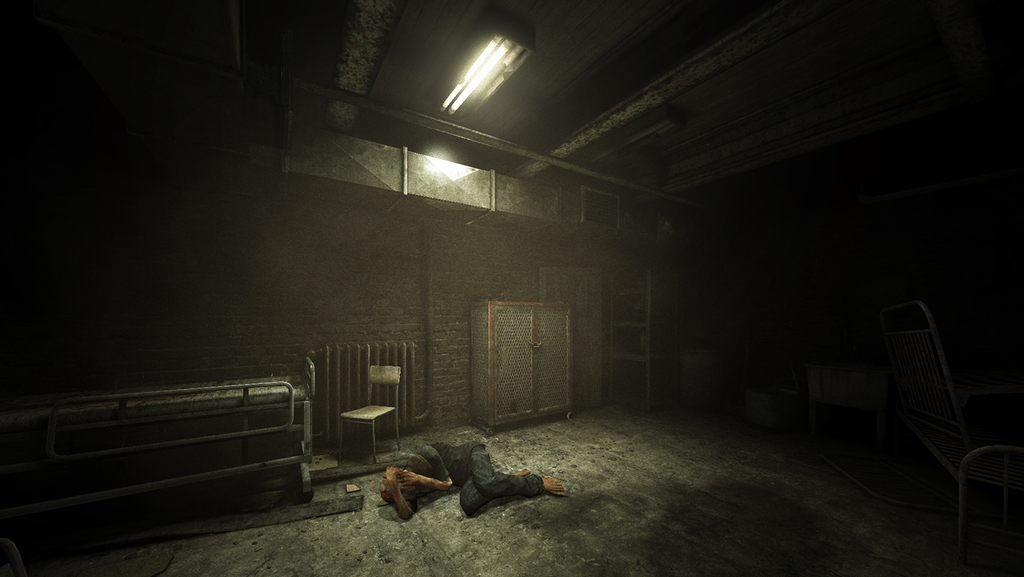
The story was also conveyed through documents, notes, and environmental storytelling. Players gradually uncovered the history of the Murkoff Corporation, its experiments on patients, and the events that led to the catastrophe. Despite this depth, the game was relatively short, with a playthrough taking roughly six to seven hours. While some critics viewed this as a drawback, for a small indie title, this concise runtime prevented the horror atmosphere from wearing thin.
Upon release, Outlast received mostly positive reviews. On Metacritic, the PC version holds an 80/100 based on 59 reviews, with a user score of 8.2/10. Critics particularly praised the atmosphere, sound design, visuals, and the night-vision mechanic. GamingTrend awarded the game a 93/100, highlighting its blend of eerie atmosphere, visual style, and camera mechanics. Edge rated Outlast a 90/100, specifically noting its mix of stealth, platforming, and horror elements.
However, the game was not without flaws. PC Gamer gave Outlast a 75/100, praising the atmosphere and effective scare moments while noting that the gameplay lacked variety across its full duration. Other critics pointed to repetitive chase sequences and an over-reliance on jump scares. A positive reception did not mean it was deemed a flawless horror title.
Nevertheless, it accomplished Red Barrels' primary objective: Outlast was genuinely terrifying to play. Beyond gameplay, one of the crucial drivers of Outlast's success was the timing of its release.
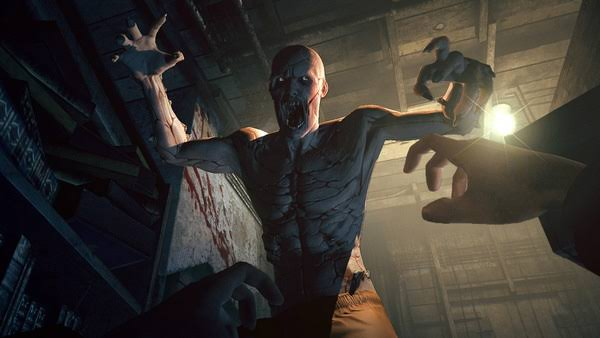
In 2013, YouTube was already a massive platform for Let's Plays, and horror games were a perfect fit for the format. A gamer sits in a dark room, hears an odd sound, opens a door — and seconds later, an enemy jumps out. For a casual play session, it's just a jump scare; for a YouTube video, it's a highly dramatic reaction captured on camera. Outlast rapidly gained popularity among gaming content creators and streamers. Reactions to the game effectively transformed its terrifying moments into a standalone form of entertainment.
This proved to be a pivotal shift for the industry as well: horror increasingly began functioning not just as a game for the person holding the controller, but as content for an audience watching someone else play.
Following the success of the original game, Red Barrels expanded the franchise. In 2014, Outlast arrived on PlayStation 4, later coming to Xbox One and Nintendo Switch. In 2017, Outlast 2 released, taking the series' core formula to a new setting with a fresh story. In 2024, Red Barrels launched The Outlast Trials on consoles — a co-op game that adapted the familiar weaponless horror concept into a multiplayer format.
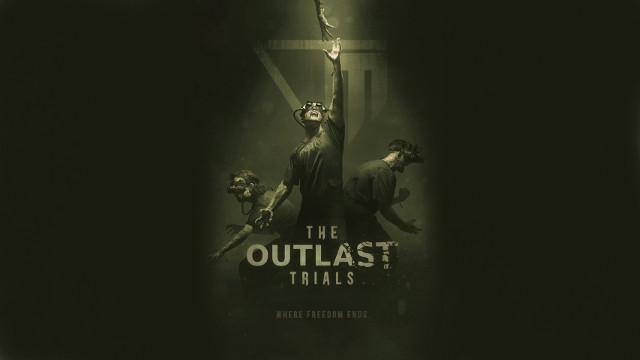
Over time, the scale of the franchise grew far beyond what anyone expected from a small 2013 release. In 2024, Red Barrels reported that the Outlast series as a whole had surpassed 37 million sales.
Calling Outlast the game that invented modern survival horror would be inaccurate; titles like Amnesia, Penumbra, and others where players had to flee rather than fight already existed. However, Outlast popularized this approach and made it mainstream. Following its success, indie horror developers leaned even harder into weaponless protagonists, chase sequences, hiding mechanics, night vision, and cinematic jump scares.
Not all subsequent games copied Outlast directly, but its formula became embedded in the language of modern horror. Its influence extends beyond gaming itself — Outlast was one of the prime titles demonstrating how effectively horror could thrive in the era of Twitch, YouTube, and content streamers.
Perhaps Outlast's greatest contribution lies not in any single mechanic, but in how seamlessly it integrated multiple elements. The camera wasn't just a tool for seeing in the dark — it became a core part of the atmosphere. The lack of weaponry forced players to genuinely fear enemies. Limited battery life sustained constant tension. Meanwhile, the asylum setting, sound design, lighting, and chase choreography welded everything into a cohesive horror experience. This is why, years later, Outlast remains one of the most recognizable indie games of its generation.
On September 4, 2013, Red Barrels didn't reinvent the horror genre. But it showed just how terrifying a video game can be when you strip away the player's ability to fight back, leaving them with only one objective: survive.
As a reminder, Total War: Rome II — a return to Rome that became one of Creative Assembly's biggest releases.