


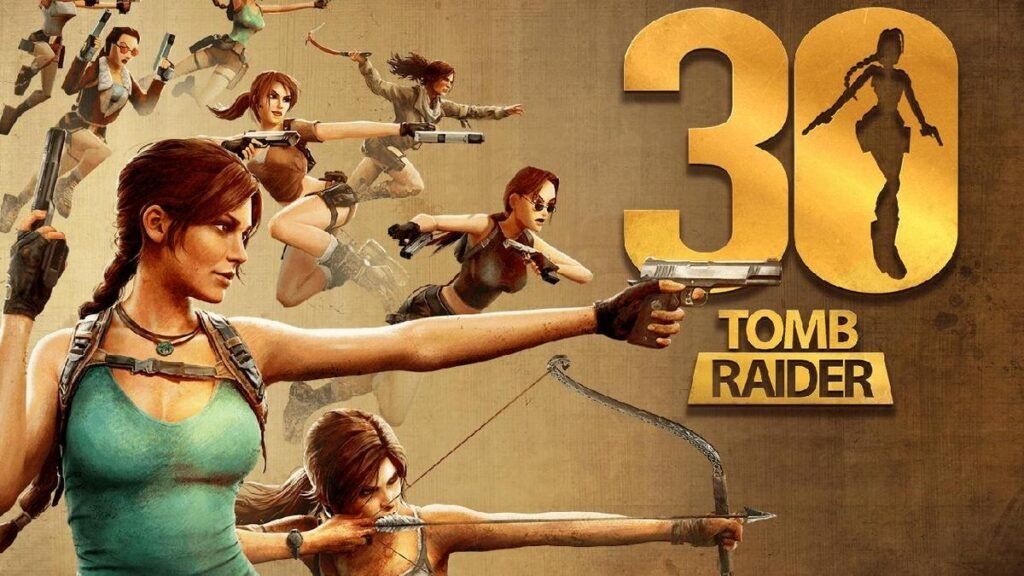
On October 25, 1996, Tomb Raider was released — an action-adventure game by the British studio Core Design that introduced Lara Croft to the world. Combining 3D location exploration, platforming, puzzles, and gunplay, the developers created one of the most recognizable games of the early 3D graphics era.
In 2026, Tomb Raider celebrates its 30th anniversary. Over this time, the franchise has spanned dozens of games, reboots, film adaptations, and studio changes, while Lara Croft has evolved into one of the most iconic heroines in video game history.
It all began with a small team at Core Design and an idea that was exceptionally ambitious for the mid-1990s.
A Game That Barely Existed at the Time
Development of Tomb Raider began at British studio Core Design in the mid-1990s. One of the main creators of the concept was Toby Gard. The team wanted to build a third-person 3D action-adventure game where players could fully explore the surrounding world rather than just move forward and shoot.

For the mid-1990s, this represented a major technical challenge. The developers needed to create large 3D environments, a camera system, platforming, swimming, climbing, puzzles, and a combat system — and make all these mechanics work seamlessly together.
In an early design document for Tomb Raider, the creators outlined five main components of the game: exploration, platforming with jumping and climbing, combat, puzzle-solving, and avoiding traps. Among their inspirations, the developers cited Prince of Persia, Ultima Underworld, Doom, and Dungeon Master, but sought to combine these familiar elements into their own 3D adventure.
Gavin Rummery, a programmer on the early titles, later recalled that when he first heard the game's concept, he wasn't even sure it was possible to implement, as the team had never built anything like it before.
Lara Croft Could Have Been Entirely Different
One of Core Design's most pivotal decisions was its choice of protagonist.
Toby Gard wanted to avoid creating another muscular male hero, typical of action movies and video games at the time. Instead, he decided to make the lead an athletic woman who relied on agility alongside strength.
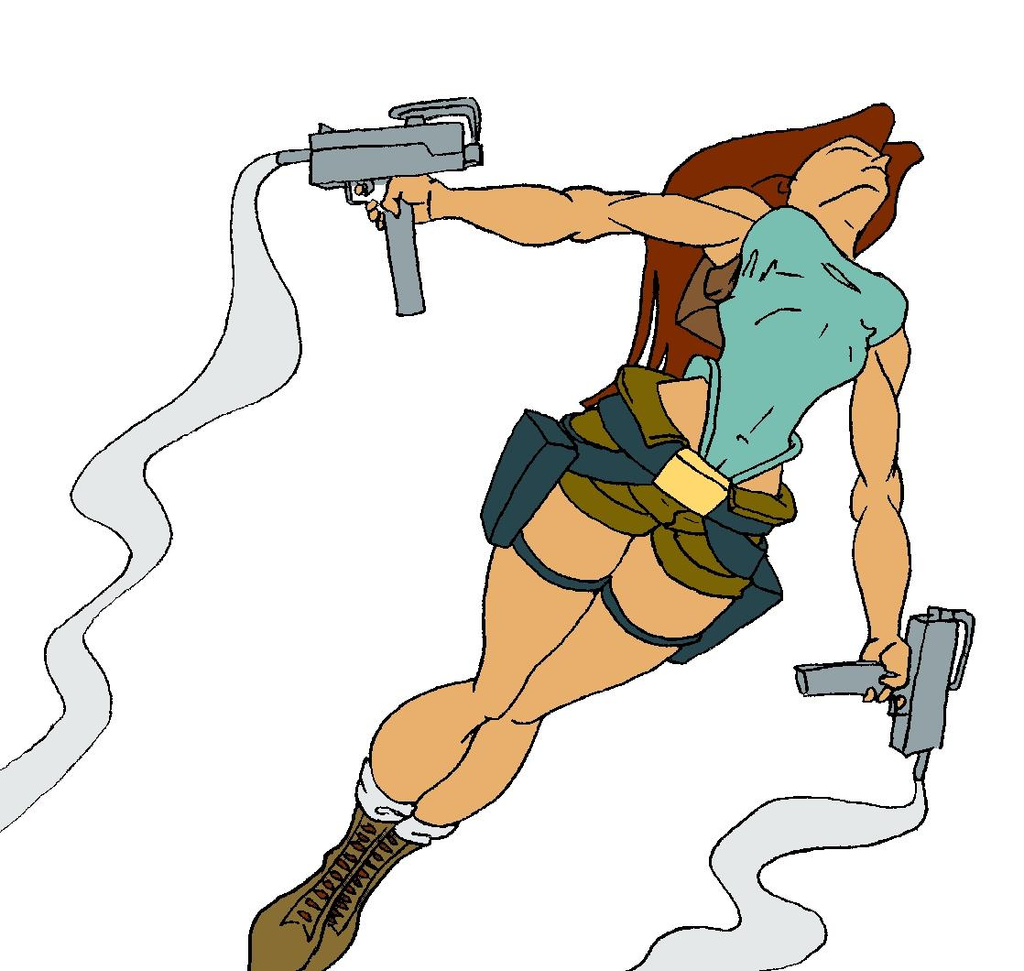
The character's design evolved during development. In early stages, she was named Laura Cruz and was of South American origin. Gradually, the concept was reworked, and she became the British adventurer Lara Croft.
In 1996, this was a bold design choice. While women had previously starred in video games, large-scale 3D adventures centered around a female protagonist were far less common.
Eventually, Lara herself became the main symbol of Tomb Raider — so recognizable that her popularity extended far beyond the game itself.
Exploration Over Pure Shooting
Tomb Raider stood apart from many action games of its era due to its pacing.
Players explored ancient tombs, caves, and ruins, searched for levers and keys, solved puzzles, avoided traps, and figured out how to navigate to the next section of a level.
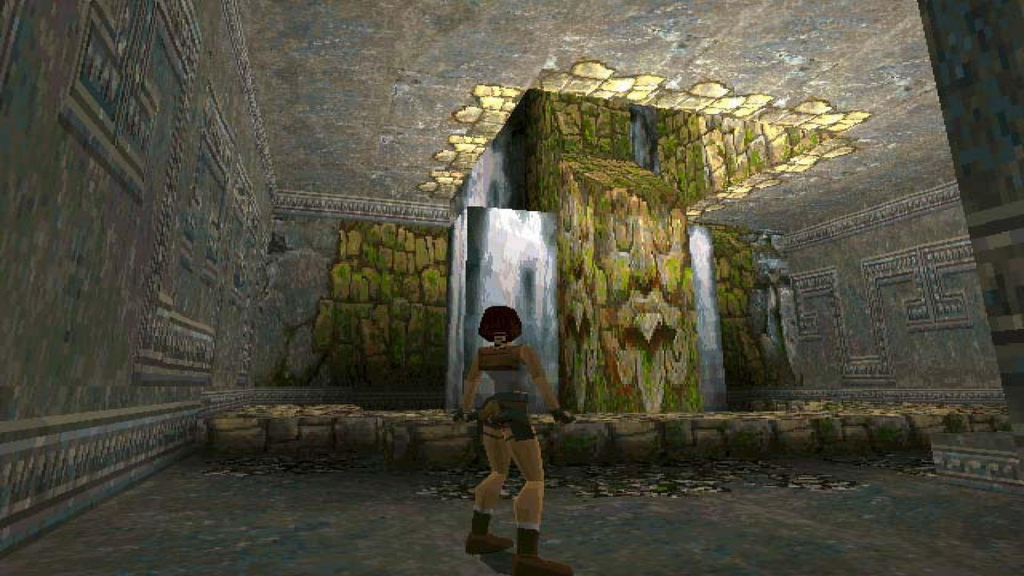
Lara could run, jump, swim, ledge-grab, and traverse large 3D spaces. Jumps required precise distance calculations, and a single wrong move could result in a fatal fall.
Exploration was a core design pillar. Tomb Raider didn't just showcase 3D environments — it challenged players to learn how to navigate within them.
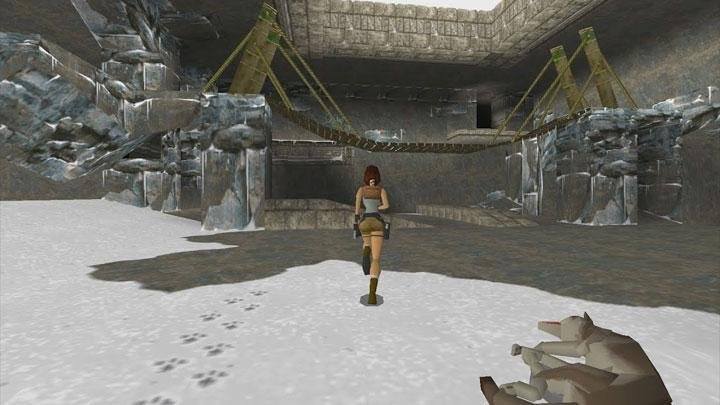
This was complemented by firefights against animals and other foes, hidden secrets, and unexpected moments. One of the most famous encounters was a sudden attack by a massive T-Rex, which became one of the most iconic scenes in the original Tomb Raider.
Sega Saturn, PlayStation, and PC
Tomb Raider was created for the Sega Saturn, PlayStation, and PC, with development across platforms running in parallel.
The Sega Saturn version has a particularly interesting history. The Saturn served as a primary platform during early development, despite its complex architecture for 3D graphics. In Europe, Sega secured a brief exclusivity window, making the Saturn version the first console release.
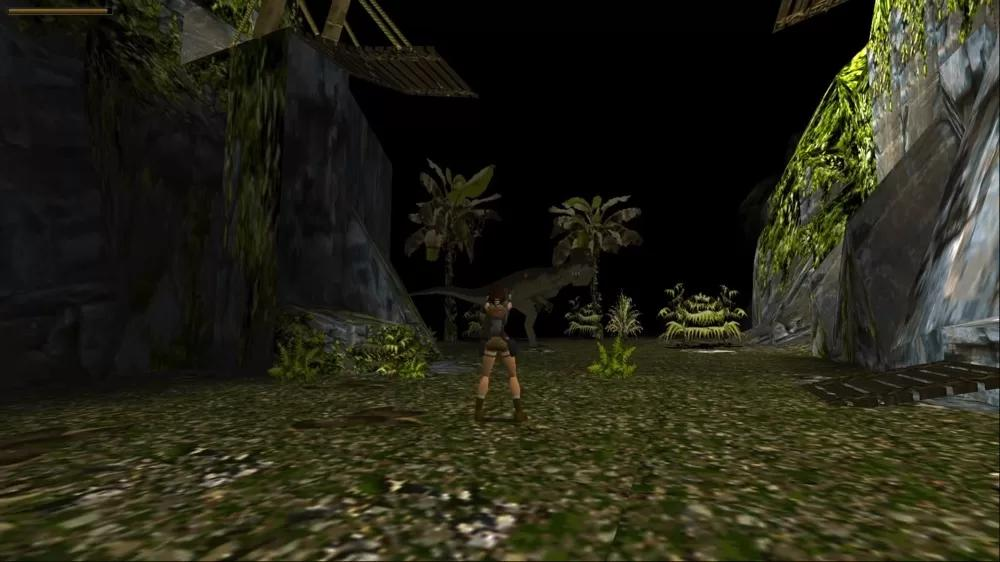
However, in mainstream pop culture, Tomb Raider became most closely associated with the PlayStation. The popularity of both the game and Lara Croft aligned perfectly with the period when 3D graphics were rapidly becoming the new industry standard.
Tomb Raider arrived in the right place at the right time: a new generation of consoles needed games to showcase 3D capabilities, and Core Design delivered an adventure built entirely around exploring 3D space.
Unexpected Success at Core Design
Prior to release, even the creators didn't anticipate how massive Tomb Raider would become.
According to former Eidos chief Ian Livingstone, company budget forecasts projected sales of around 100,000 copies. The actual outcome was drastically different — the original Tomb Raider ultimately sold over 7 million units.
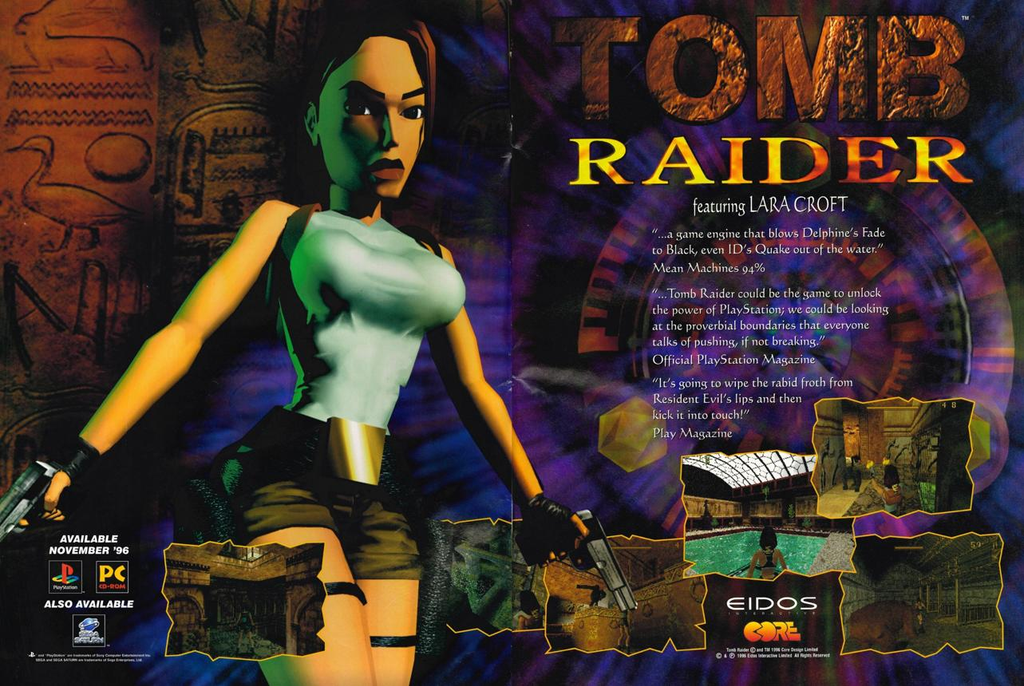
For Core Design, this launched a massive franchise; for Lara Croft, it marked a transition from a single-game character into a global cultural phenomenon.
She appeared well beyond the covers of gaming magazines. Tomb Raider spawned sequels, comic books, commercials, extensive merchandise, and eventually Hollywood films.
In 2024, the franchise owners reported that cumulative sales of Tomb Raider games had crossed 100 million copies worldwide.
30 Years Later
Three decades on, the original Tomb Raider looks very different from modern action-adventure titles. By today's standards, its tank controls, blocky level geometry, and iconic low-polygon Lara model clearly betray its age.
Yet this single game laid the foundation for the entire series. Exploring ancient ruins, deadly traps, acrobatics, puzzles, and artifact hunting remain embedded in Tomb Raider's DNA across numerous sequels and reboots.
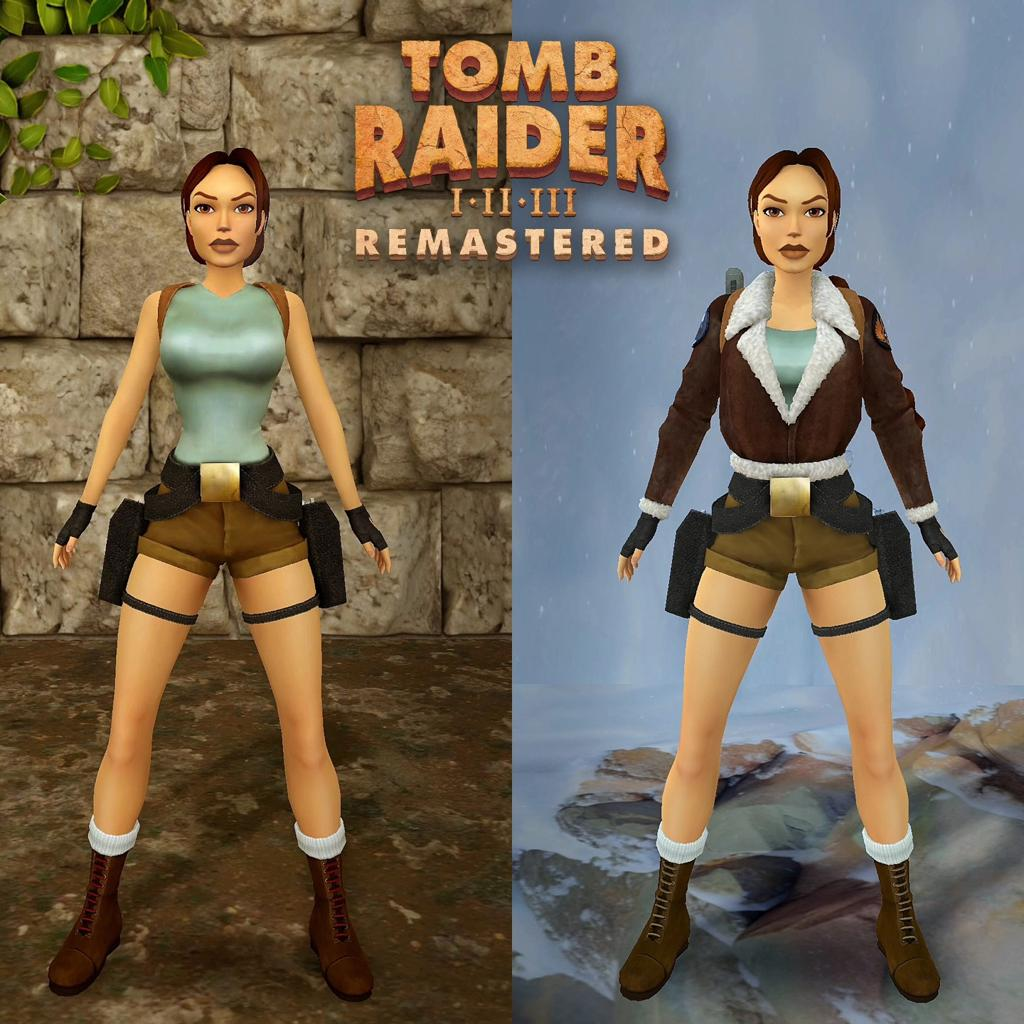
To mark the franchise's 30th anniversary, its owners scheduled celebrations throughout 2026. Over the decades, Lara has spanned multiple console generations and several reinterpretations, but the story of one of gaming's most legendary heroines began with a small British team and an ambitious attempt to create a 3D adventure that barely existed at the time.
On October 25, Tomb Raider turns 30 — a game that didn't just launch an iconic adventure series, but established Lara Croft as a symbol of an entire era in gaming.
As a reminder, Super Punch-Out!! — the boxing game that turned every match into a puzzle.