


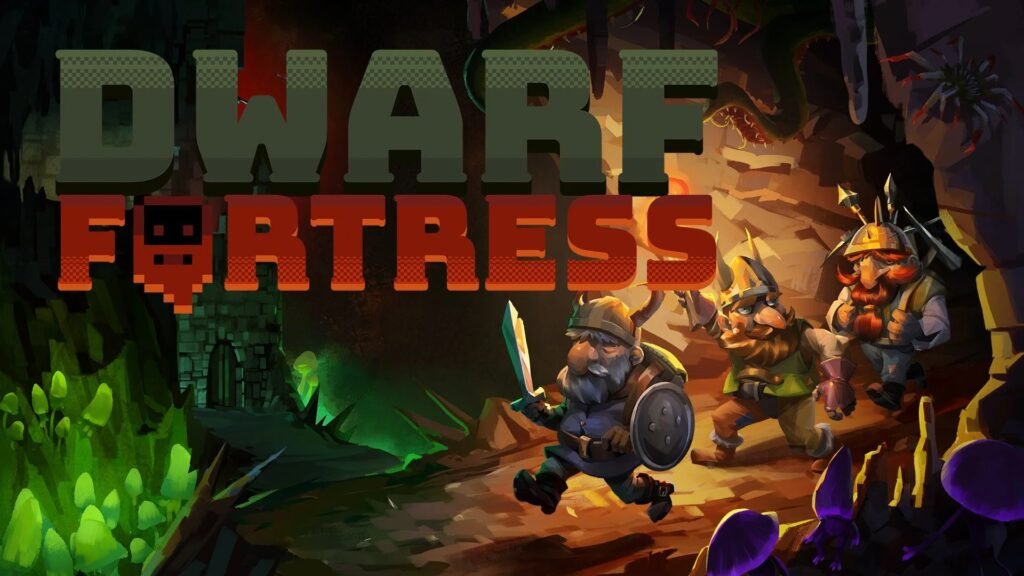
On August 8, 2006, the first public release of Dwarf Fortress arrived — a game that would eventually become one of the most famous examples of just how far an independent developer can go when building a complex simulation. Over two decades, the project not only survived multiple generations of gaming technology but also became an inspiration for Minecraft, RimWorld, Prison Architect, and many other games.
Today marks 20 years since the first public release of Dwarf Fortress. At the same time, its history goes back even further: development began in 2002, meaning almost 24 years have passed since the Adams brothers' earliest experiments. And, perhaps most importantly, the game is still actively being developed.
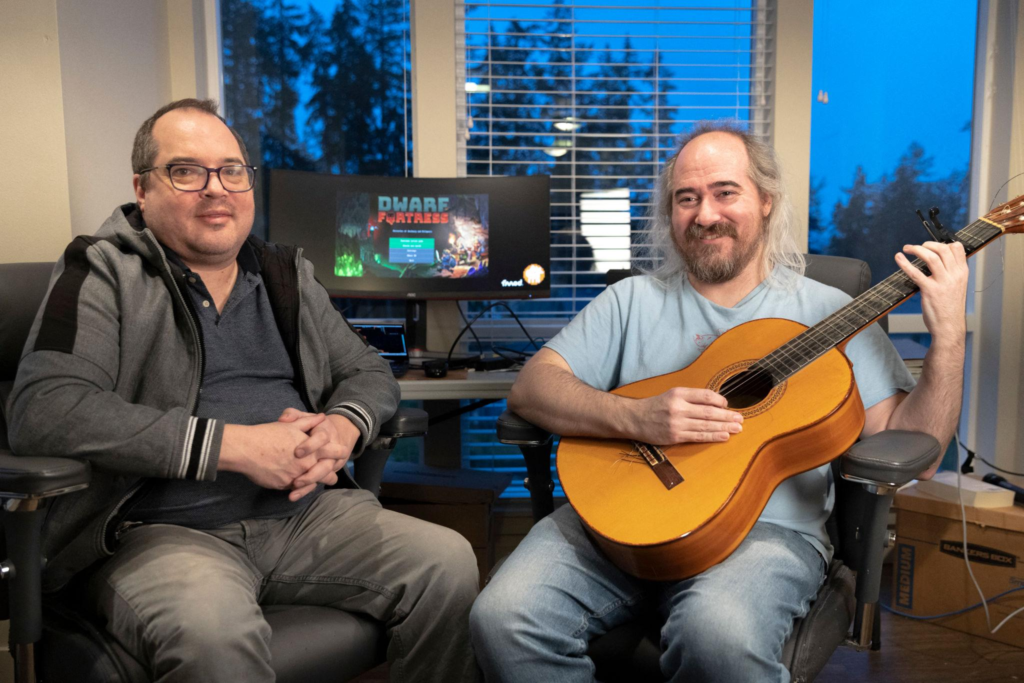
Behind Dwarf Fortress are brothers Tarn and Zach Adams, who work under the name Bay 12 Games. The idea for what would become Dwarf Fortress began taking shape back in 2002. At first, Tarn viewed the project as a small experiment that was supposed to take roughly two months.
But the idea quickly grew into something much more ambitious.
Before Dwarf Fortress, Tarn had worked on Slaves to Armok: God of Blood, while the brothers had also created earlier text-based projects, including dragslay. Their experience with text-based games, simulations, and fantasy worlds gradually led them toward the concept that would become Dwarf Fortress.
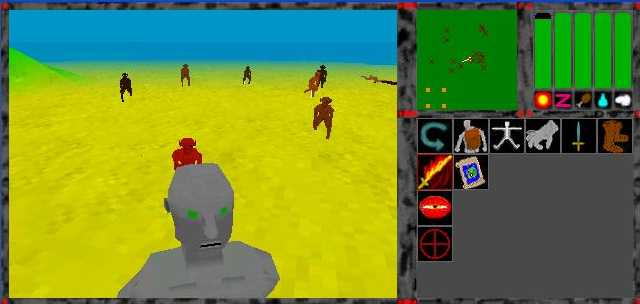
The game was initially connected to the Armok series and carried the rather unusual full title Slaves to Armok II: Dwarf Fortress. Over time, however, it became clear that the simulation of dwarf life had far greater potential.
In 2004, Tarn decided to focus entirely on Dwarf Fortress. Instead of creating a conventional game with a predetermined storyline, the brothers began building a system capable of generating its own world, history, civilizations, characters, and events.
That approach became the foundation of everything Dwarf Fortress represents today.
After several years of development, the first public alpha version of Dwarf Fortress — 0.21.93.19a — was released on August 8, 2006. It was not a finished game in the traditional sense, but rather an ongoing experiment that would continue evolving alongside its developers and community.
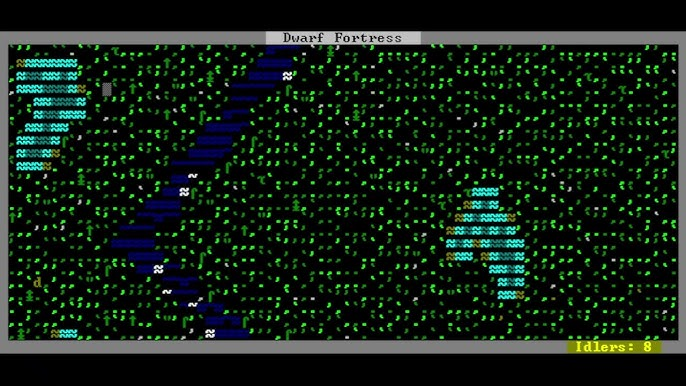
At the time, few could have imagined that this release would mark the beginning of a 20-year history.
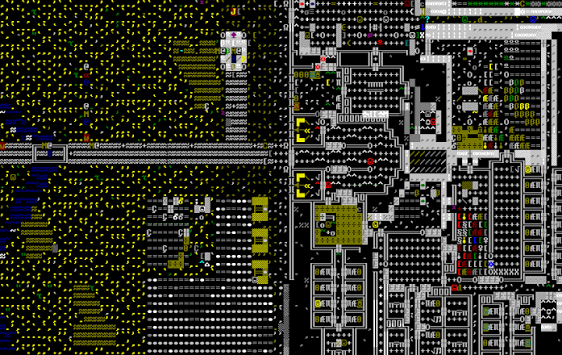
Dwarf Fortress did not feature the kind of graphics players were accustomed to. Its world was displayed through ASCII characters, letters, numbers, and special symbols. A player could look at the screen and see a collection of symbols where one character represented a dwarf, another an animal, while different colors and symbols conveyed information about the surrounding world.
For a modern player, this can look extremely intimidating.
But that was also the secret behind Dwarf Fortress.
Instead of spending resources on advanced graphics, the developers focused on simulation.
The game could simulate character traits, needs, professions, relationships, world history, wars, civilizations, animals, economics, and countless other systems. This is why Dwarf Fortress became one of the most notable examples of procedural generation and emergent gameplay — situations where interesting stories emerge not because they were written by a designer, but because different systems interact with one another.
In my opinion, this is the main reason behind the Dwarf Fortress phenomenon.
Most games try to create an interesting story for the player. Dwarf Fortress took a different approach: it created tools for generating stories.
A player could begin by building a fortress, assigning jobs to dwarves, organizing food and weapon production, and protecting the settlement — and then the simulation itself would begin creating unpredictable situations.
One dwarf might lose someone close to them. Another might fall into depression. A fortress could face an invasion, famine, disease, or another disaster. Sometimes the most absurd situations could emerge from completely ordinary decisions made by the player.
This is where the community's famous phrase "Losing is fun!" comes from.
Defeat in Dwarf Fortress is often not the end of the story. Instead, a destroyed fortress can become part of the world's history, while its ruins can serve as the foundation for the next game.
Dwarf Fortress's influence on the industry is difficult to overstate. One of the most famous examples is Minecraft. Before creating Minecraft, Markus Persson experimented with a project called RubyDung, which was inspired by Dwarf Fortress and combined building concepts with an isometric 3D perspective.
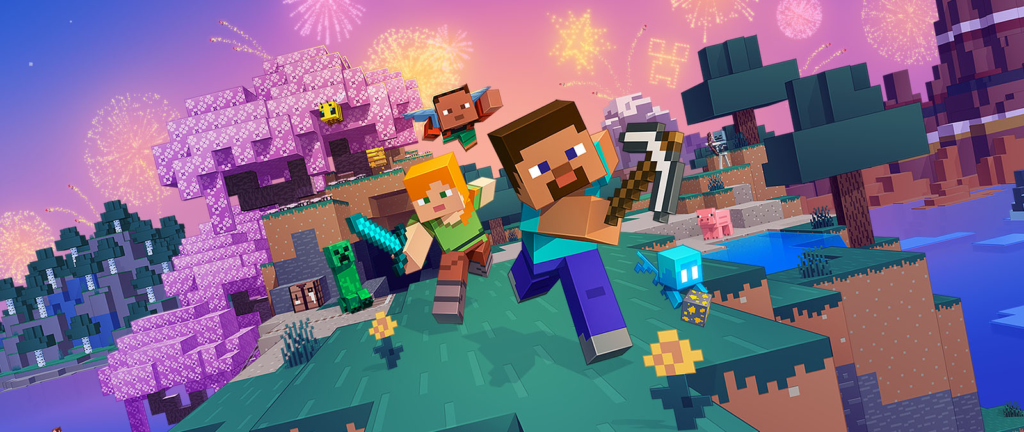
Later, Minecraft helped popularize ideas that Dwarf Fortress had been exploring for years in a much more complex form: procedurally generated worlds, freedom of construction, and the ability for players to create their own stories.
An even more obvious example is RimWorld. Its creator, Tynan Sylvester, has openly acknowledged Dwarf Fortress as a major source of inspiration. He was particularly fascinated by the stories players experienced while playing Dwarf Fortress. Sylvester was especially interested in famous community stories such as Boatmurdered and wanted to create a game capable of delivering a similar experience while being more accessible to newcomers.

As a result, RimWorld became something of a bridge between Dwarf Fortress's complex simulations and the more accessible format of the modern colony sim.
Another notable example is Prison Architect. The game's developers have also cited Dwarf Fortress among its sources of inspiration.
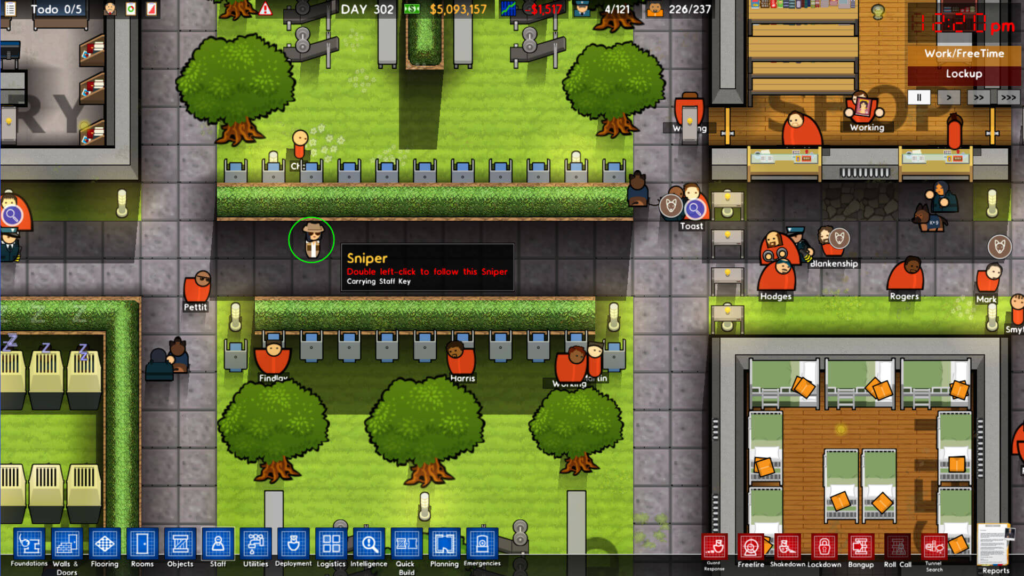
The official Dwarf Fortress page itself now describes the game as an original inspiration for RimWorld, Prison Architect, and other projects.
Dwarf Fortress's influence, therefore, goes beyond specific mechanics. It helped popularize the very idea of simulation as a generator of stories.
One of the most fascinating aspects of Dwarf Fortress's history is that its complexity existed for years almost in spite of its appearance.
While the industry was moving toward increasingly impressive 3D graphics, Bay 12 Games continued developing a game that could look like software from a much earlier era.
And this was a deliberate choice.
ASCII allowed the developers to focus on the simulation rather than spending years creating enormous amounts of graphical content. The text-based interface also reflected the traditions of roguelike games, which had a major influence on Dwarf Fortress.
That is why the game remained free for many years, with its development supported largely through community donations.
It was a highly unusual path for a project of such enormous scope.
A major turning point came in 2019, when Bay 12 Games announced plans for a paid version of Dwarf Fortress for Steam and itch.io with support from Kitfox Games.
But this was never supposed to be a simple port of the old game to another storefront.
The developers faced a much more difficult challenge: how could they make Dwarf Fortress understandable to a new audience without destroying what made it unique?
The answer included a new graphical style, a completely redesigned interface, mouse support, tutorials for newcomers, music, sound effects, and other quality-of-life improvements.
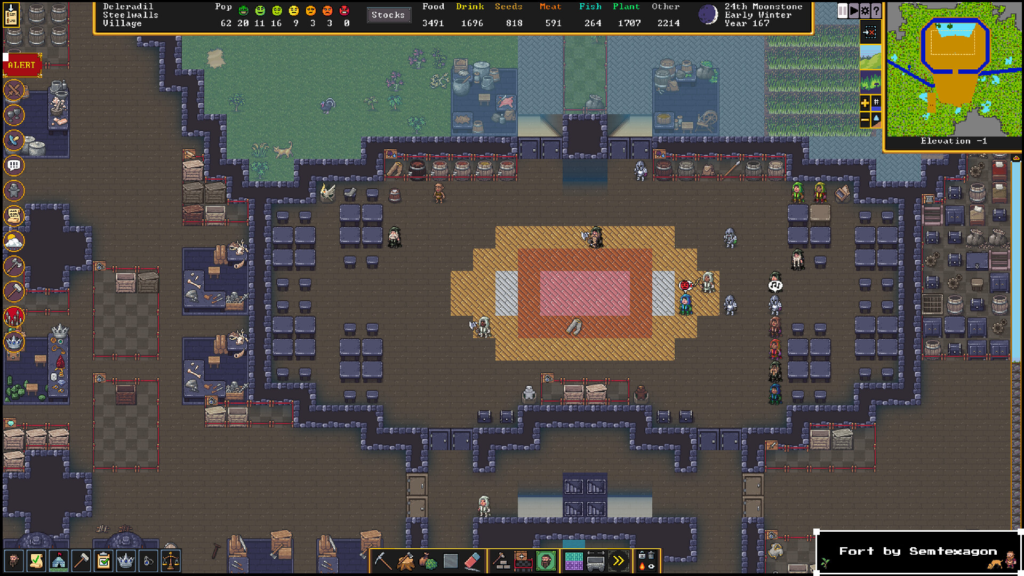
Finally, on December 6, 2022, Dwarf Fortress officially launched on Steam.
It was the moment when a game that had spent almost two decades as a legendary title known primarily among a relatively small group of PC players suddenly had the opportunity to reach a much larger audience.
At the same time, the developers did not force longtime fans to abandon the original visual style.
In December 2022, the Steam version received Classic Mode, allowing players to switch between the new graphical version and the classic ASCII presentation. The transition to modern graphics therefore did not mean abandoning the game's heritage.
It was an important decision. Dwarf Fortress did not try to erase its history for the sake of a new audience. Instead, it effectively kept both versions side by side.
The result exceeded expectations. During the first 24 hours after launch, the Steam version was purchased approximately 160,000 times. For Kitfox Games, this was essentially a sales figure they had expected to reach over roughly two months. By the end of December 2022, sales had approached 500,000 copies.
In the following years, the game continued expanding its audience. In 2025, Dwarf Fortress passed 1 million copies sold on Steam, providing further evidence that such a highly specific project could attract a huge audience even many years after its original release.
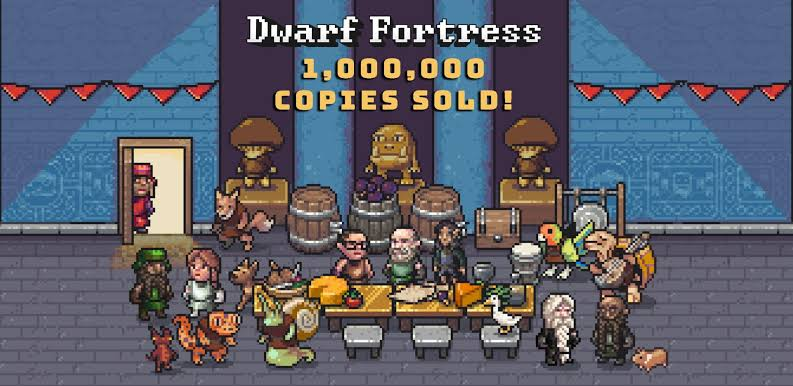
And this is perhaps the most interesting part of the entire story. Dwarf Fortress did not become popular because it suddenly turned into a simple game. It became more accessible without abandoning its fundamental idea.
In 2011, Tarn Adams said that version 1.0 of Dwarf Fortress could still be a long way off. And even once that milestone was eventually reached, he suggested that development might not necessarily end.
Two decades later, that philosophy remains essentially unchanged.
Dwarf Fortress is still being developed. Following the success of the Steam release, the team gained the ability to expand development, while the game continues to receive major systemic updates. Even in 2026, the project remains in development.
This makes Dwarf Fortress a unique phenomenon. It is not simply a game that has survived for 20 years. It is a game that has spent 20 years continuing to develop the same fundamental idea — creating an incredibly deep simulation of a fantasy world.
The story of Dwarf Fortress is a story about how a game's success is not always determined by its budget, graphics, or team size.
Two brothers began working on an ambitious experiment in the early 2000s. Four years later, it received its first public release. What followed were years of ASCII graphics, donations, a huge community, legendary stories, memes, and the constant expansion of the simulation.
Then, 16 years after the first release, Dwarf Fortress finally arrived on Steam — complete with graphics, music, a modern interface, and support for a new audience.
But the most important thing remained unchanged. The game still allows players to create worlds where events cannot be completely predicted. That is why Dwarf Fortress influenced Minecraft, RimWorld, Prison Architect, and an entire generation of simulation games while remaining something uniquely its own.
And if procedural generation, colony sims, and emergent stories now feel like familiar elements of the gaming industry, it is worth remembering that Dwarf Fortress was developing many of these ideas long before most players had even heard of Bay 12 Games.
On August 8, 2006, a story began that was supposed to last only a few years. Twenty years later, it is still being written. And it seems the end of this fortress is nowhere in sight.
As a reminder, Dead Cells Turns 8: How the French Indie Hit Redefined the Roguelite Genre and Became a Modern Classic.