


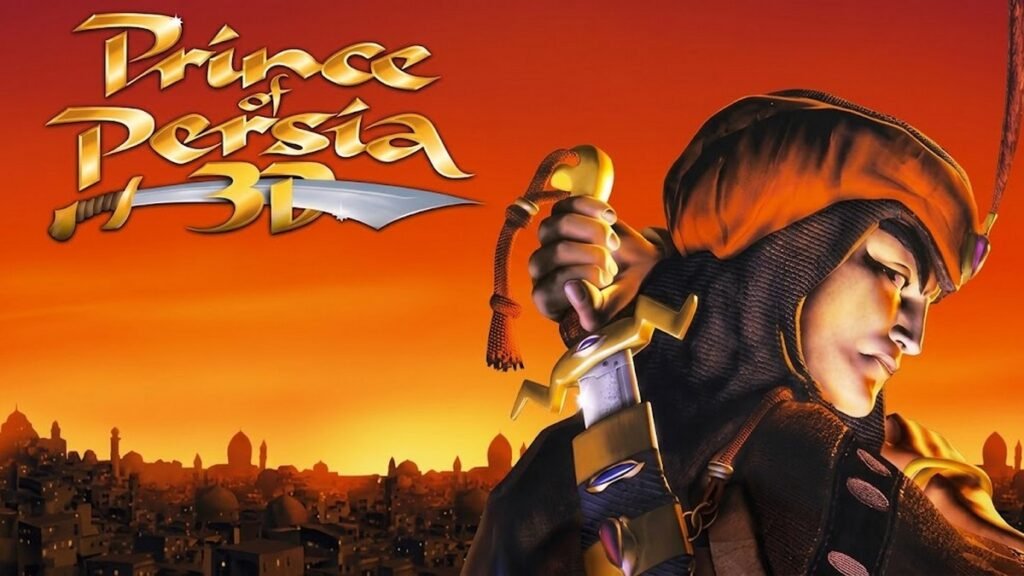
On September 17, 1999, Prince of Persia 3D was released for PC — the first game in the iconic Prince of Persia series to fully transition into a three-dimensional world. Today, the move from 2D to 3D seems like a natural step in the evolution of any franchise, but in the late 1990s, it was a major challenge even for well-established series.
By the time Prince of Persia 3D arrived, the franchise had already become one of the most recognizable names in the platforming genre. The original Prince of Persia, created by Jordan Mechner in 1989, had impressed players with its remarkably realistic character animation. To create it, Mechner used rotoscoping — a technique in which an actor's movements are transferred into the game frame by frame. The smooth animations, challenging jumps, deadly traps, and the need to act quickly helped make the game a classic.
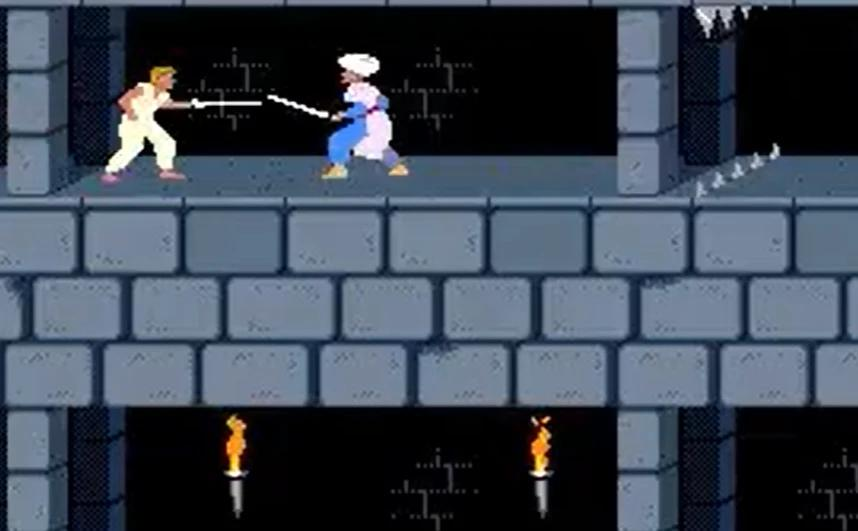
In 1993, Prince of Persia 2: The Shadow and the Flame continued the Prince's story. After that, however, the series largely disappeared from the spotlight for several years.
A Step Into a New Era
By the late 1990s, video games were changing rapidly. The PlayStation, Nintendo 64, and increasingly powerful PCs allowed developers to create fully three-dimensional worlds. The success of games such as Tomb Raider, Super Mario 64, and Metal Gear Solid showed that the future of the industry was increasingly tied to 3D.
That was the direction chosen for the return of Prince of Persia.
Development was handled by Red Orb Entertainment, while The Learning Company served as the publisher. The game was titled Prince of Persia 3D and was intended to become a modern continuation of the legendary series.
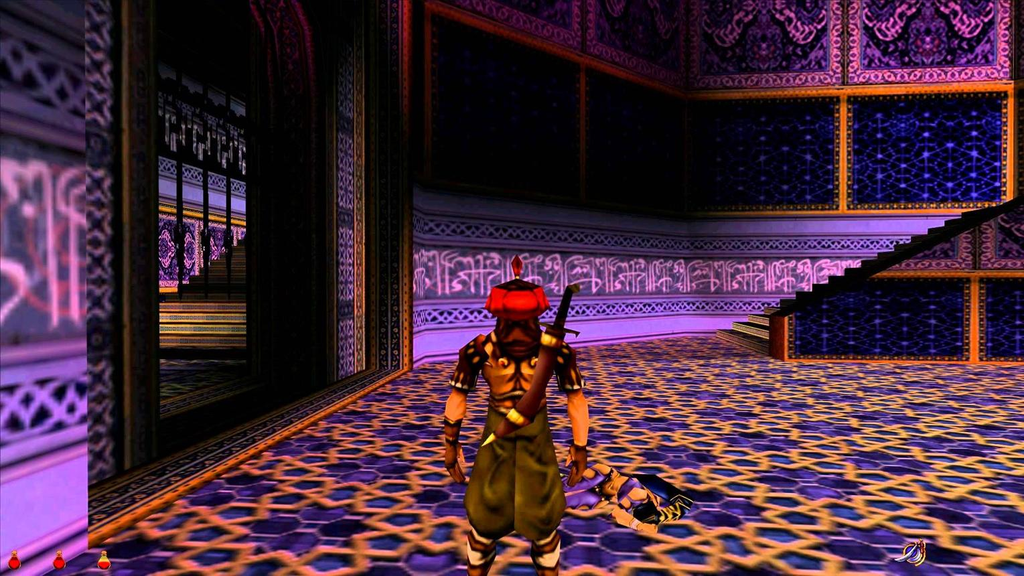
The Prince was no longer moving between two dimensions. Players were introduced to palaces, dungeons, ruins, and other large-scale environments that the hero could explore in full 3D.
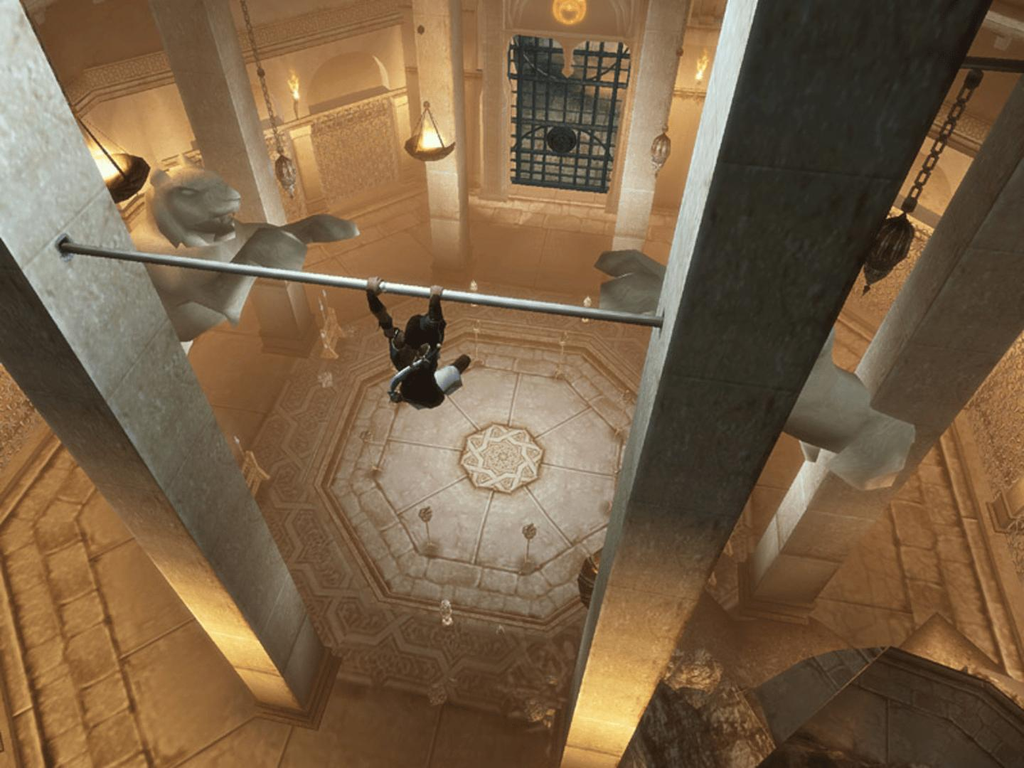
The core formula remained familiar: running, jumping, climbing, finding the right route, and fighting enemies. Acrobatics received particular attention. The Prince could grab ledges, balance on narrow surfaces, leap across gaps, and use the environment to navigate through the levels.
A Familiar Story in a New Format
The story once again revolved around the Prince and the princess.
The protagonist travels to his uncle's palace, but the situation quickly spirals out of control. The Prince becomes caught up in a conspiracy, while the princess becomes a pawn in a political struggle. To save her and regain his freedom, the hero must make his way through dangerous locations and battle numerous enemies.
Unlike the first two games, Prince of Persia 3D could make use of cinematic cutscenes and present its story through a fully three-dimensional world. The developers were trying to turn Prince of Persia into more than just a platformer — they wanted to create a large-scale adventure.
However, the transition to 3D would ultimately become the project's biggest challenge.
When 3D Was More Difficult Than It Seemed
Prince of Persia 3D received mixed reviews. One of the main criticisms was its control system. Precise jumps and acrobatic maneuvers, which had been the foundation of the classic Prince of Persia games, became considerably more difficult to perform in a three-dimensional environment.
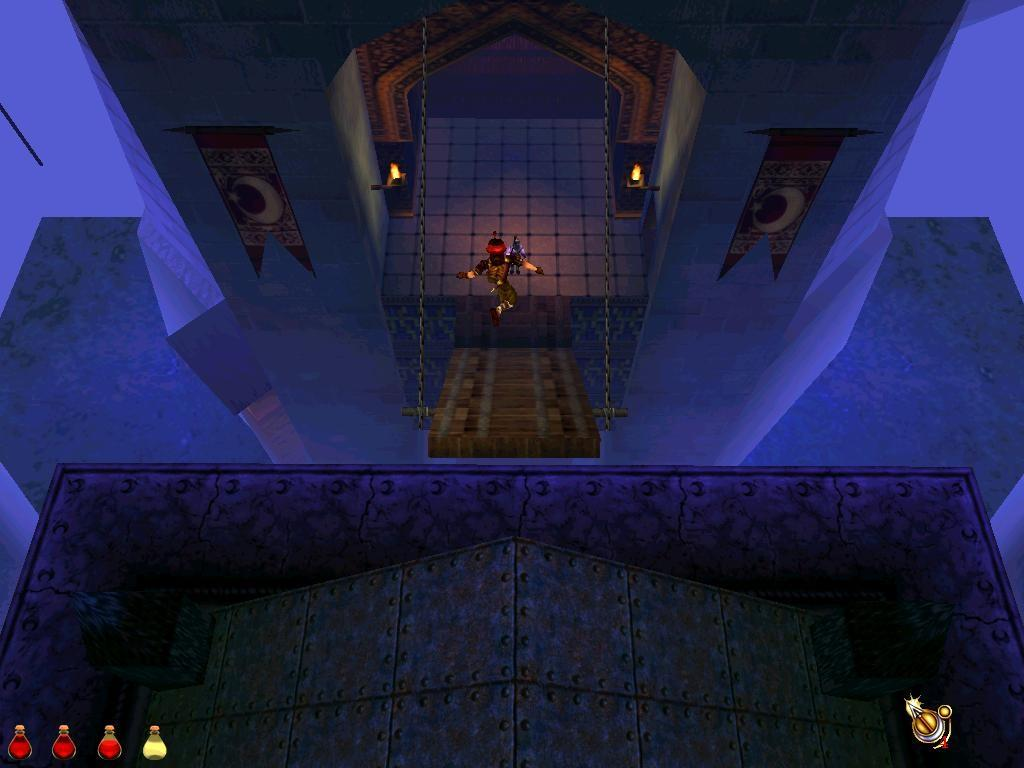
The camera also caused problems. In narrow corridors or during acrobatic sequences, having a clear view of the surrounding environment was crucial. When the camera moved into an awkward position, it became much harder for players to judge the distance to the next platform or ledge.
The technical side of the game also fell short of expectations for a major 3D project at the end of the 1990s. As a result, the game failed to achieve the same cultural impact that the original Prince of Persia had once enjoyed.
At the same time, it would be unfair to completely dismiss the game from the history of the franchise. Prince of Persia 3D was an experiment that demonstrated to developers that simply transferring an old formula into three dimensions was not enough.
The very mechanics of the Prince's movement had to be rethought.
The Road to The Sands of Time
That experience would ultimately prove important for the future of the franchise.
After Prince of Persia 3D, the series once again went on hiatus. The next major project arrived under the leadership of Ubisoft.
In 2003, Prince of Persia: The Sands of Time was released. It preserved the series' focus on acrobatics while completely reworking it for 3D. The Prince's movements became much smoother, the levels were more carefully designed, and the ability to rewind time using the magical Sands became one of the game's defining mechanics.
The Sands of Time received a much stronger reception and marked the beginning of a new era for Prince of Persia.
In this sense, September 17, 1999, became an important date in the history of the franchise. Prince of Persia 3D was not the triumphant return of a legend, but it demonstrated just how difficult it could be to move a beloved 2D series into the world of 3D.
Today, the game is remembered far less often than the original Prince of Persia or The Sands of Time. Nevertheless, without this unsuccessful but important experiment, the evolution of the franchise might have taken a very different path.
September 17, 1999 — the day the Prince took his first major step into the third dimension.
As a reminder, Mount & Blade: how a small Turkish project launched one of the most open-ended RPGs.