On September 16, 2008, Mount & Blade officially launched on PC — a medieval action-RPG from the Turkish studio TaleWorlds Entertainment. At first glance, the game might have seemed unremarkable: outdated graphics even for that time, a small development team, and the absence of a large-scale story campaign. However, it was the freedom of action, an unusual combat system, and the combination of role-playing with strategic mechanics that made Mount & Blade one of the most distinctive RPGs of its generation. The full release took place on September 16 in North America, while the European release followed three days later.
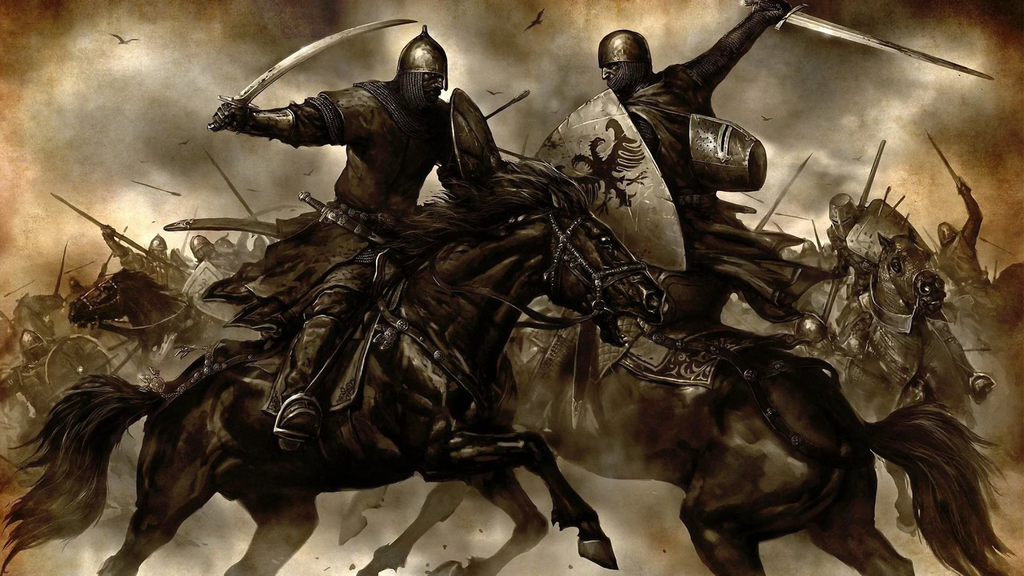
The game's story began long before its official release. Armagan Yavuz, founder of TaleWorlds, wanted to create a project in which medieval combat would play the primary role. He was not interested in yet another RPG with a pre-scripted story, but in the opportunity to make a combat system where the outcome of a fight would largely depend on the player. Together with his wife, Ipek Yavuz, he began working on the game essentially as an independent home project: Armagan was responsible for programming, while Ipek handled the graphics. In 2005, they founded TaleWorlds Entertainment.
Development and Early Versions
The developers drew inspiration from a vast variety of games. Among the influences cited were Sid Meier's Pirates!, The Elder Scrolls II: Daggerfall, Frontier: Elite II, and old strategic games by Koei Tecmo, as well as historical novels, particularly the works of Bernard Cornwell. As a result, Mount & Blade gradually evolved not into a classic RPG with a rigid storyline, but into a large-scale sandbox where players had to craft their own story.
Even before the full release, TaleWorlds took a step that was quite unusual for that era — publishing alpha versions of the game on their own website as early as 2004. Players gained access to early builds, tested them, and left feedback for the developers. In this way, Mount & Blade developed in constant contact with its initial audience. By the time of its official release, the game had already spent several years in alpha and beta stages, managing to build a dedicated community around itself.
At the center of the game lay Calradia — a fictional medieval continent divided among several warring factions. The player created their own character and started virtually from scratch. There was no single "correct" path: one could trade, complete quests, recruit people into their party, join rulers, become a vassal, or gradually forge their own empire.
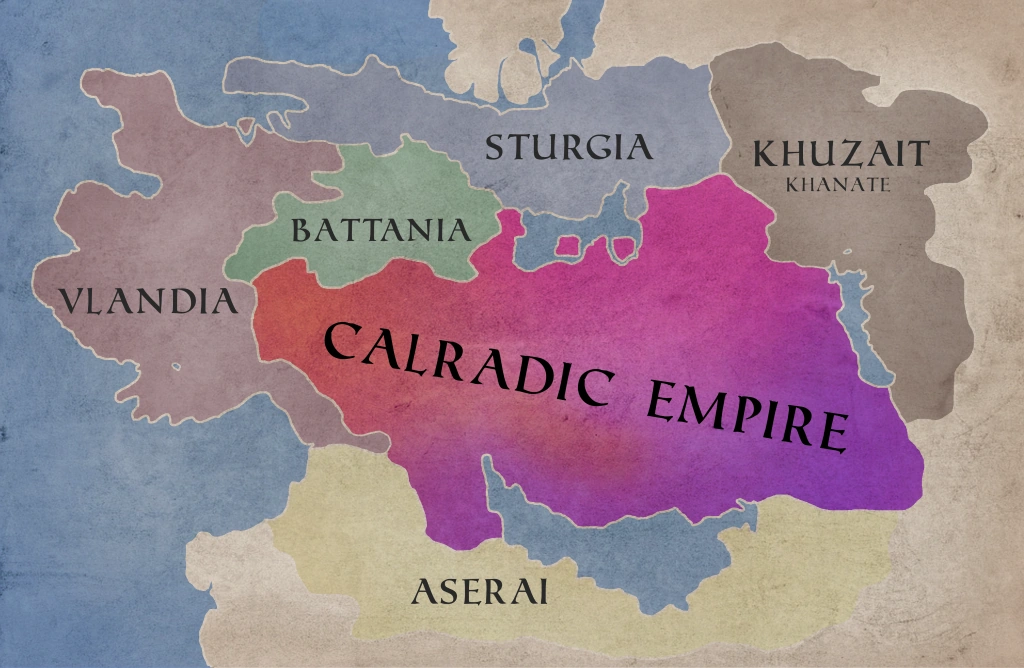
This was precisely where the main philosophy of Mount & Blade manifested: the game did not dictate who you had to become. One player could dedicate a campaign to commerce, another to mercenary work, a third to serving one of the monarchs, while someone else could steadily build their own army and attempt to redraw the political map of Calradia.
Combat System and Freedom
The defining feature of Mount & Blade was its combat system. Instead of the traditional RPG scheme where a character automatically performs an attack upon pressing a button, the game required players to manually control the direction of strikes and blocks. Mounted combat also played a crucial role: battles could be fought either on foot or on horseback, with character speed and positioning directly influencing the outcome of the clash. It was this direct player engagement that made Mount & Blade's combat one of its main differentiators from other RPGs of the time.
Equally important was the party system. The hero could gradually recruit soldiers, train them, and bring them into battle. A small band of mercenaries could eventually transform into a formidable army, while the character progressed from a simple wanderer to an influential feudal lord. As a result, progression in the game felt not just like leveling up a hero's stats, but as the gradual growth of an entire army.
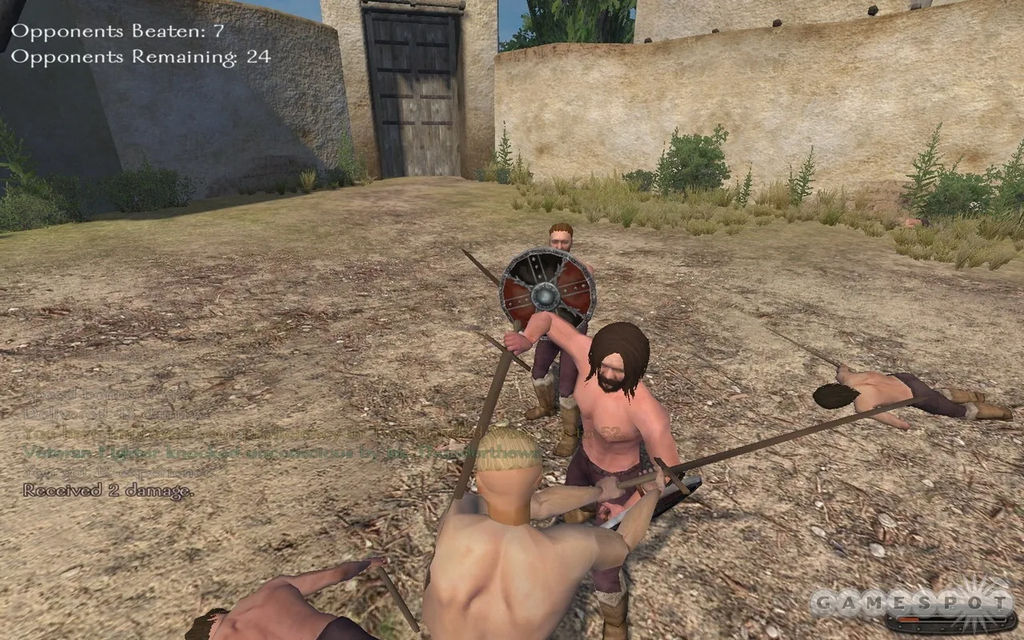
At the same time, Mount & Blade virtually avoided the cinematic tropes common to major RPGs of that era. There was no grand scripted presentation holding the player's hand. The developers essentially created a set of systems, rules, and possibilities, and it was the interaction between them that generated the narrative. That is why no two campaigns were ever identical.
In January 2008, it was announced that Paradox Interactive would handle the publishing of the game. By that point, Mount & Blade already had several years of early access history and a well-formed community. On September 16, 2008, the game finally received its full release on Windows.
Critical Reception and Modding
Critical reception at launch was mixed. Metacritic scores Mount & Blade at 72 out of 100 based on 28 reviews. Journalists praised the freedom of action, combat system, role-playing, and strategic mechanics, but simultaneously pointed out graphics that were outdated even by contemporary standards, repetitive elements, and the absence of a traditional story campaign.
However, what some critics saw as a flaw became a core strength for the community. The game's relative openness allowed modders to create custom modifications, changing the world, factions, characters, and rules of the game. Mount & Blade gradually turned into a platform upon which fans could build their own historical and fantasy scenarios.
One of the most notable examples for the Ukrainian audience was "With Fire & Sword" («Вогнем та Мечем»). The project was developed by the Kyiv-based Sich Studio in collaboration with TaleWorlds; the team featured Ukrainian developers, with Maksym Horban serving as the project lead. The initial release of the project took place in 2009, and it was later reworked and released as a standalone game, Mount & Blade: With Fire & Sword, in 2011.

With Fire & Sword translated the familiar Mount & Blade formula from fictional Calradia to 17th-century Eastern Europe. It introduced real historical states and events, with a narrative heavily drawn from Henryk Sienkiewicz's novel With Fire and Sword. Factions included the Zaporozhian Host, the Polish-Lithuanian Commonwealth, the Tsardom of russia, the Kingdom of Sweden, and the Crimean Khanate.
For Ukrainian players, this particular installment in the franchise proved especially memorable. It allowed them to immerse themselves in a historical context tied to Ukrainian lands and the Cossacks, assemble their own warband, and participate in conflicts between the powers of that era. Unlike fictional Calradia, it featured real geographical names, historical figures, and nations, making the game instantly recognizable to Ukrainian gamers.
The Legacy of Mount & Blade
The success of the original Mount & Blade enabled TaleWorlds to expand the concept further. In 2010, Mount & Blade: Warband was released, significantly expanding the original game, refining its systems, and adding a multiplayer mode. The franchise later received several more entries, and in 2020, Mount & Blade II: Bannerlord entered Early Access, eventually seeing a full release in 2022.
Yet the foundation for all of this was laid by that very first game. Mount & Blade did not try to compete with AAA RPGs in cinematic cutscenes or graphical fidelity. Its primary weapon was freedom. Players were given a world, an army, an economy, politics, and a combat system — and it was up to them to decide what their story would be.
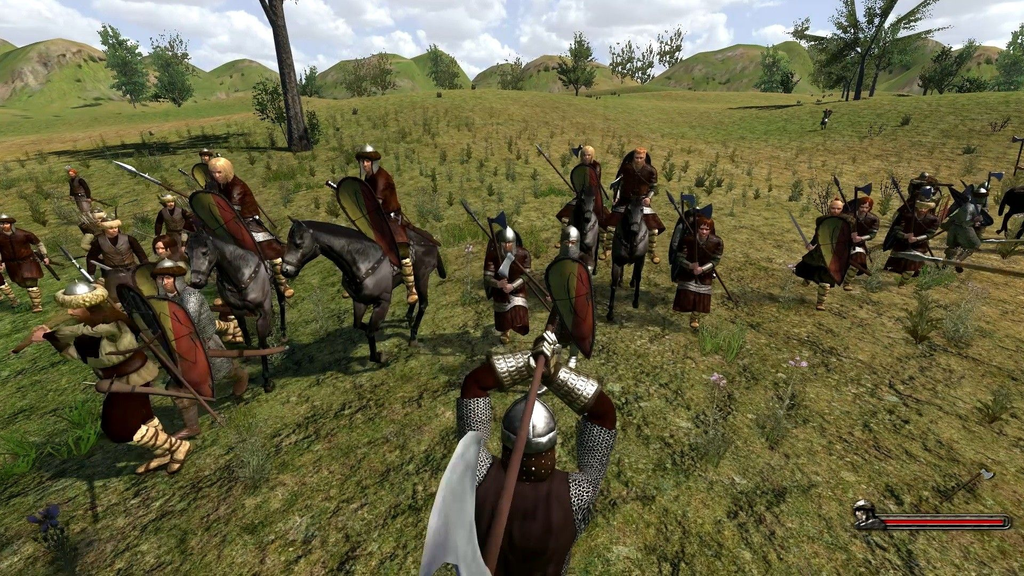
Today, the original Mount & Blade may appear technically dated, but its influence remains clearly visible in subsequent entries in the series. Warband solidified the formula, With Fire & Sword demonstrated how it could be adapted into a real historical setting, and Bannerlord scaled the concept to modern standards.
That is why September 16, 2008, should be remembered as more than just the release date of another medieval RPG. Mount & Blade became a prime example of how a small independent project with simple graphics and an ambitious vision could build its own audience, spark an entire franchise, and practically establish its own subgenre of sandbox RPGs. And it all began with a small game that simply gave the player a sword, a horse, a few warriors, and a vast world — leaving the rest of the story for them to write.


