



On October 20, 2010, Super Meat Boy was released on Xbox 360 — a platformer developed by the independent studio Team Meat, founded by Edmund McMillen and Tommy Refenes. At the time, the game looked like a small indie project featuring a funny protagonist, but it later became one of the best-known platformers of its generation and an important part of the history of independent game development.
It all started with a small piece of meat
The story of Super Meat Boy began back in 2008. Edmund McMillen and his friend Jonathan McEntee created a simple Flash game called Meat Boy in just three weeks. It appeared on Newgrounds on October 5, 2008, and unexpectedly attracted huge attention from players. By April 2009, the game had received more than 840,000 views on Newgrounds alone and around 8 million views overall.
Meat Boy was born from a very simple idea. McMillen used a small red cube as a temporary character prototype. Because of its appearance, the character began to resemble a piece of meat, while the ability to leave a trail behind him while moving further reinforced the concept. This is how one of the most recognizable characters in indie games was born.
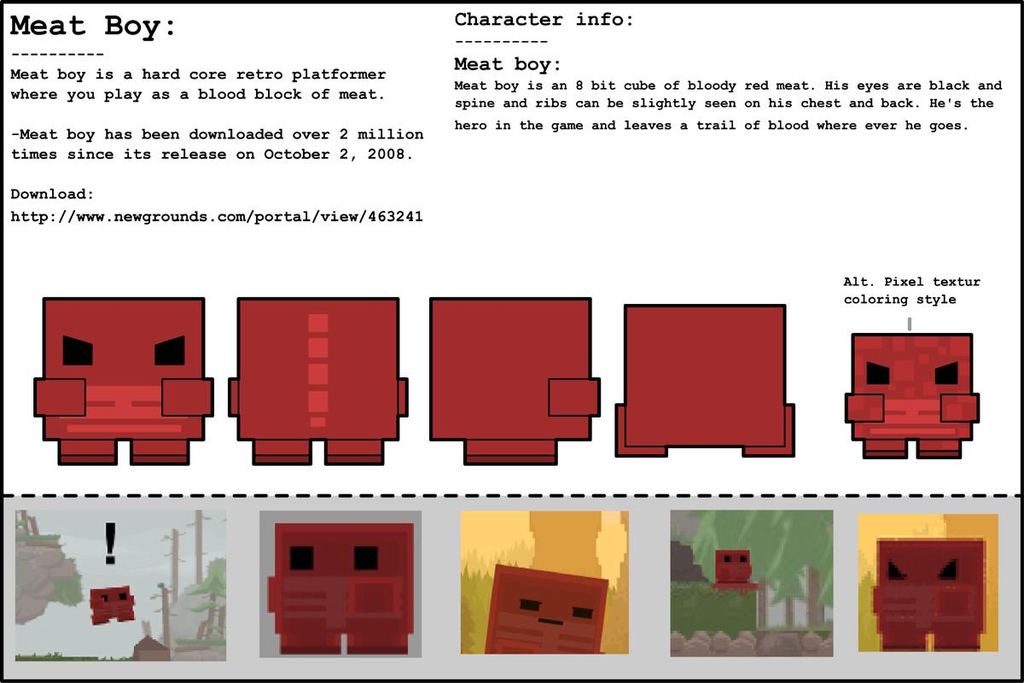
The success of the Flash version attracted the attention of Microsoft and Nintendo. The companies offered McMillen the opportunity to create a game for their digital platforms — Xbox Live Arcade and WiiWare. He initially considered making a sequel to Gish or an expanded version of Aether, but eventually decided to turn Meat Boy into a full-fledged console platformer.
How Team Meat was created
To work on the new version of the game, McMillen teamed up with programmer Tommy Refenes. Together they created Team Meat — essentially a team consisting of two main developers, later joined by composer Danny Baranowsky and sound designer Jordan Fehr.
Development of Super Meat Boy began in January 2009. McMillen was primarily responsible for the design and visual aspects, while Refenes handled programming and created his own engine for the game. He also developed a tool that allowed animations created by McMillen in Flash to be transferred directly into the game.

The original plans were much more modest. The developers wanted to create the game for WiiWare and PC and release it in early 2010. However, the team continued adding new levels and mechanics, so the release was postponed. Xbox 360 was later added to the list of platforms, and that version was the first to reach players.
Difficulty became its main feature
Super Meat Boy was built around the classic platformer formula: short levels, precise character control, traps and a huge number of deaths. The player controls Meat Boy, who tries to rescue Bandage Girl from the main antagonist, Dr. Fetus.

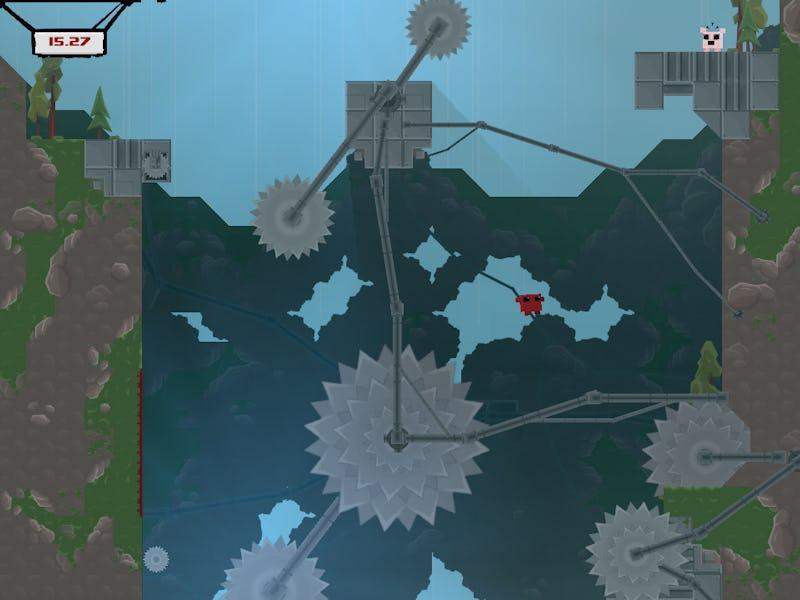
At the same time, the developers deliberately made the game difficult, but did not want to turn it into a constant punishment for the player. That is why levels could be restarted almost instantly after death, while the number of lives was unlimited. The short length of the levels also made it possible to quickly repeat failed attempts and gradually learn the location of the traps.
Another feature was the replay system. After completing a level, the player could see several of their previous attempts simultaneously. As a result, dozens of deaths became more than just statistics — they also turned into a kind of reward, allowing players to see how much their route had changed from the first failed attempt to the successful one.
Development almost became a disaster
The final months of work on Super Meat Boy turned out to be particularly difficult. In 2010, Microsoft offered to include the game in its fall GameFeast campaign on Xbox Live Arcade. For Team Meat, this was a huge opportunity, but at the same time the team had almost completely run out of financial resources.

To meet the deadline, the developers essentially worked without a normal schedule. During the final two months, they worked every day, slept around five hours a night and even forgot to eat properly. McMillen later described this period as one of the most difficult in the entire history of the game's development.
Despite this, Super Meat Boy was released on Xbox 360 on October 20, 2010. The PC version arrived slightly more than a month later — on November 30, 2010, through Steam.
From a small indie project to a cult game
Super Meat Boy quickly received recognition for its challenging but precise gameplay, level design and visual style. The game became one of the most notable representatives of the wave of indie projects that, in the early 2010s, demonstrated that a small team could create a commercially successful and influential project without the support of a major publisher.
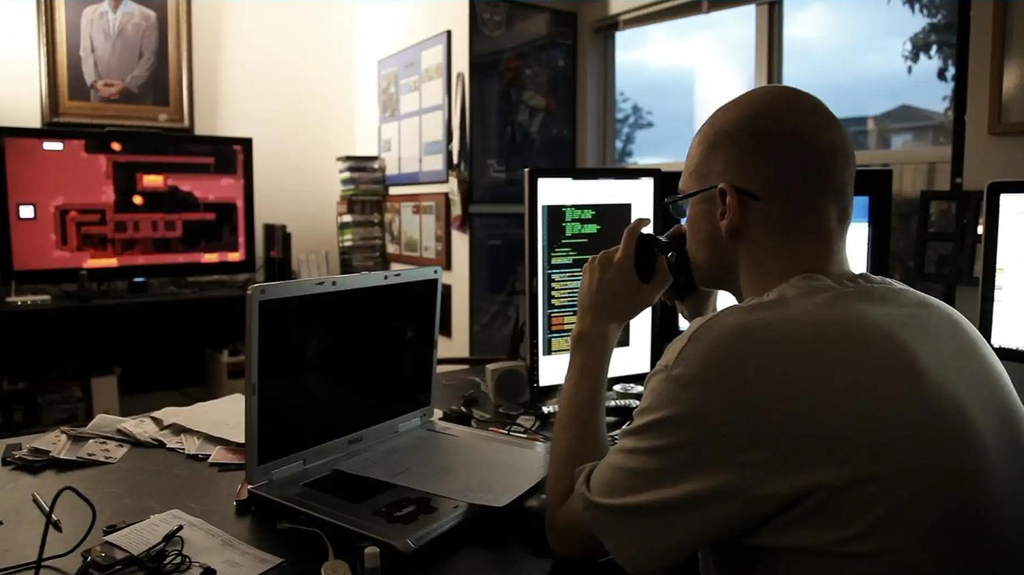
Its story also became part of the documentary Indie Game: The Movie, which showed the difficult final stage of Super Meat Boy's development and Team Meat's struggle to complete the project.
Super Meat Boy was later released on other platforms: PlayStation 4 and PlayStation Vita in 2015, Wii U in 2016, and Nintendo Switch in 2018.
Today, Super Meat Boy remains one of the best-known indie games of its generation. Its journey from a three-week Flash prototype to a full-fledged console hit is a good example of how the video game industry itself was changing in the early 2010s — and how small teams were gaining the opportunity to create projects that would leave a significant mark on history.
On October 20, 2010, Super Meat Boy was released on Xbox 360 for the first time. This release marked a new chapter for the game — no longer as a successful Flash project, but as one of the symbols of indie games.
As a reminder, Fallout: New Vegas — how Obsidian created a cult RPG in a short time.