September 27, 2023, marked a major date in the history of Counter-Strike. On that day, Valve officially released Counter-Strike 2 on Steam, replacing Counter-Strike: Global Offensive and moving the series onto a new technological foundation. In 2026, CS2 celebrates its third anniversary.
The release was more than a visual upgrade. Valve introduced the Source 2 engine, a new networking system, dynamic smoke grenades, the Premier mode with CS Rating, redesigned maps, updated audio and numerous technical changes that affected both casual and professional play.
Valve officially announced Counter-Strike 2 on March 22, 2023, describing it as the largest technical leap in the history of Counter-Strike. Before the full release, the game was available through a Limited Test, with access gradually expanded to more CS:GO players.
The most important reason for the transition was the move to Source 2. The new engine allowed Valve to rebuild not only the visual side of the game but also several elements of its technical foundation.
On September 27, the Limited Test ended and Counter-Strike 2 became available to everyone for free. The first Premier season also began with the release.
Counter-Strike 2 was built on Source 2, Valve's modern engine that had already been used in several other projects.The transition allowed the developers to overhaul lighting, materials, reflections, visual effects and the way maps were rendered.
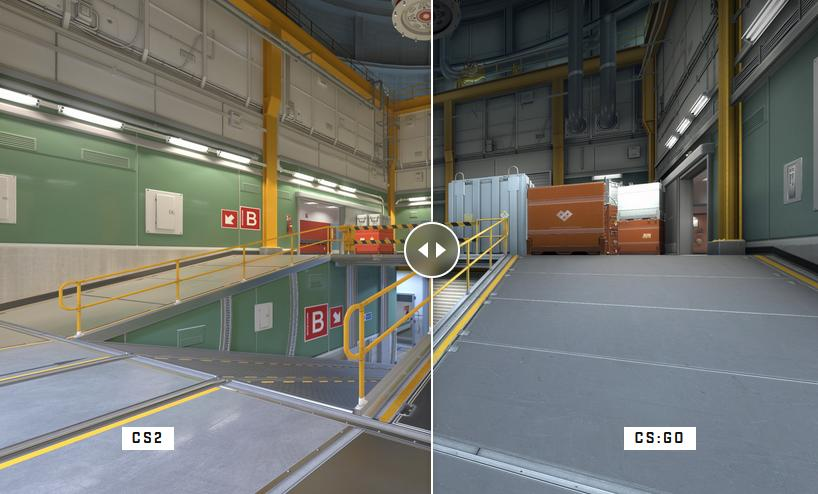
Valve approached the map updates in several different ways. Some locations received major visual remakes, while others were updated more carefully in order to preserve their familiar gameplay. This was important because professional players had spent years developing strategies, grenade lineups and timings around the existing layouts.
Valve also updated the Workshop Tools, giving community map creators access to new Source 2 tools and workflows.
One of the most discussed technical changes was the introduction of the sub-tick system.
In previous Counter-Strike versions, servers processed the game at a specific tick rate. CS2 changed the way the game records important player actions, allowing the server to determine more precisely when an action such as shooting or throwing a grenade actually happened.
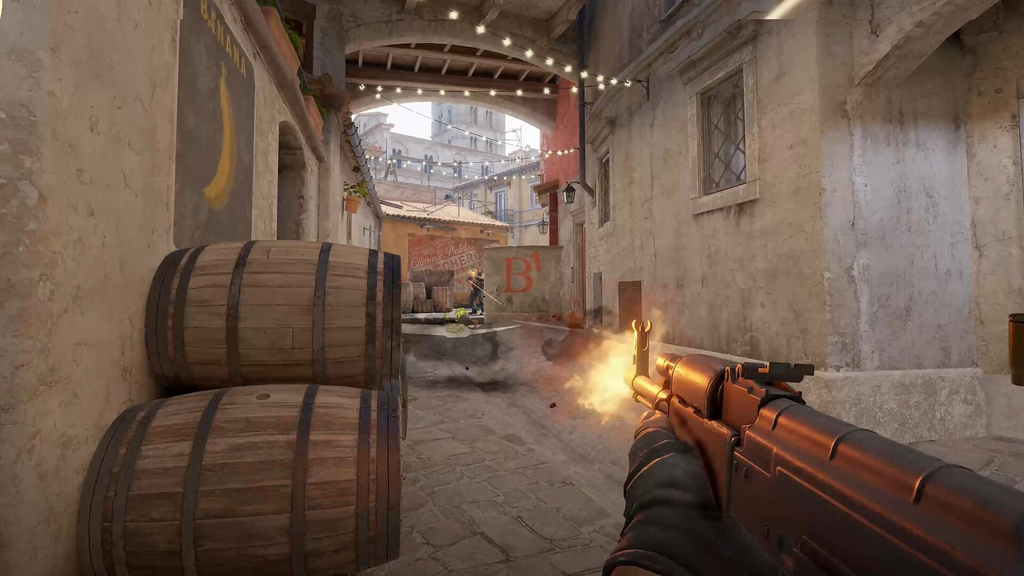
Valve described the system as providing tick-rate-independent gameplay. The goal was to make actions register based on their exact timing rather than simply depending on the next server tick.
The sub-tick system quickly became one of the most discussed aspects of CS2 among both casual and professional players.
One of the most visible gameplay changes in CS2 was the introduction of dynamic smoke grenades.
In CS:GO, smoke grenades created a relatively static cloud that blocked vision. In CS2, smoke became a dynamic object that interacts with the environment, lighting and other gameplay elements.
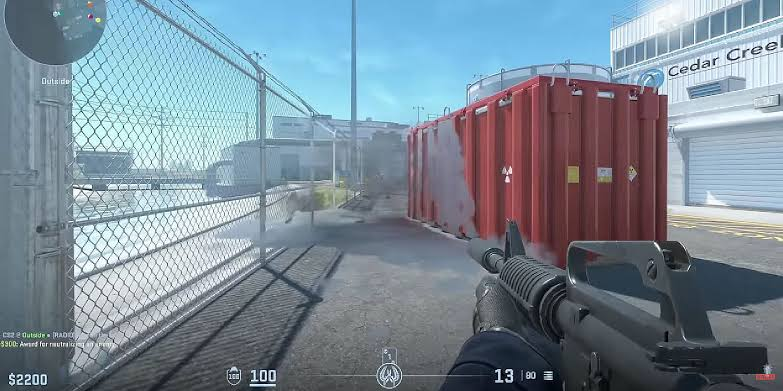
Bullets can temporarily create openings in the smoke, while explosions can disperse it. This changed how teams use grenades and created new tactical possibilities for attacking and defending bombsites.
A smoke that previously provided complete visual cover could now be temporarily disrupted, forcing players to consider additional variables when executing strategies.
Counter-Strike 2 also introduced an updated competitive matchmaking system known as Premier.
One of its main features is CS Rating, a numerical rating used to measure a player's performance in Premier matches. Unlike CS:GO's traditional Skill Groups, the new system gives players a specific numerical rating.
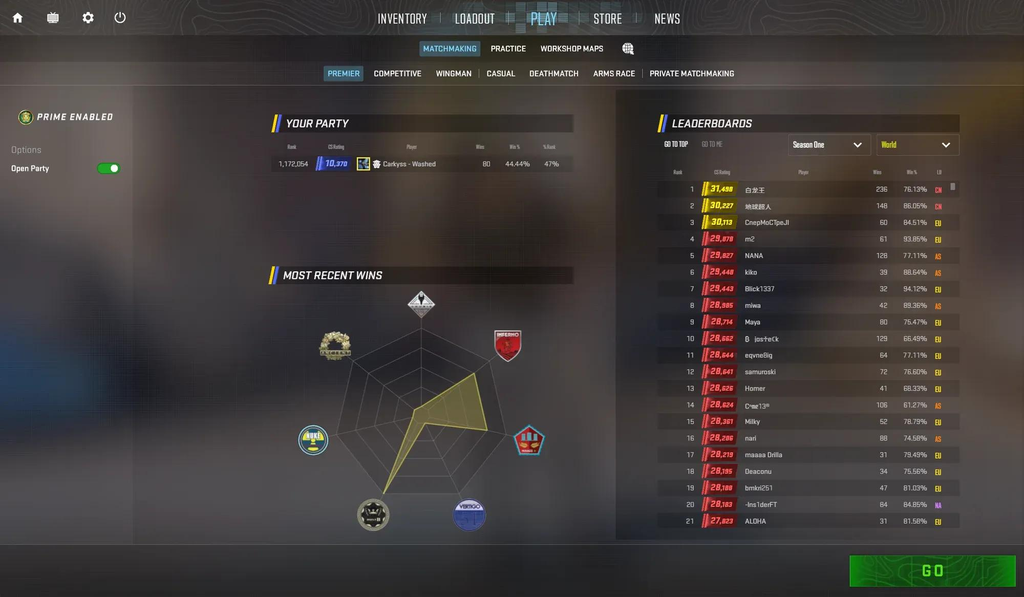
Valve also introduced regional and global leaderboards, allowing players to compare their results with others.
Premier became one of the central competitive modes in CS2. Matches use a map veto system, while results directly affect a player's rating.
The launch of CS2 marked the end of the separate CS:GO era.
Counter-Strike: Global Offensive was replaced by Counter-Strike 2 on Steam on September 27, 2023. The new game became the main version of Counter-Strike, while players' inventories were transferred to CS2.
Skins, knives, gloves and other items remained available, although their materials and lighting were updated for the Source 2 environment.
For the Counter-Strike community, this was a significant transition. CS:GO had been the main version of the game for more than a decade, building one of the largest competitive communities and in-game item economies in gaming.
Source 2 gave Valve the opportunity to significantly improve Counter-Strike's maps.
Lighting, water, glass, metal, textures and other materials received major visual improvements. The goal, however, was not simply to make every map look completely different.
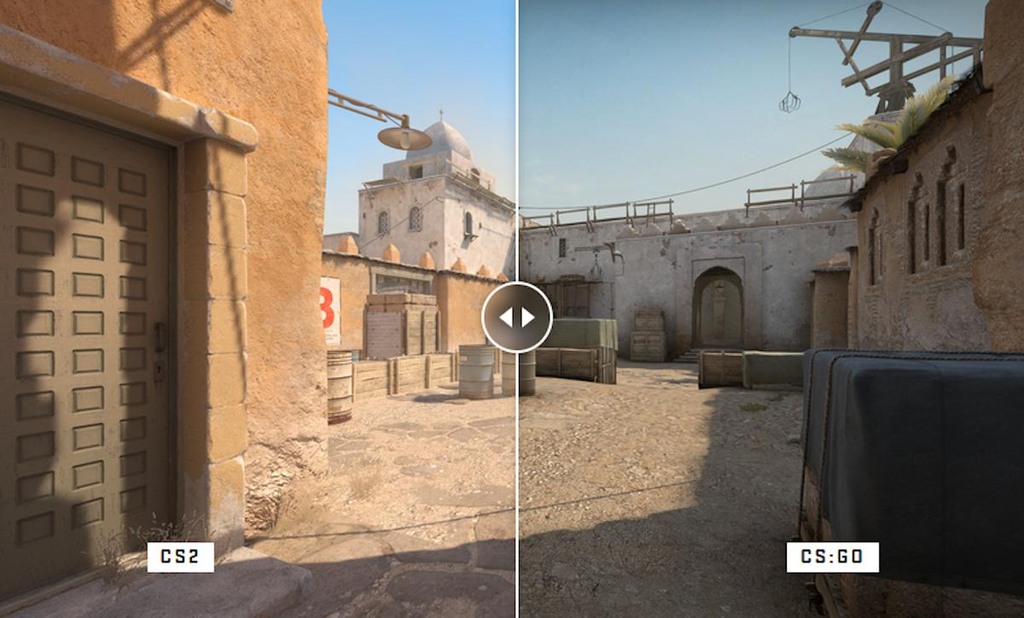
For Counter-Strike, preserving familiar geometry is extremely important. Professional players spend thousands of hours learning positions, timings and grenade lineups, so even relatively small changes can have a significant impact on gameplay.
Some maps received extensive visual remakes, while others retained much of their original structure and focused mainly on improvements to lighting and materials.
The audio system was also redesigned for Counter-Strike 2.
Valve updated weapon sounds, environmental audio and the overall way sound is presented to the player. This is particularly important in Counter-Strike because audio provides essential information about the position and actions of opponents.
Footsteps, reloads, gunfire and bomb-related sounds can reveal information before an opponent even appears on screen.
For professional players, these audio cues can influence decisions within fractions of a second.
The launch of CS2 was followed by a long period of technical improvements.
Valve regularly released updates addressing bugs, performance problems, map issues, animations, audio, smoke behavior and networking.
Early patches fixed issues related to player movement, bullet penetration, smoke grenades, Molotovs, sound and map elements, while Valve continued to refine Premier and other systems.
The release therefore became the beginning of a continuous development process rather than the final version of the game.
The transition to Counter-Strike 2 also had a major impact on the professional scene. Teams had to adapt to new smoke mechanics, map changes, networking behavior and technical differences. Players had to rebuild grenade lineups and develop new approaches to positions and timings.
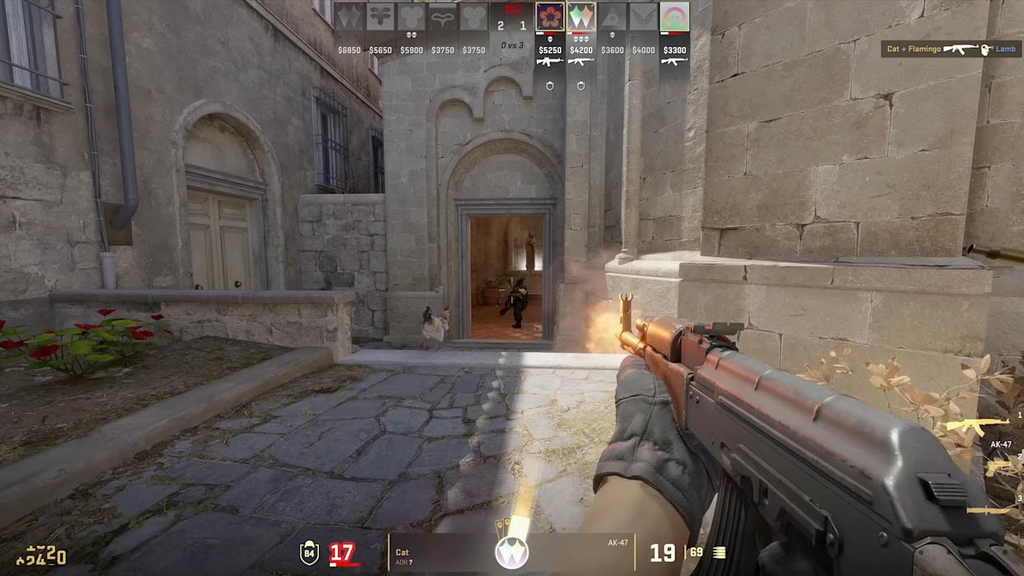
The dynamic smoke system was particularly important. Professional teams began experimenting with new ways to use and counter smoke grenades, creating tactical possibilities that did not exist in exactly the same form in CS:GO.
The transition also forced teams to adjust their preparation. Familiar strategies from CS:GO could not always be transferred directly to the new game, particularly when they relied on specific smoke lineups, timings or interactions with map geometry.
On September 27, 2026, Counter-Strike 2 celebrates its third anniversary.
During those three years, the game has evolved from a major transition away from CS:GO into the foundation for the next stage of the Counter-Strike series.
Source 2, sub-tick, dynamic smoke grenades, Premier with CS Rating, redesigned maps, improved visuals and the continued development of the game's technical systems have defined this new era of Counter-Strike.
At the same time, the core formula has remained familiar. Two teams compete round by round, managing their economy, controlling the map, using utility and trying to complete their objectives.
Counter-Strike 2 therefore did not completely reinvent the series. Instead, September 27, 2023 marked the moment when one of the most recognizable competitive shooters in gaming moved onto a new technological foundation.
As a reminder, Castlevania Turns 40: The History of the Game That Started the Legendary Series.


