In an interview with Insider Gaming, Team Liquid co-founder and CEO Victor "Nazgul" Goossens discussed the organization's tournament successes in 2026, the future of esports monetization, and spoke out sharply regarding the criticism of the updated Valorant partnership model.
Riot Games' decision to reduce the number of partner teams in the league for the 2027-2028 seasons from 48 to 32 caused significant dissatisfaction among the clubs that did not make the cut. Goossens, whose organization retained its slot, came to the defense of Riot's system. According to him, a closed or semi-closed model with stable guarantees attracts serious investments and allows for the signing of long-term contracts with players, which is critical for building a strong ecosystem.
As a counterexample, he cited Dota 2, which operates on a completely open system without digital item revenue sharing. According to Goossens' assessment, the Dota 2 ecosystem is not currently in a healthy state: besides Team Liquid and NAVI, there are almost no classic professional organizations left, and their place has been taken by projects funded by betting companies.
Goossens also criticized the clubs that publicly condemn Riot's system only after failing to secure a spot in it. He called this position hypocritical, emphasizing that some of these organizations simultaneously enjoy all the benefits of partnership programs in other titles, such as Rainbow Six Siege. In addition, he recalled that Riot has set aside about $4 million for clubs that did not make the top 32, which represents an unprecedented level of financial support in the industry.
Responding to claims about the impossibility of retaining players in an open system (using Shopify Rebellion as an example), Goossens noted that developing talents for their subsequent sale is a normal business model. He compared it to the approach of the Dutch football club Ajax. If Team Liquid had not secured a partnership, the organization would most likely have stayed in the discipline by putting together a roster of promising rookies.
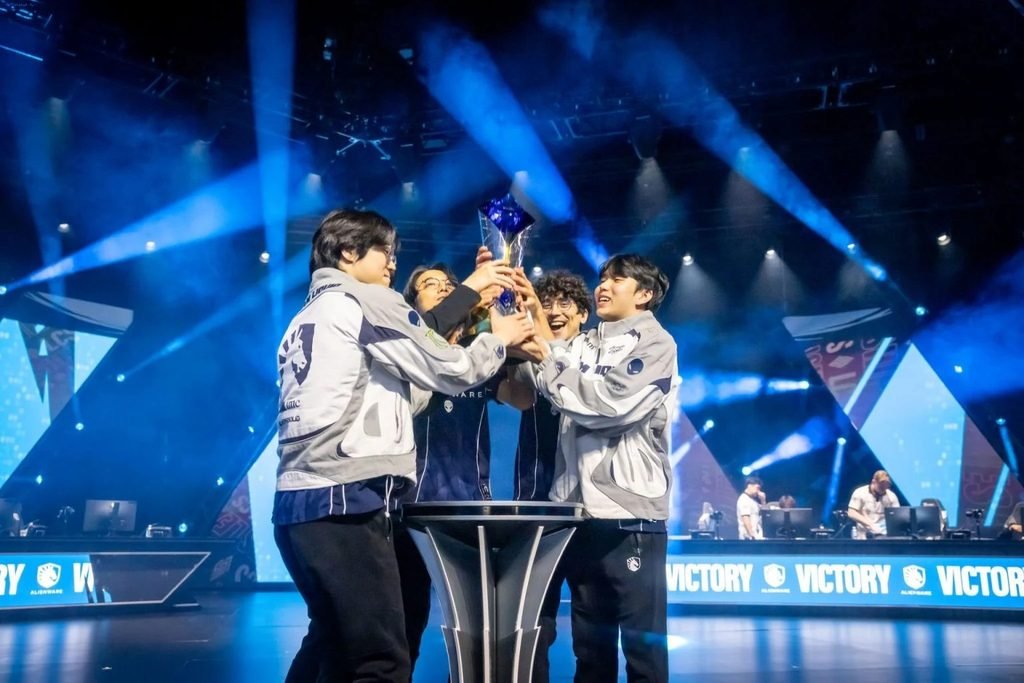
Despite frankly weak results in Counter-Strike, 2026 became one of the most successful years in Team Liquid's history, rivaled perhaps only by 2019. The organization won the Race to World First in World of Warcraft, claimed trophies at regional and international Mobile Legends: Bang Bang tournaments, secured two international Dota 2 titles, and won the LCS in League of Legends. Goossens attributed the secret of their LoL success to the synergy of talented players (specifically Yeon and CoreJJ) and the outstanding work of coach Spawn, who pays attention not only to strategy but also to the social dynamics and physical health of the esports athletes.
Commenting on the shutdown of Evil Geniuses and the overall financial state of the industry, Goossens acknowledged that esports is still far from a stable economy. Although sponsorships and in-game item sales are performing well, the industry globally lags in two aspects: media rights value and the level of direct fan spending.
Comparing esports to traditional sports (using FC Utrecht as an example), Liquid's CEO emphasized that esports fans still spend significantly less money on tickets, merchandise, or broadcasts. According to Goossens, building a fully-fledged economic ecosystem for the industry will still require a lot of time.
As a reminder, The MongolZ and MOUZ will play in the IEM Beijing 2026 final: NAVI and BetBoom will fight for third place


