On November 21, 1998, The Legend of Zelda: Ocarina of Time was released for the Nintendo 64 in Japan — a game that became one of the biggest turning points in Nintendo's history and the history of video games in general. For the series, it was the first major transition into three-dimensional space, while for the developers, it was a large-scale experiment with new technology, camera systems, controls, and world design.
Before Ocarina of Time, The Legend of Zelda series had already become hugely popular. The early entries on NES and SNES established the franchise's core principles: exploring the world, finding items, completing dungeons, solving puzzles, and fighting enemies. However, the transition to 3D required the developers to rethink almost all of these mechanics.
Nintendo did not simply want to make an old Zelda game with three-dimensional graphics. The team wanted to understand how an adventure game should actually work in a three-dimensional space.
Development of Ocarina of Time began in the mid-1990s. Nintendo was already working on Super Mario 64, which was intended to demonstrate how popular 2D games could work in fully 3D environments.
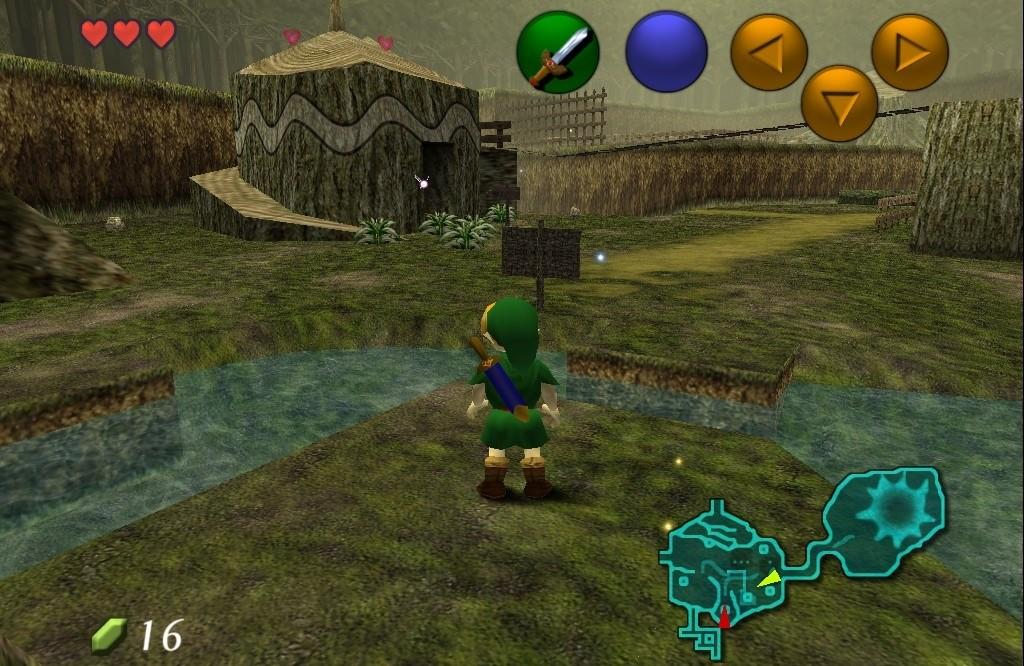
The experience gained from Mario 64 was also important for Zelda. However, the two games had fundamentally different requirements. Mario focused primarily on precise character movement and platforming, while Zelda required large spaces, combat, puzzles, item interaction, and a large number of characters.
A large Nintendo team worked on the game. Key developers included Shigeru Miyamoto, Eiji Aonuma, and Yoshiaki Koizumi. For Aonuma, it was his first work on a Zelda game, but Ocarina of Time became the beginning of his long-term involvement in the development of the series.
The project was originally planned to be considerably smaller. However, the team continued adding new ideas throughout development. As a result, the release was delayed several times, and the game became one of Nintendo's largest and most complex projects at the time.
The developers had to solve problems that simply did not exist before. In a 2D Zelda game, the camera was essentially not an issue — the player always saw the character from the necessary angle. In 3D, the situation changed completely.
One of the most important solutions was the Z-targeting system. It allowed Link to automatically focus on an enemy or another important object.
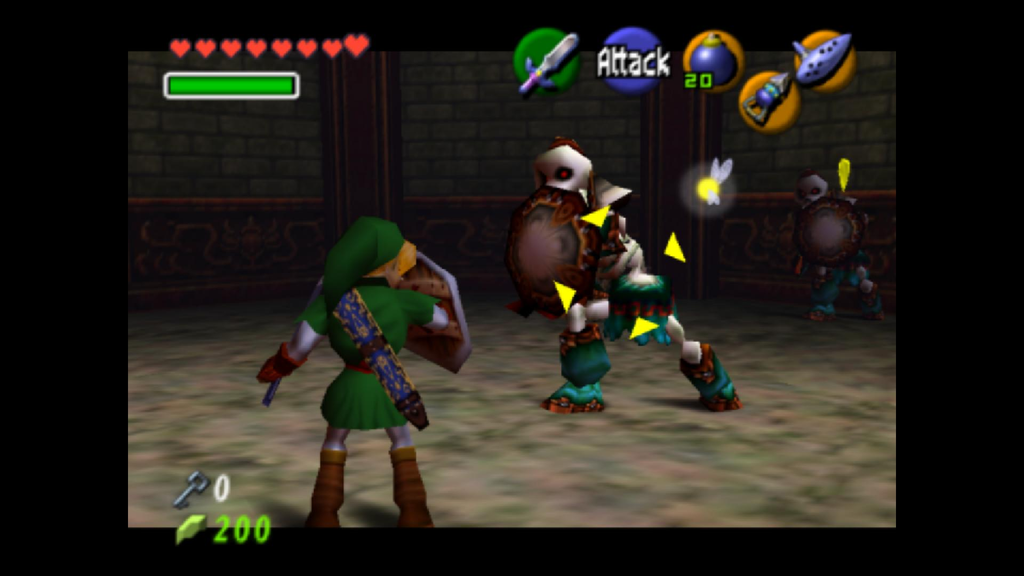
At first glance, it was a simple mechanic, but at the time it solved a major problem. In three-dimensional space, it was difficult for players to control the character, camera, and attacks simultaneously. Z-targeting partially automated the camera and made combat easier to understand.
When Link focused on an enemy, the camera followed the target while the character could move around it. This made it possible to create battles that required positioning and choosing the right moment to attack.
Similar principles were later used by dozens of other games. The mechanic became one of the foundations of modern 3D action-adventure games and action RPGs.
Another enormous challenge was creating the world itself.
Nintendo wanted Hyrule to feel like a single space that could be explored rather than a collection of separate levels. The central part of the world was Hyrule Field, which allowed players to travel between different locations.
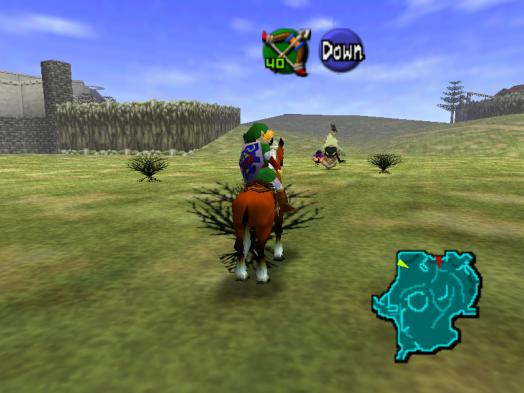
The game featured towns, villages, forests, lakes, mountains, and dungeons. The world was designed to constantly encourage the player's curiosity. A new item could open a path to a previously inaccessible area, while a familiar character could appear somewhere else after a particular event.
The changing time of day also played an important role. Day and night affected the behavior of the world and its enemies, while some events could only be seen at certain times.
This helped create the feeling that Hyrule was living its own life.
The story once again centered on Link. At the beginning of the game, he lives among the Kokiri and receives a task that eventually leads him to Princess Zelda.
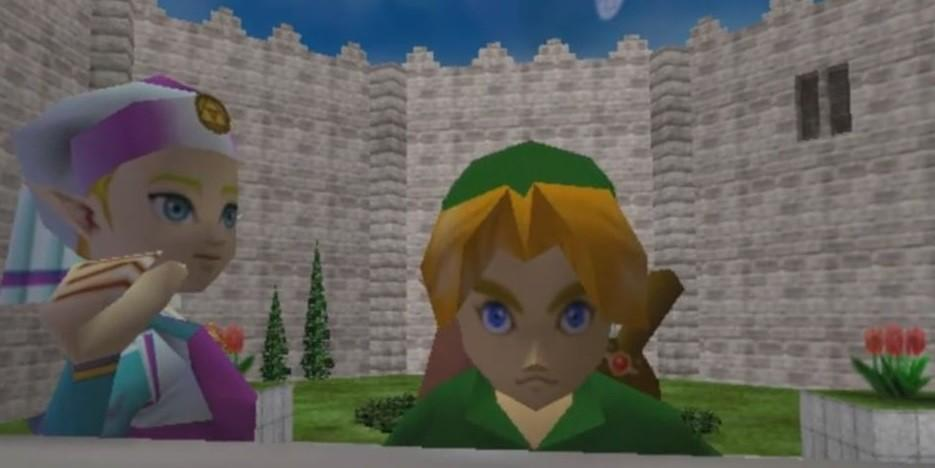
Together, they attempt to stop Ganondorf, who seeks the power of the Triforce. However, the story quickly grows beyond a traditional adventure.
One of Ocarina of Time's main features was the ability to travel between Link's childhood and adulthood. The player sees the same world during different periods, while events of the past and future are connected.
This approach allowed Nintendo not only to tell a story about a hero saving Hyrule, but also to show how the characters and the world itself change.
Link could also use different items and equipment that gradually unlocked new abilities. This structure became one of the main principles of Zelda: first, the player sees something that is inaccessible, then obtains the necessary item, and finally returns to discover a new path.
The word Ocarina in the game's title is there for a reason. The musical instrument was not simply a story element but a full part of the gameplay.

Link learned different melodies and used them to interact with the world. Songs could change the time of day, teleport the hero, unlock certain abilities, or affect characters.
The game's music was composed by Koji Kondo, one of Nintendo's most renowned composers. The soundtrack became an important part of Ocarina of Time's atmosphere, while musical themes associated with individual characters and locations helped make them recognizable.
What made the system special was that music was closely connected to gameplay itself. The player did not simply listen to compositions — they created them using the Nintendo 64 controller.
The traditional Zelda dungeons also received a new life.
In Ocarina of Time, they became fully three-dimensional complexes where players had to do more than simply defeat enemies. They also had to carefully explore their surroundings.
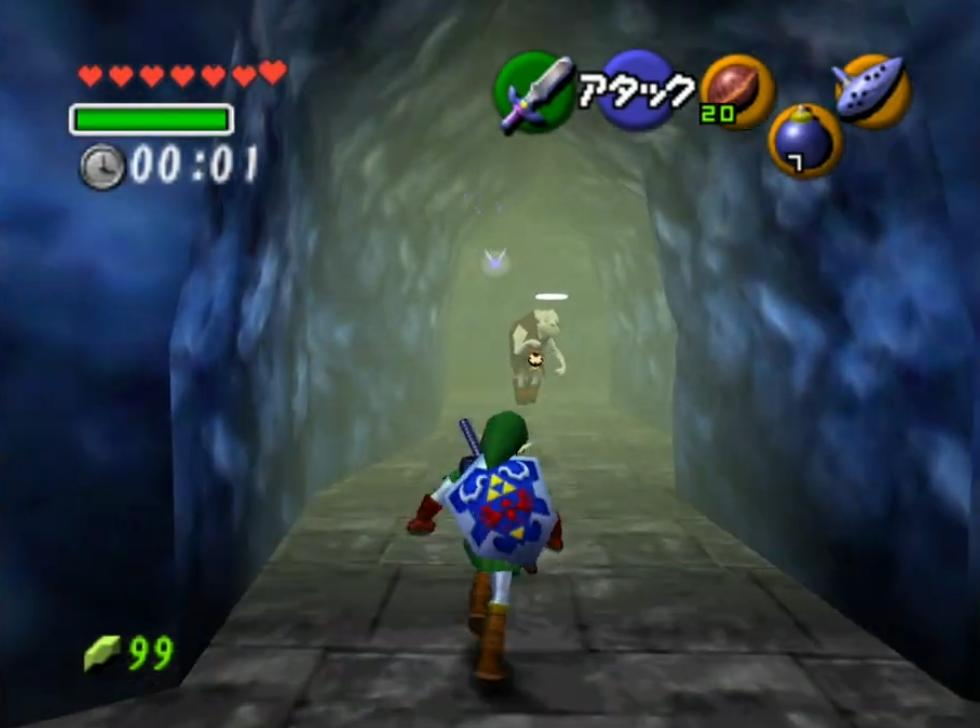
Each dungeon had its own theme, mechanics, and set of puzzles. Players had to find keys, open new rooms, use items, and gradually understand the structure of each location.
Bosses also played an important role. Battles with them often required more than quick reactions — players had to understand the mechanics of each individual enemy.
This structure — exploration, puzzles, a new item, and a final boss battle — became one of the most recognizable elements of 3D Zelda games.
The Legend of Zelda: Ocarina of Time was released in Japan on November 21, 1998. The game later arrived in North America and Europe.
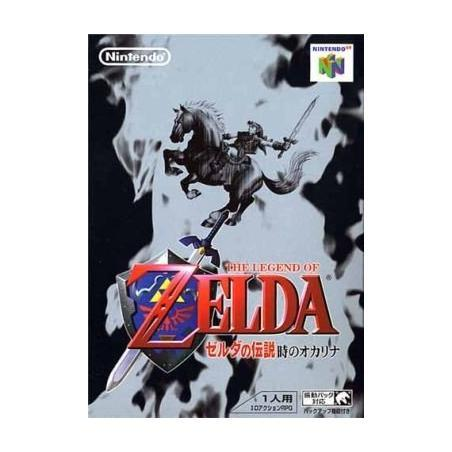
Expectations ahead of the release were enormous. Nintendo positioned Ocarina of Time as one of the major games of its generation, while Zelda's transition to 3D attracted attention not only from fans of the series but from the entire gaming industry.
The critical response was overwhelmingly positive. The game received perfect scores from numerous major publications, while Metacritic currently lists it at 99 out of 100.
Critics particularly praised the world design, combat system, music, dungeons, and the way Nintendo successfully transferred the Zelda formula into three-dimensional space.
The commercial success was also significant. In the United States, more than 500,000 pre-orders were placed before release, while more than one million copies were sold there during the first week. The game ultimately sold around 7.6 million copies worldwide.
Ocarina of Time's greatest achievement was not simply successfully bringing Zelda into 3D. Nintendo effectively established a set of principles that other developers would use when creating their own three-dimensional adventure games.
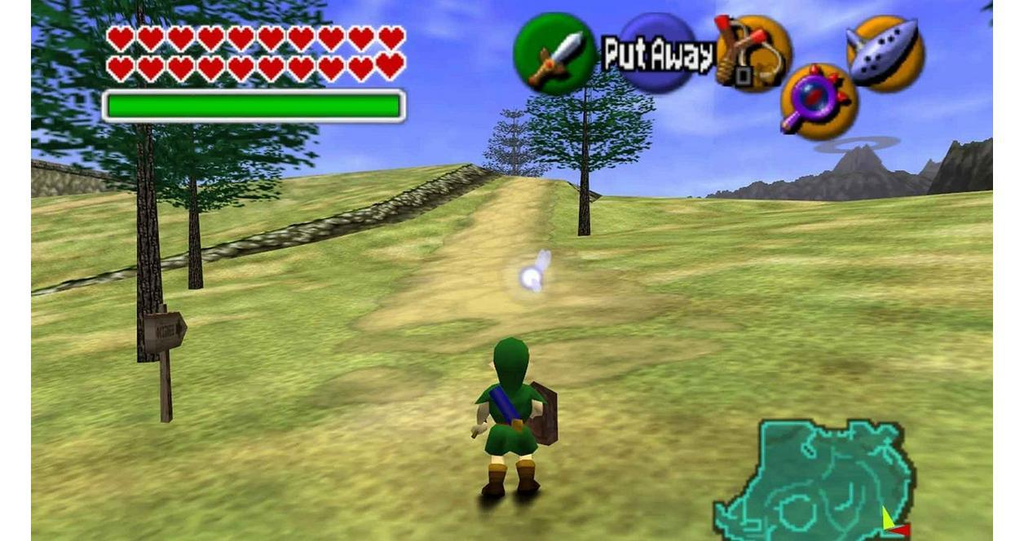
Z-targeting, camera design, dungeon structure, world design, and the way exploration was combined with acquiring new abilities became reference points for future projects.
The influence of Ocarina of Time can be seen in many games released after it. Even projects that were not directly connected to Zelda adopted principles that Nintendo had refined in 1998.
The game also became the foundation for the continued development of the series itself. Nintendo later released Majora's Mask, which used many of Ocarina of Time's technological and gameplay foundations while offering a much darker story and a different world structure.
Ocarina of Time was later re-released on other platforms, including Nintendo 3DS, where the game was adapted for the handheld console and received updated visuals.
Years after its release, The Legend of Zelda: Ocarina of Time remains one of Nintendo's most influential games.
Its importance is not limited to its reviews or sales. In 1998, Nintendo proved that a series that had existed in a 2D format for years could successfully transition into 3D while preserving its core principles — exploration, discovery, puzzles, and a sense of adventure.
The Legend of Zelda: Ocarina of Time became a game that demonstrated what a large-scale 3D adventure could be. It laid the foundation for future Zelda titles and influenced an entire generation of developers.
That is why, nearly three decades after its release, Ocarina of Time remains not only a Nintendo classic but one of the games that helped shape the modern understanding of 3D adventure games.
As a reminder, Mass Effect — the story of the game that created a legendary sci-fi universe.


