On August 14, 2020, Czech studio Wube Software brought version 1.0 of its game Factorio out of Early Access. What once began as a modest crowdfunded indie project quickly evolved into a foundational pillar of the automation and base-management genre.
Six years after its full release, this game categorically refuses to lose relevance. Its peak online player count over the last 24 hours stands at a powerful 21,500 players on Steam — a figure that most modern high-budget releases could envy. We recall how this "playable Excel spreadsheet" became a cult hit, why the developers tactically fled from Cyberpunk 2077, and what lies behind the secret of the mantra "The factory must grow."
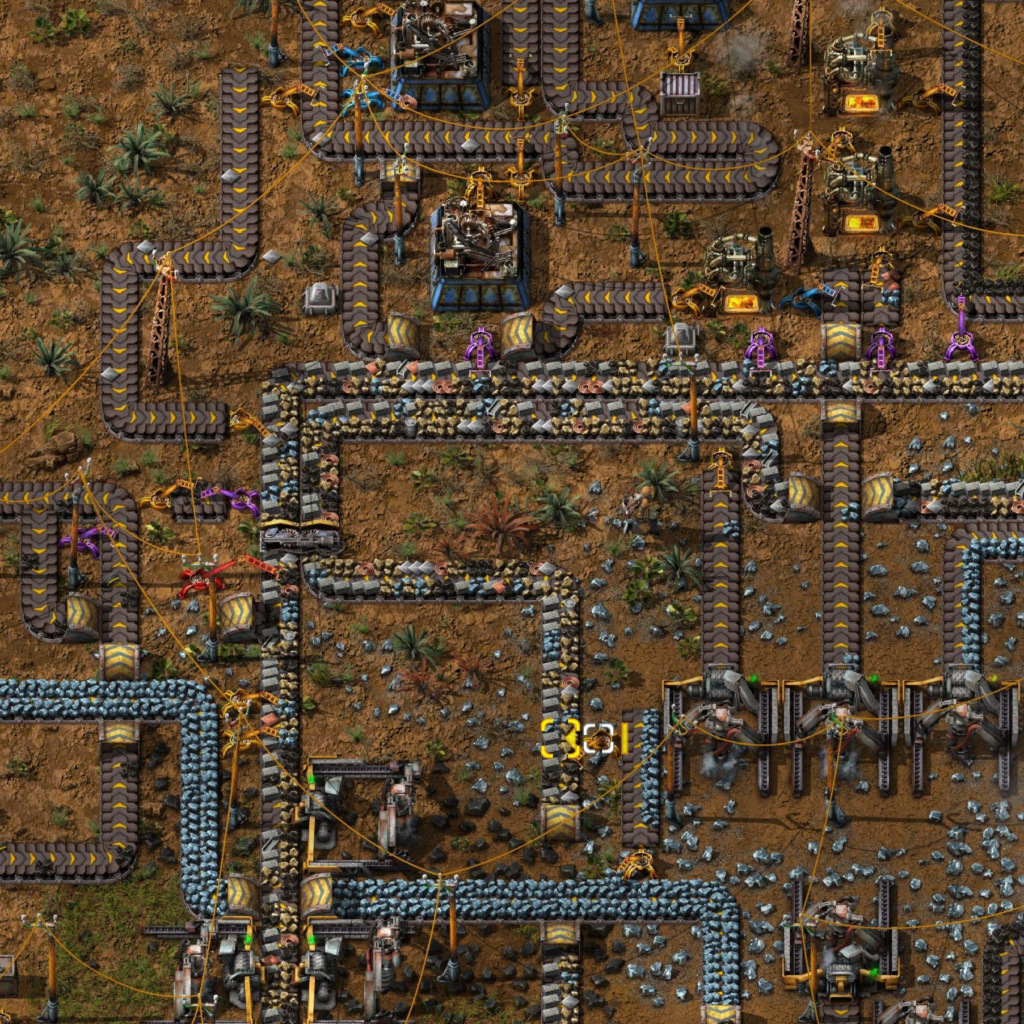
The main phenomenon of Factorio lies in how skillfully it manipulates the pleasure centers in the player's brain. You start by manually mining a piece of coal and chopping down a tree to light a primitive furnace. But a few dozen hours pass, and you stand in the middle of a giant industrial metropolis, where thousands of robotic inserters, complex conveyor belts, and trains work as a single symphonic orchestra.
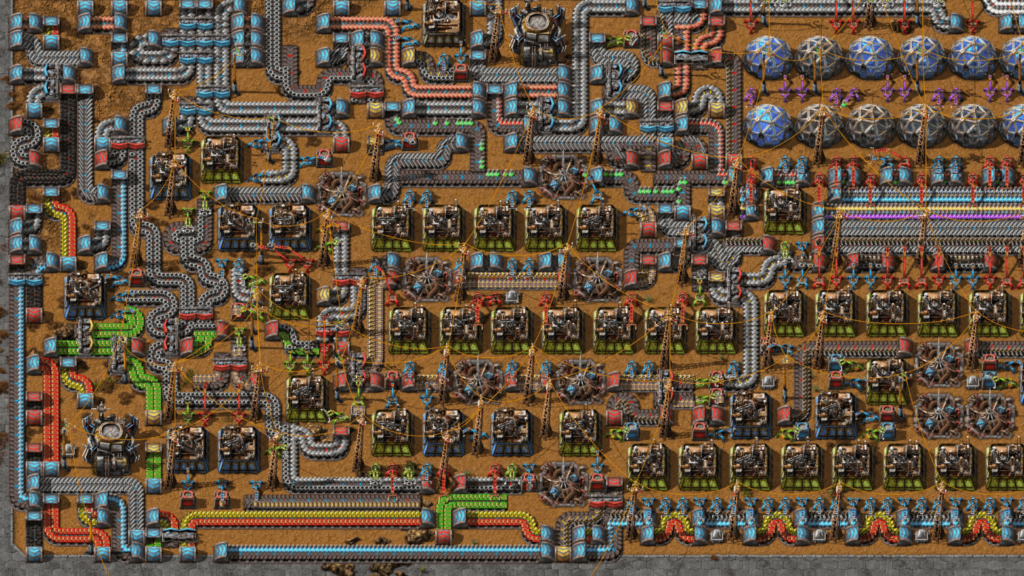
The game does not punish you for mistakes; it forces you to punish yourself through your own inner perfectionist. Every created production line sooner or later turns out to be insufficiently efficient. This endless loop — find the bottleneck, rebuild the factory, realize that now you critically lack copper, expand mining — turns the game into a true black hole for free time.
Another stroke of genius in Factorio is how the game subtly makes you feel like a real corporate villain. Your factory doesn't just produce resources; it generates thick clouds of toxic pollution. The more your factory smokes, the more aggressive the local inhabitants become — insectoids known as "biters." At this point, the game elegantly transforms from an economic strategy into a full-fledged Tower Defense. You have to build kilometers of concrete walls, set up artillery, and place laser turrets to defend your precious conveyor belts from waves of ecologically outraged natives.
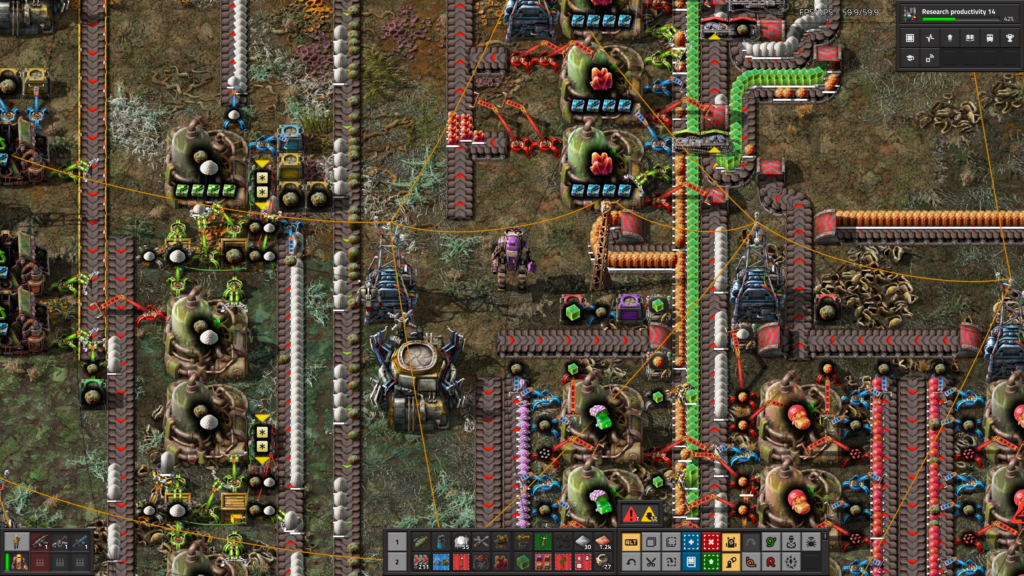
The official goal of the base game is to research all technologies, build a silo, and launch a rocket into space. For most games, this would mean a "Victory" screen and uninstalling from the drive. But in Factorio, this is precisely where a new stage of progression opens up. Launching a rocket yields unique "space science," which allows for infinite technology upgrades. The official finale becomes merely the starting whistle for the real game: designing giant megabases, creating an ideal railway network, and transitioning to the mass production of thousands of resources per minute.
From a technical standpoint, Factorio is a benchmark of optimization. Wube Software's engine is capable of simultaneously calculating the movement of millions of items on belts, the complex logistics of railway networks, and the behavior of thousands of "biters" without even a hint of a frame rate drop.
The developers spent years meticulously polishing the code, rewriting entire systems just to save milliseconds of CPU time. This is that rare case in the industry where the game's code is just as beautiful and orderly as an experienced player's perfectly constructed factory.
Beyond gameplay achievements, August 14 is also the date of one of the funniest and wisest decisions in indie marketing history. Originally, the release of Factorio 1.0 was planned for September 2020. However, CD Projekt RED delayed the release of its long-suffering Cyberpunk 2077 to that exact period yet again.
The Czech studio realistically assessed the situation and made a brilliant move: they simply moved their game's release date a month earlier, choosing August 14. They stated openly and with humor that they didn't want to force players to choose between their cozy factory and Night City. The irony of fate is that the Polish developer then delayed Cyberpunk again all the way to December, but Factorio had already launched triumphantly, garnered overwhelming reviews, and gathered all the spotlight.
For a long time, fans satisfied their engineering appetite with massive mods, but a true revolution occurred with the release of the official Space Age expansion and global update 2.0. The developers didn't just add new content — they completely overturned the endgame concept. With this expansion, launching a rocket turned into a real ticket to deep space. Now players have to construct massive orbital platforms, manage complex interplanetary logistics, and colonize new, completely unique worlds: from volcanic wastelands to planets drowned in jungles or electromagnetic storms. Thanks to Space Age, the scale of the "Factory" expanded beyond a single planet, conclusively proving that conveyor belts work perfectly even in a vacuum.
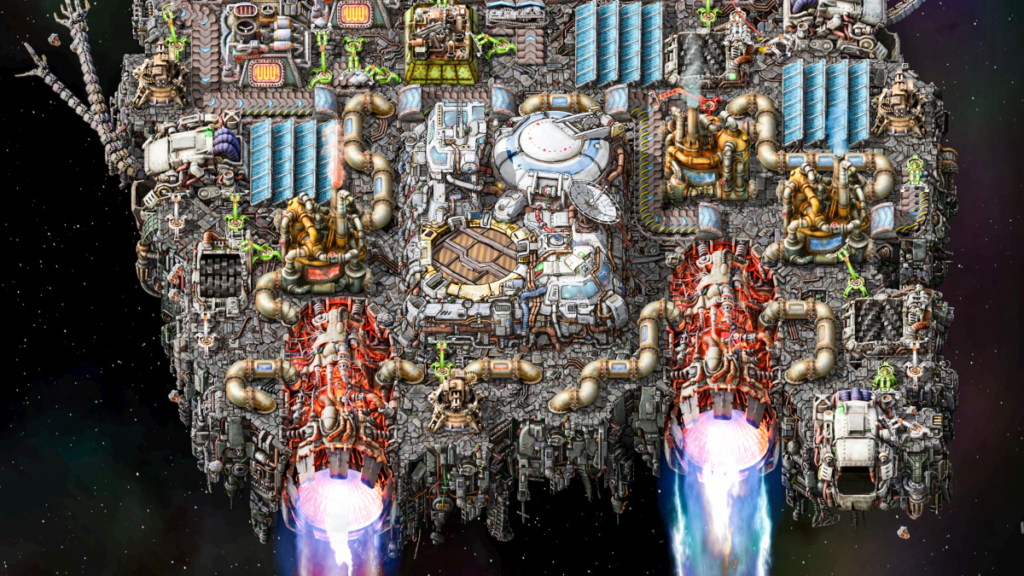
The studio continues to develop its universe, and the high online player count confirms an immutable truth: no matter what happens in the world, the Factory must grow.
As a reminder, 13 Years of Payday 2: How a Co-op Heist Shooter Became an Immortal Phenomenon.


