On August 15, 2017, Sonic Mania was released — a game that didn't just return hope for former greatness to Sega's iconic mascot, but also proved that the brightest projects are born when a major publisher trusts the development of a series to true fans. Even today, nine years after its release, this project remains a benchmark for how to work with classics.
To understand the "Mania" phenomenon, one must recall the state the blue hedgehog was in for most of the 2000s and 2010s. It was a true "3D curse." Sega desperately tried to modernize Sonic, throwing him from one extreme to another. We saw a hedgehog with a sword, a hedgehog turning into a werewolf, bizarre design experiments, and outright failed releases. Even the most high-profile modern three-dimensional projects, whether the highly controversial Sonic Forces or the ambitious Sonic Frontiers with its open zones, always gathered mixed reviews. Graphics improved and budgets grew, but Sonic in 3D often felt clumsy, while players complained that the series had lost its signature drive.
The salvation story began not in expensive offices, but in the room of Australian programmer-enthusiast Christian Whitehead. Being a hardcore fan, he single-handedly created the Retro Engine, which perfectly replicated that exact unique momentum physics from the 16-bit games, and independently ported Sonic CD to smartphones. In most cases, such an initiative ends with a harsh letter from lawyers. But Sega's management made a brilliant and wise move: they officially hired the talented modder.

When the Sonic 1 and Sonic 2 ports brought in revenue and rave reviews, Whitehead pitched a bold idea to Sega — to make an entirely new 2D game. Several other small independent studios from the fan community (PagodaWest Games and Headcannon) were brought into the project. Given creative freedom, they worked a miracle. Sonic Mania wasn't just a lazy set of old levels for nostalgia's sake. It was a love letter to an entire era.
The developers took classic levels like Green Hill or Chemical Plant and rebuilt them from scratch, adding new routes, bosses, and mechanics. Alongside them, they placed completely new, stunning zones, such as Studiopolis with its neon glamour or the desert Mirage Saloon. The gameplay felt ideal: jump physics, momentum preservation during acceleration, thoughtful level design — everything that made the original Genesis games great returned multiplied by two. Anyone who picked up a gamepad instantly caught that exact flow state.
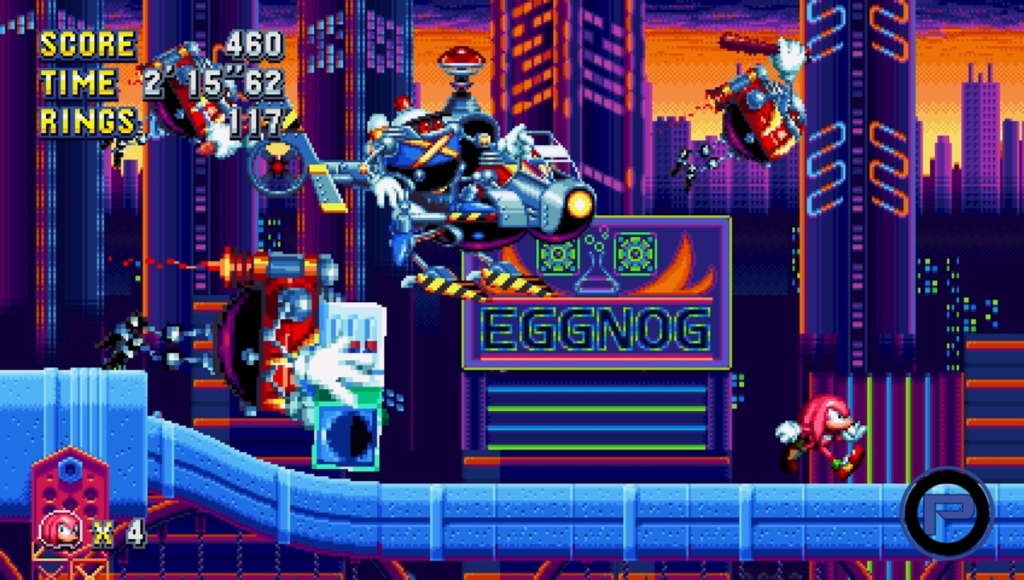
A special point of pride for Sonic Mania is its musical accompaniment. Instead of simply inserting original 16-bit tracks, the team invited composer Tee Lopes, previously known in the community for his splendid YouTube remixes. He did a colossal job: preserving that same recognizable funk and retro 90s sound, while enriching it with lush, modern arrangements. When you fly into the updated Green Hill level for the first time, and a fresh yet painfully familiar motif starts playing in the background, endorphin levels simply skyrocket. This soundtrack perfectly emphasizes the frantic dynamic, driving you to move even faster.

An equally important detail that instantly won players over even before pressing the "Start" button was the stunning hand-drawn animation. Artist Tyson Hesse was responsible for the opening cinematic, capturing the hedgehog's classic audacious vibe so meticulously that Sega later invited him to rescue Sonic's controversial design for the Hollywood movie. This visual care is felt in every sprite of the game itself. Animations became significantly smoother, and a multitude of fine details and funny character reactions to the environment appeared — things that simply couldn't exist in the original installments due to the strict technical limitations of old consoles.
The project's success proved so massive that a year later, the developers released an expanded edition, Sonic Mania Plus. It added new playable characters from the deep, nearly forgotten lore of the series — Mighty the Armadillo and Ray the Flying Squirrel. Each of them brought unique mechanics that allowed players to traverse familiar levels along entirely new routes. This served as yet another proof that the developers were not merely fulfilling a contract, but were lovingly digging through Sega's dusty archives, bringing to light what the franchise creators themselves had once abandoned.
One can only hope that the gaming world will see more such projects in the Sonic universe. Playing Sonic Mania was an absolute delight: it felt incredibly pleasant, cool, and dynamic in every movement. It proved that a perfect game doesn't always need Hollywood scale or hundreds of millions of polygons — perfect physics, gorgeous pixel art, and a team passionate about their work are enough. And even now, returning to this game, you realize: Sonic Mania is not just a fantastic platformer, it is a reminder to the entire industry that sometimes a fan's heart beats stronger than corporate calculation.
As a reminder, 6 Years of Factorio: How an Engineer Simulator Turned into a Digital Drug for Perfectionists.


