On August 3, 2004, DOOM 3 was released — a game that became not just a continuation of the legendary series, but a true technological demonstration of PC capabilities in the early 2000s. The new project from id Software fundamentally reimagined classic DOOM, betting not on a frantic pace, but on atmosphere, cinematic feel, and graphics technologies that were revolutionary at the time.
It was DOOM 3 that gave the world the id Tech 4 engine, which long served as a benchmark for modern graphics, while the game itself gained a reputation as a project capable of bringing even the most powerful computers of its era to their knees.
Today, when speaking of games that were technically ahead of their time, most immediately recall Crysis. But three years before its release, it was DOOM 3 that held this unofficial title.
In 2004, the game became a real trial for PC hardware. Owners of even high-end systems often couldn't achieve a stable 60 FPS at max settings, and new graphics cards from NVIDIA and ATI were marketed specifically through their ability to run DOOM 3 comfortably.
For many enthusiasts back then, the question "Will my PC run DOOM 3?" was just as relevant as "Can it run Crysis?" became a few years later.
That is why DOOM 3 is often called the "Crysis of its time" — a game that became a symbol of technical progress and the primary benchmark for new hardware components.
The biggest innovation of DOOM 3 was its new graphics engine, id Tech 4, created by legendary programmer John Carmack.
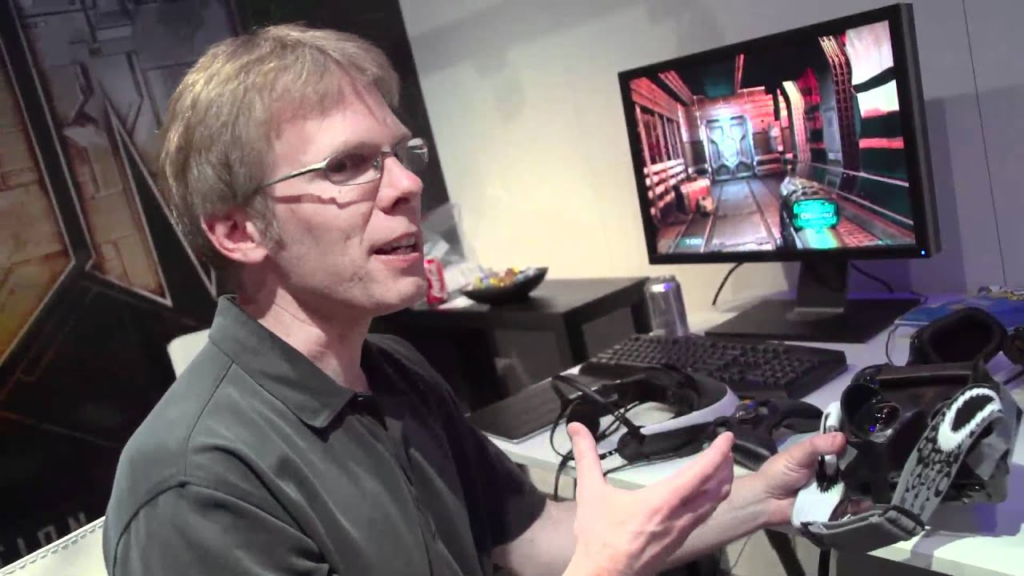
Unlike most games of the early 2000s, which relied on pre-rendered lighting, id Tech 4 bet on fully dynamic lighting and shadows.
Every light source in the game worked in real time. The flashlight, explosions, gunshots, or emergency lighting transformed the appearance of rooms right before the player's eyes. Shadows cast by enemies moved naturally, and light interacted with virtually every object on the level.
Today, such technologies seem commonplace, but in 2004, it was a true breakthrough.
Later, id Tech 4 formed the basis for, or significantly influenced, the technology of many other games. It served as the foundation for Quake 4, Prey (2006), Enemy Territory: Quake Wars, and a number of other projects. Furthermore, Carmack's approaches to handling lighting became a benchmark for many modern engines.
While the classic DOOM games were associated primarily with speed, swarms of demons, and relentless action, the third installment chose a completely different path.
id Software essentially turned DOOM into a psychological survival horror. Abandoned laboratories on the Martian UAC base, constant power outages, narrow corridors, unexpected demon attacks, and near-total darkness created an atmosphere that remains one of the best in the genre even today.
A special element was the famous flashlight. In the original version of the game, it could not be used simultaneously with a weapon, forcing players to constantly choose between being able to see danger or being ready for combat.
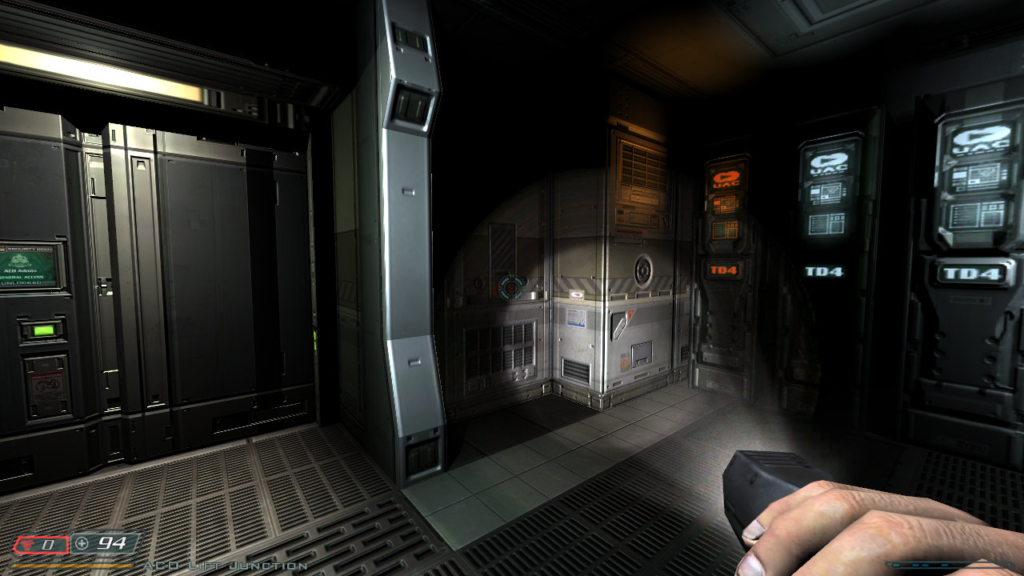
This very mechanic became a subject of much controversy, but at the same time made DOOM 3 a significantly more tense game than its predecessors.
Even two decades later, DOOM 3 continues to impress with its attention to detail. Character models possessed a high level of detail, metal and glass surfaces looked convincing, and the system of normal mapping allowed for complex textures without a massive load on polygon counts.
Particularly impressive were the monster animations and numerous special effects — smoke, sparks, light reflections, and the physics of small objects. All of this worked in real time, making DOOM 3 look significantly more modern than most of its competitors.
That is why journalists and reviewers used the game for many years as a performance benchmark for new CPUs and graphics cards.
Upon release, the game divided fans. Some criticized it for its slower pace and significantly greater emphasis on horror rather than classic action. Others, on the contrary, dubbed DOOM 3 the most atmospheric entry in the franchise. And even today, that very atmosphere remains the main reason why many players regularly return to this game.
The sound design, dim lighting, constant sense of danger, and expertly crafted jumpscares created a unique experience that stands out not only from modern titles like DOOM (2016) and DOOM Eternal, but from most shooters in general.
Essentially, id Software showed that the DOOM universe can be about more than just speed and swarms of demons — it can also be about tension, isolation, and fear of the unknown.
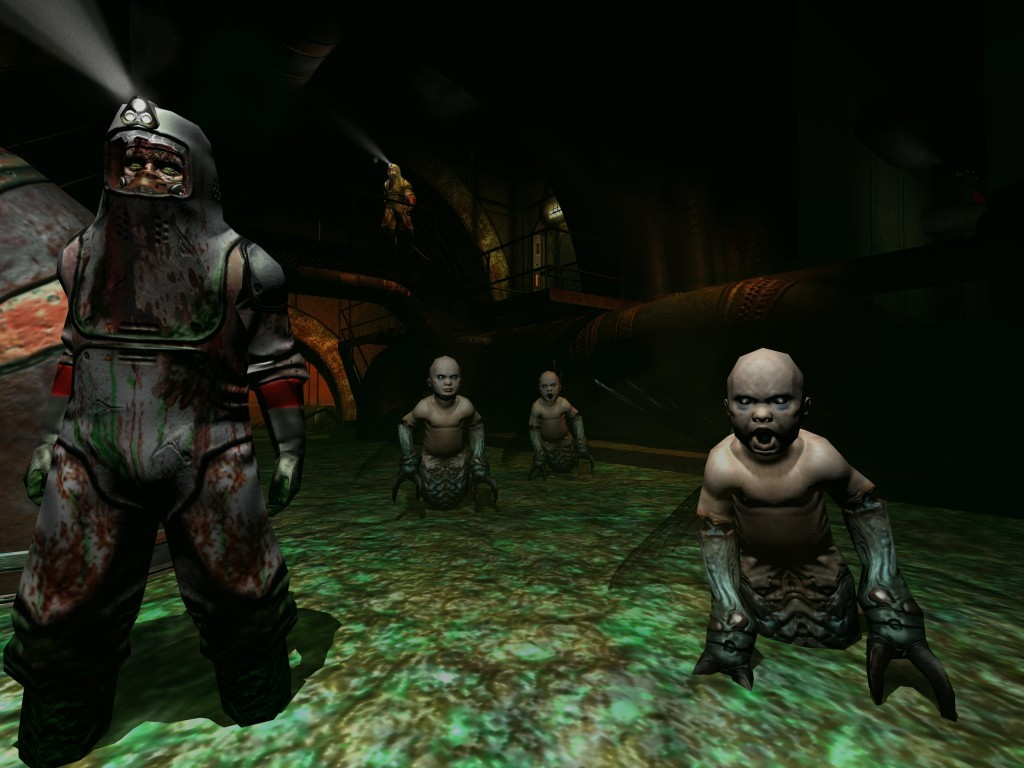
DOOM 3 sold millions of copies, received the expansion pack Resurrection of Evil, and in 2012, the re-release DOOM 3: BFG Edition came out featuring enhanced graphics, support for modern systems, and a number of gameplay adjustments.
However, the main legacy of the game was not its sales, but its technological contribution to the industry.
DOOM 3 proved that graphics technology could become more than just eye candy; it could be an essential part of gameplay. Lighting, shadows, and sound didn't just exist for a pretty picture here — they forged the atmosphere and directly impacted how the player interacted with the world.
Twenty-two years after its release, DOOM 3 is no longer the best-looking game on the market. But its contribution to the evolution of game engines, its impact on the industry, and its status as one of the most atmospheric shooters in history remain undeniable. That is why, for many gamers, DOOM 3 remains today not just another installment in a legendary series, but a true technological revolution that defined the genre's development for years to come.
As a reminder: The Sister Duo That Conquered the World: How Cinny and Chell Became the Heart of Team Vitality.


