On August 10, 1992, European players got their first chance to play Virtua Racing — a revolutionary arcade racing game from Sega that showcased the potential of full 3D polygon graphics and effectively became one of the foundations of the upcoming 3D era of video games.
In the early 1990s, most arcade hits were still built around 2D graphics. Sega decided to take a risk and created its own hardware platform, the Sega Model 1, capable of handling 3D polygon graphics. It was Virtua Racing that became the first game to showcase the potential of this technology in a large-scale commercial project.
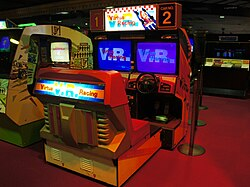
The story of Virtua Racing began as a technological experiment. Sega was creating a new 3D platform to test how realistic polygonal graphics could be in arcade games. To achieve this, the AM2 team, led by Yu Suzuki, developed a racing prototype.
The result impressed Sega so much that they decided to turn the experiment into a full-fledged arcade game. Thus was born Virtua Racing — one of the company's first major projects built entirely around a new 3D approach.
This was particularly important because Sega didn't just create three-dimensional backdrops. The cars, the track, trees, billboards, and other objects were all constructed from polygons, and the camera could smoothly shift its perspective around the car.
For a modern gamer, the ability to switch camera angles seems like a standard feature. In 1992, that was far from the case.
Virtua Racing allowed players to switch between four different camera angles right during a race. Players could view the car from behind, use a perspective closer to the vehicle, or choose other viewing options.
The game featured three tracks — Big Forest, Bay Bridge, and Acropolis — which corresponded to three difficulty levels. Races were held against other opponents, where mistakes on the track could cost precious time. There was even an option to choose between automatic and manual transmission.
But the main achievement was not the number of tracks. Virtua Racing demonstrated a completely different way of perceiving space.
Players were no longer just watching a car against a flat backdrop — they were moving through a three-dimensional world where objects shifted perspective based on the vehicle's position.
Virtua Racing served as the flagship showcase for the capabilities of Sega Model 1 — the company's specialized arcade platform designed for 3D graphics.
At that time, creating a convincing three-dimensional image required vastly more computing power than traditional 2D graphics. Sega essentially bet on the future by investing in a hardware platform capable of rendering polygonal objects in real time.
And that bet paid off.
Virtua Racing served as proof to the entire industry that 3D could be more than just a tech demo — it could be the foundation of a full-fledged, mainstream genre.
The most important consequence of Virtua Racing's success was that it gave Sega confidence in its own 3D technology.
As early as 1993, Virtua Fighter debuted on the very same Model 1 hardware. And this time, polygons were used for characters rather than cars.
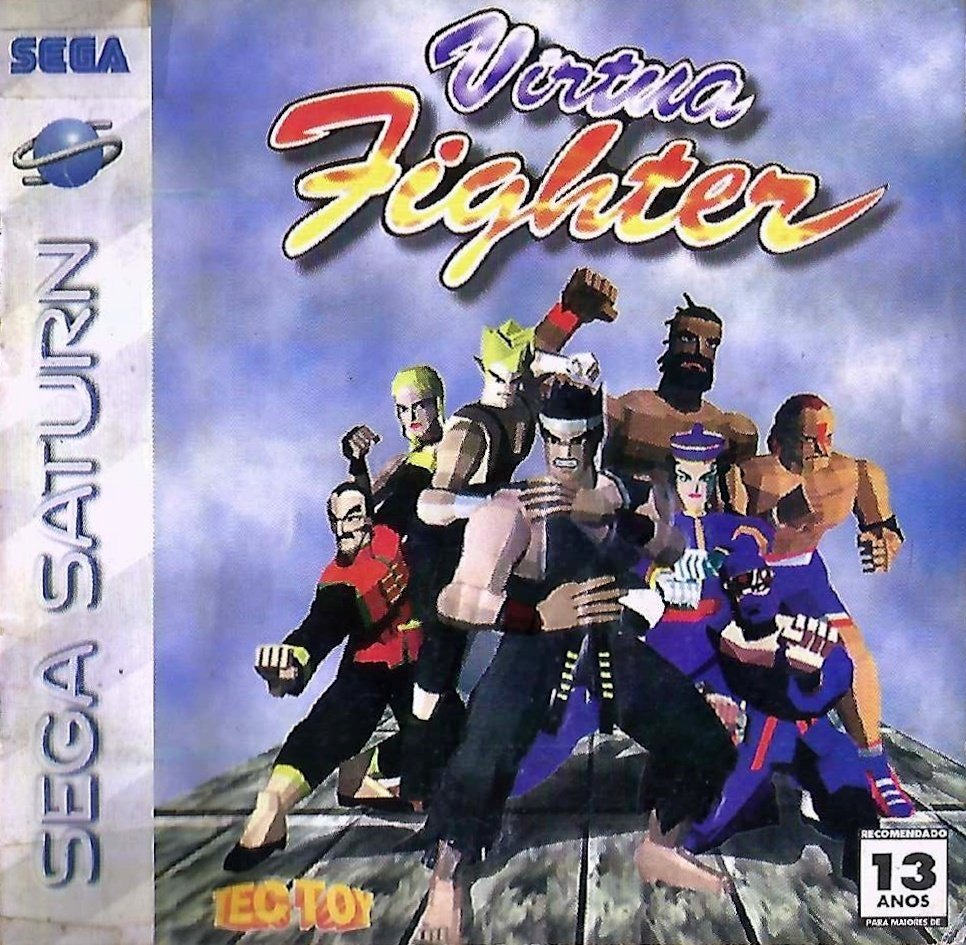
Official histories of the Virtua Fighter franchise call it the first fighting game to feature 3D polygonal character models. At a time when the genre was almost exclusively associated with 2D graphics, the arrival of Virtua Fighter came as a genuine shock to the industry.
Thus, Virtua Racing became a testing ground for technologies that Sega would soon bring to other genres.
The racing game proved that 3D worked. Virtua Fighter showed that even complex characters and combat mechanics could exist within it.
Another major project born out of Sega's experience with 3D arcades was Daytona USA.
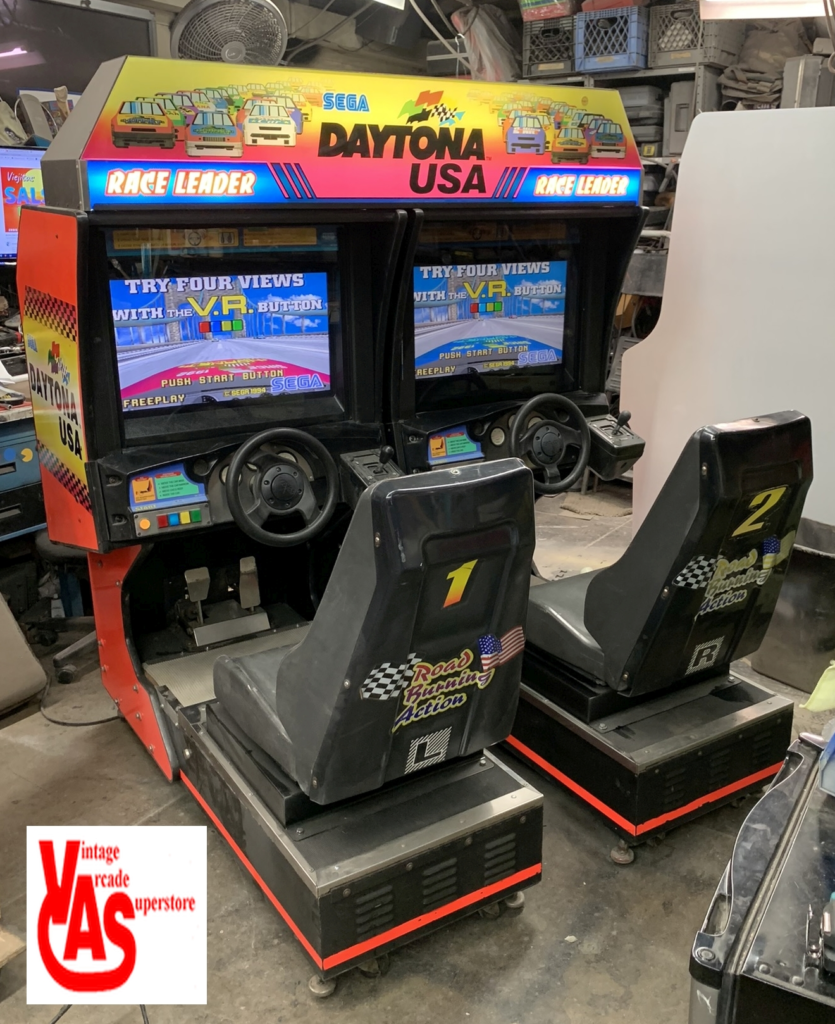
Released in 1993, it became one of Sega's most iconic arcade racers. With experience on the Model 1 and polygonal vehicles gained through Virtua Racing, the company could push the concept much further and bolder.
Daytona USA emphasized speed, massive tracks, rivals, and immersion. Projects like these permanently cemented Sega's reputation as a key technological leader of the 1990s arcade industry.
Today, 3D polygonal graphics are the foundation of nearly every major video game. But in the early 1990s, that was far from obvious.
Virtua Racing demonstrated several key points all at once:
And most importantly, Sega showed other developers what the next generation of video games could look like.
Virtua Racing was not the first game in history to use polygons — 3D graphics had appeared in arcades before. However, Sega was the one to turn the technology into a spectacular gaming experience that could be seen and felt right in a local arcade hall.
In the following years, 3D rapidly took over the industry. Virtua Fighter, Daytona USA, and Sega Rally Championship arrived, and soon 3D graphics became a primary driving force behind home console development.
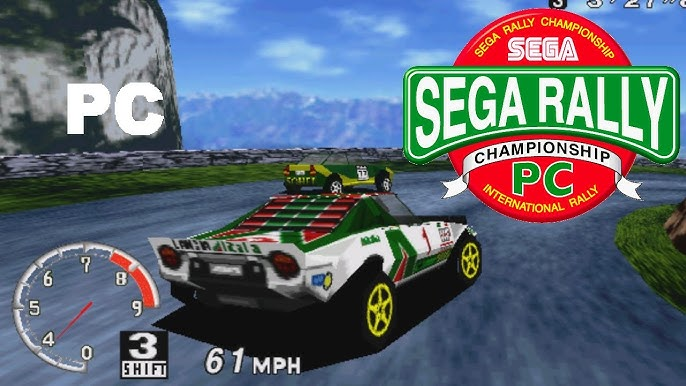
Even Sega itself continued refining this concept on the Saturn, while competitors began heavily investing in their own 3D technologies.
Therefore, the significance of Virtua Racing lies not just in being a fast arcade racer from the early '90s. It served as a technological signal for the entire industry.
On August 10, 1992, players got the chance to take the wheel and witness the polygonal future of video games. And within just a few years, 3D worlds became the new normal.
Virtua Racing didn't invent 3D video games from scratch — but it helped make them the future.
As a reminder, Death Crimson — A Game That Became a Legend Thanks to Failure: 30 Years Ago, One of Sega Saturn's Most Famous Kusoge Was Released.


