In October 2003, Star Wars Rogue Squadron III: Rebel Strike was released for the Nintendo GameCube — the third installment in the series of aerial combat games set in the Star Wars universe. The developers at Factor 5 attempted to expand the familiar formula, allowing players not only to pilot legendary starfighters but also to take part in ground battles. However, this very innovation became one of the game's most controversial features.
In the early 2000s, the Rogue Squadron series was considered one of the most striking examples of how large-scale space battles from Star Wars could be brought into video game form.
Following the success of Star Wars: Rogue Squadron in 1998 and Rogue Squadron II: Rogue Leader in 2001, the Factor 5 studio decided to make the next installment even more ambitious.
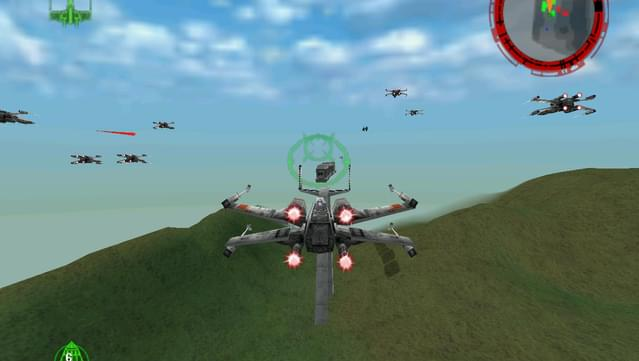
Star Wars Rogue Squadron III: Rebel Strike once again transported players into the events of George Lucas's original film trilogy. At the center of the story were Luke Skywalker and Wedge Antilles, who led the Rebel Alliance's combat operations against the Galactic Empire.
Players could take part in familiar battles on Hoth and Endor, pilot X-wings and other aircraft, attack Imperial forces, and complete special missions.
The developers sought to recreate the atmosphere of the films through large-scale battles, familiar locations, musical accompaniment, and the use of footage from the original trilogy.
The main difference between Rebel Strike and its predecessors was the ability to leave the cockpit of a combat spacecraft.
While the series had previously focused primarily on aerial and space battles, players could now control characters directly on the ground.
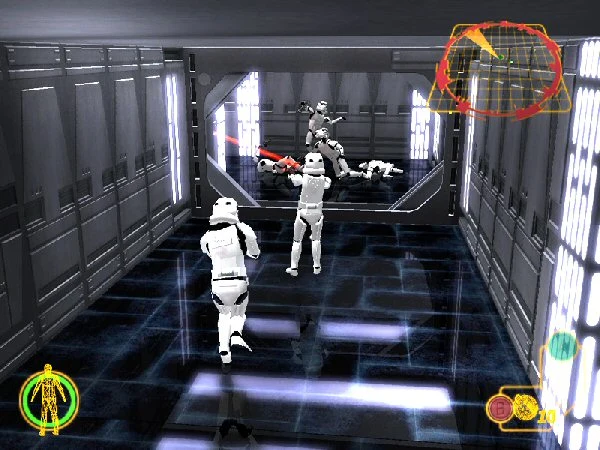
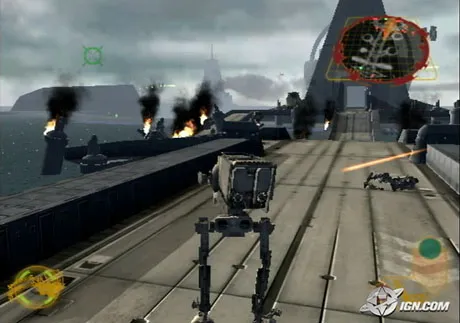
In some missions, Luke Skywalker moved on foot, used weapons and a lightsaber, and interacted with various vehicles.
In addition to starfighters, the game introduced the ability to control Imperial AT-ST walkers, high-speed speeders, and other vehicles from the Star Wars universe.
One example of this approach was the Battle of Hoth, where players could not only take part in vehicle combat but also travel across the snowy planet on the back of a tauntaun.
The developers aimed to make Rebel Strike more varied by combining several gameplay styles within a single adventure.
One of Rebel Strike's most interesting innovations was its two-player cooperative mode.
Factor 5 essentially brought the campaign from the previous game, Rogue Leader, into the third installment, adapting it for cooperative play.
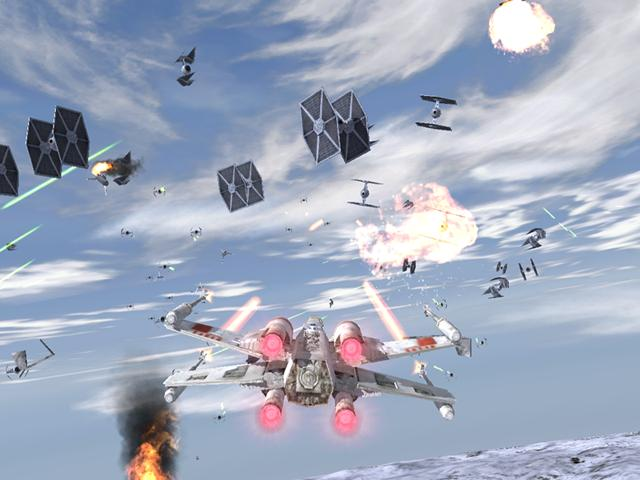
Two players could complete missions together, destroy Imperial ships, and coordinate their actions during large-scale battles.
At the same time, the developers adjusted the difficulty balance to prevent cooperative play from becoming too easy.
In addition to the cooperative campaign, Rebel Strike also featured competitive multiplayer modes, including aerial duels.
For Nintendo GameCube owners, this was a significant addition, as the game offered not only a new story campaign but also the opportunity to relive the events of the previous installment with a friend.
Star Wars Rogue Squadron III: Rebel Strike became another demonstration of the Nintendo GameCube's technical capabilities.
Factor 5 paid considerable attention to the graphics engine, lighting, explosions, and atmospheric effects.
The developers aimed to increase the number of enemies on screen and make battle scenes more spectacular than in Rogue Leader.
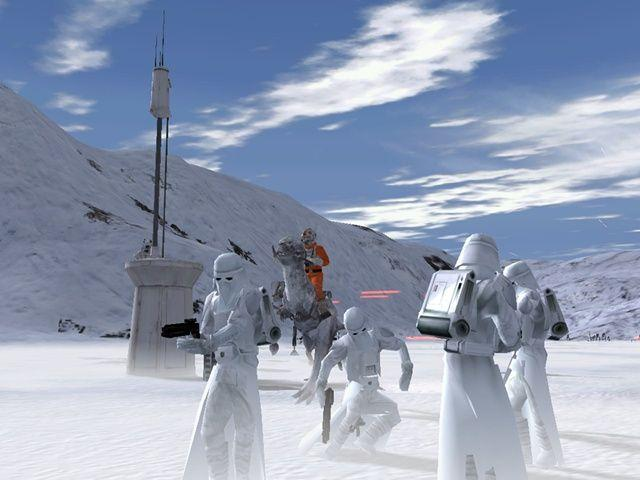
Particular attention was paid to the detail of starfighters, ground vehicles, and environments to bring the visuals as close to the films as possible.
As a result, space battles remained one of the game's strongest aspects.
However, the ambitious expansion of gameplay mechanics also had negative consequences.
Despite its technical achievements, the third Rogue Squadron installment failed to match the overwhelmingly positive reception of its predecessor.
The ground missions received the most criticism. Reviewers pointed to awkward character controls, an underdeveloped combat system, and a noticeable contrast between the high-quality flight sequences and the less successful on-foot sections.
According to some reviewers, the attempt to make the game more varied distracted the developers from the main element that had made the series popular.
At the same time, the aerial battles, graphics, and cooperative campaign received positive reviews.
In particular, GameSpot rated Rebel Strike 7.8 out of 10, while the game's average score on Metacritic stands at 75 out of 100.
Thus, Rebel Strike remained a high-quality but controversial sequel that both developed and weakened the series' established formula.
Twenty-three years after its release, Rebel Strike remains an interesting chapter in the history of video games based on Star Wars.
It became an example of how developers attempted to expand the boundaries of a successful series by combining spectacular space battles with ground adventures and cooperative gameplay.
Although not all of Factor 5's experiments proved successful, Rebel Strike is remembered for its large-scale battles, technical achievements, and the ability to play through the Rogue Leader campaign with a friend.
Today, the game serves as a reminder of a period when the Nintendo GameCube was receiving ambitious exclusives and studios were actively experimenting with the capabilities of a new generation of consoles.
Star Wars Rogue Squadron III: Rebel Strike did not become a flawless continuation of the series, but it left a notable mark on the history of Star Wars games — as one of the most ambitious attempts to combine space and ground battles in a single adventure.
As a reminder, Super Meat Boy — a small Flash game that became an indie hit.


