31 october 1991 — Super Castlevania IV was released in Japan on the Super Famicom — the fourth Castlevania game for Western audiences and one of the best-known games in the series. In Japan, it was titled Akumajō Dracula, and it was developed by Konami. The game became Castlevania's first full-fledged transition to the 16-bit generation and demonstrated how the familiar formula could be significantly expanded thanks to the new generation of consoles.
Unlike many later entries in the series, Super Castlevania IV did not attempt to turn Castlevania into an RPG or a game with a branching structure. Director and lead programmer Masahiro Ueno, who was credited as Jun Furano, wanted to return to the roots and make it primarily a pure action game. His reference point was the original Castlevania on the NES, which he particularly liked.
By the time Super Castlevania IV was created, the series had already gone through several different stages. The original 1986 Castlevania laid the foundation for the classic platformer, Castlevania II: Simon's Quest attempted to add adventure RPG elements, while Castlevania III: Dracula's Curse introduced branching levels, multiple characters, and different paths through the game.
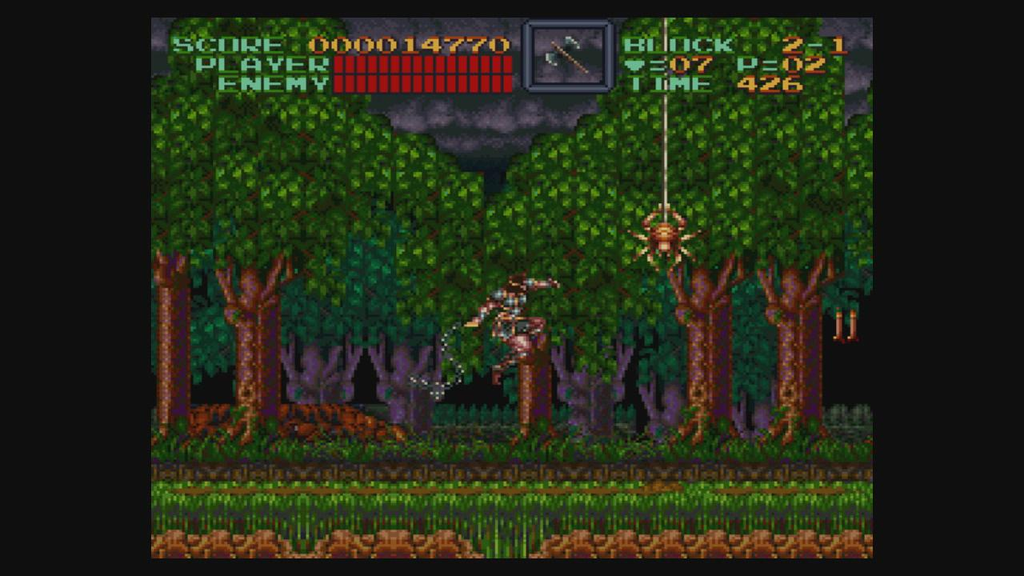
Ueno decided to take a different approach. He wanted to create a game that was closer to the first Castlevania — a linear action game with gradual level progression, challenging enemies, and constant movement toward Dracula's castle. As a result, some of the innovations from the third game, particularly its branching structure, did not make it into Super Castlevania IV.
At the same time, it would be incorrect to call the game simply a remake of the original. Ueno viewed it as a kind of reinterpretation of the first Castlevania. The familiar story of Simon Belmont and Dracula received new levels, bosses, mechanics, and a much larger technical presentation.
Development of Super Castlevania IV began as early as the late 1980s, approximately alongside Castlevania III: Dracula's Curse. The team was small, and during the early stages of development, the developers did not even have complete development kits for creating games for the Super Famicom. They had to work with the specifications of the new hardware and plan levels on paper.
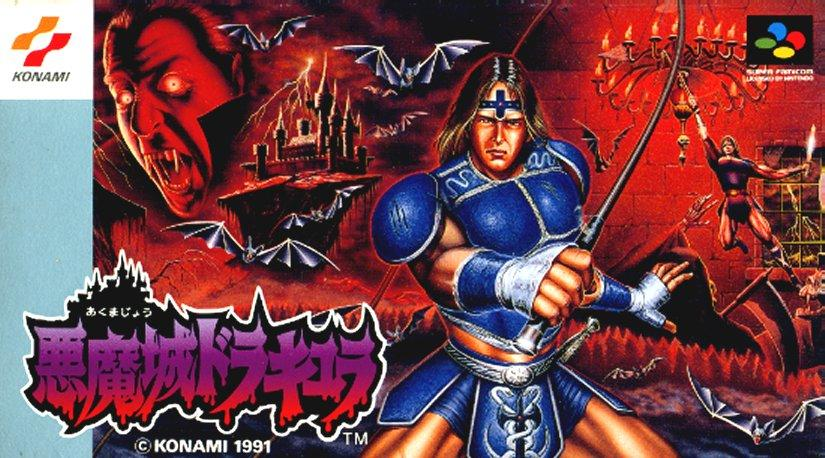
This significantly influenced the development process. Team members participated not only in their direct responsibilities but also contributed ideas for levels and mechanics. Some decisions were discovered by the developers while experimenting with the capabilities of the new hardware.
The transition from the NES to the Super Famicom opened up far more possibilities for Konami. The console could handle more detailed graphics, more complex backgrounds, scaling, and image rotation. As a result, Super Castlevania IV became not just a new game in the series, but also a demonstration of what Castlevania could look like in the 16-bit era.
One of the main innovations was Simon's whip control system.
In previous games, the direction of attacks was much more limited. In Super Castlevania IV, Simon gained the ability to attack in eight directions, significantly expanding control over the character. The whip could be aimed upward, downward, and to the sides, allowing players to attack enemies at different heights.
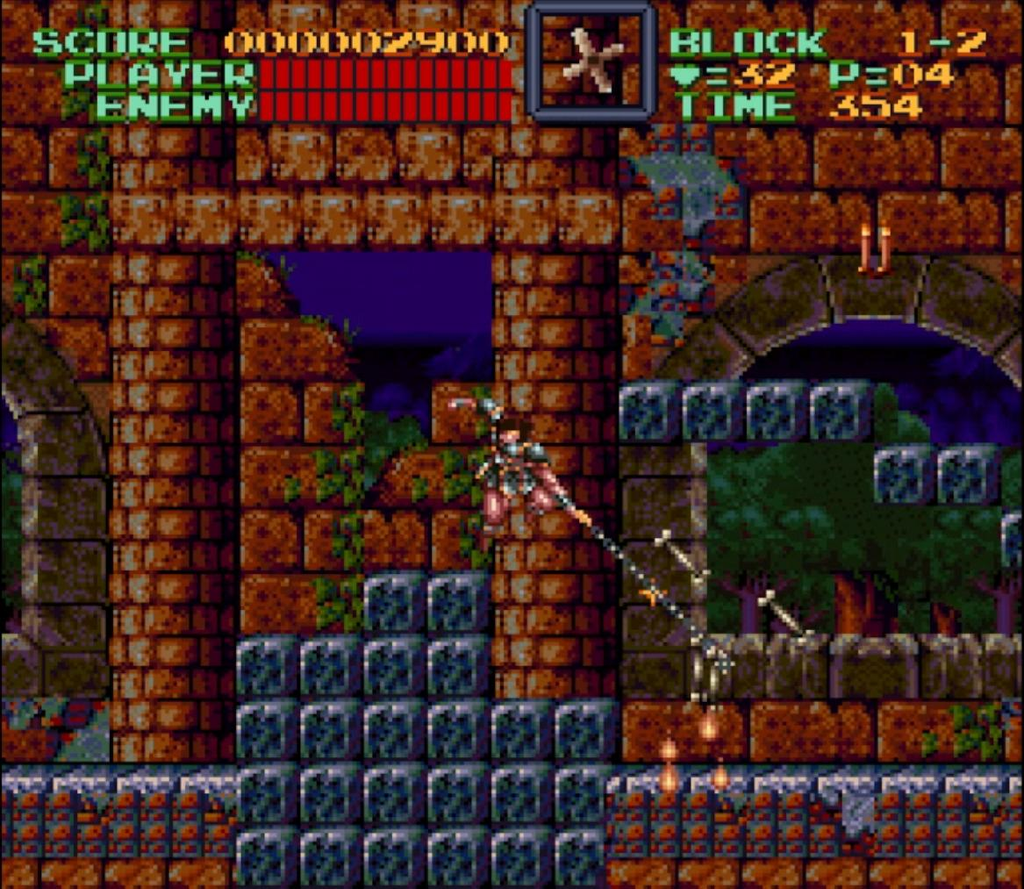
Even more interesting was the ability to hold the attack button and swing the whip around Simon. This made it possible to defend against enemies from different directions and created new ways to approach encounters.
The developers also used the whip as a kind of grappling hook. In certain areas of the levels, Simon could attach it to special points and swing across gaps. This mechanic added elements of spatial movement to the traditional platformer that had not previously been present in Castlevania.
One of the main reasons the game remained so memorable was the way it used the technical capabilities of the Super Famicom.
Konami made extensive use of Mode 7 — the SNES graphics mode that allowed two-dimensional images to be rotated and scaled. In Super Castlevania IV, this became more than just a visual effect and was incorporated into the level design.
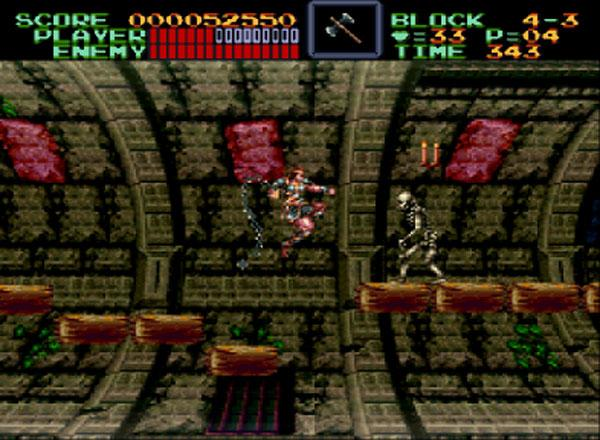
One of the most famous moments was a location featuring a rotating room. The player had to navigate the environment while the surrounding area changed its orientation. Other levels used scaling, moving backgrounds, and complex visual effects.
This was particularly important early in the Super Famicom's life cycle. Konami demonstrated that Nintendo's new console could do more than simply reproduce familiar 8-bit mechanics with better graphics — it could create a new level of visual spectacle.
The story of Super Castlevania IV remains simple even by the standards of the series. One hundred years have passed since Dracula's previous defeat, and the forces of evil are once again beginning to grow stronger. As a result of a ritual, the vampire returns, and Simon Belmont sets out to stop him.
The main focus, however, is not on a complex story but on the journey through the game's dark world. Simon travels through the castle, ruins, caves, dungeons, and other locations, gradually approaching the final battle.
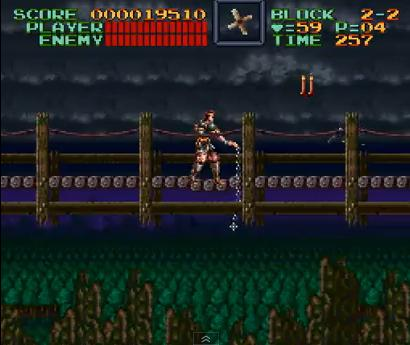
Konami created eleven levels, each with its own atmosphere and set of mechanics. They included dangerous platforms, traps, moving structures, rotating rooms, and other challenges. Konami's official description specifically highlighted locations such as Terrace of Terror, Rotating Dungeon, and Sunken Ruins of Lost Spirits.
Music was another important component. The Super Castlevania IV soundtrack was composed by Masanori Adachi and Taro Kudo, and it became one of the game's most recognizable elements.
The compositions combined a gothic atmosphere with the dynamics of classic action gameplay. The music did not simply accompany the player — it helped create a sense of an ancient castle, danger, and the constant approach of the final battle.
The game's audio was later frequently mentioned among its greatest strengths. Nintendo Life called the soundtrack one of the best created for games of its generation.
Despite numerous improvements to the controls, Super Castlevania IV did not abandon the difficulty that was characteristic of the series.
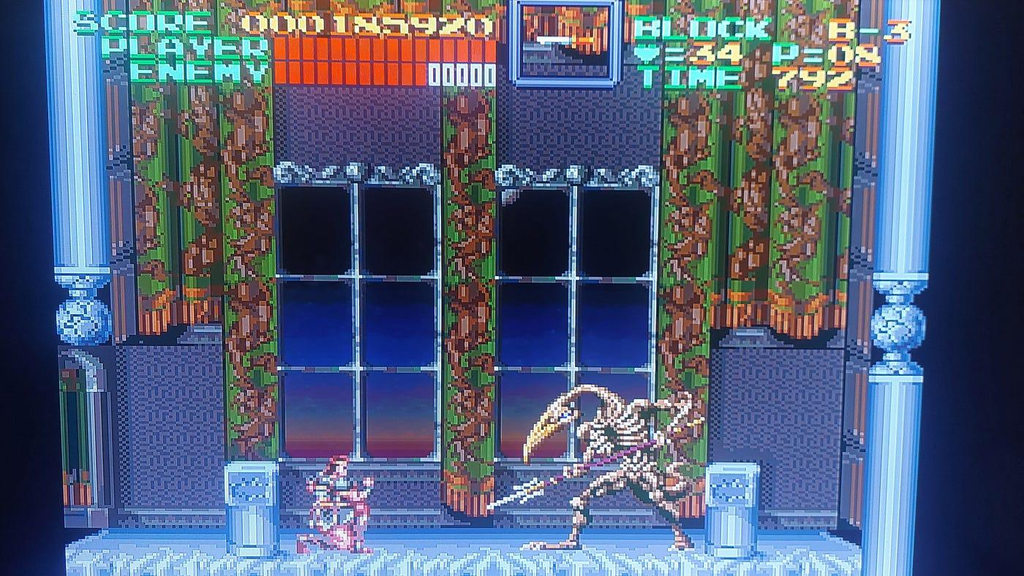
Players had to carefully watch their enemies, learn the placement of traps, and use the whip and secondary weapons correctly. Medusas, skeletons, bats, zombies, and other enemies could easily interrupt a run if the player lost concentration.
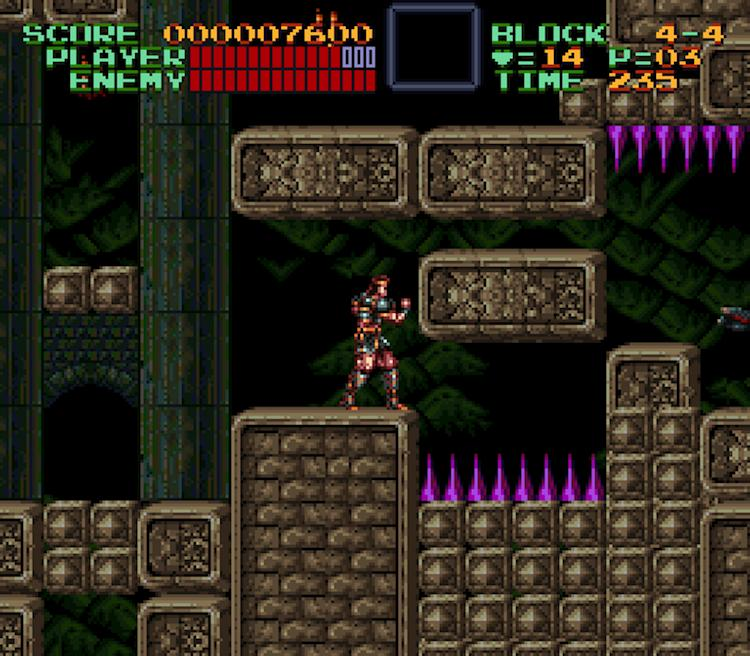
At the same time, Super Castlevania IV was often considered a more comfortable and fairer game than some of its predecessors. Improved control over Simon gave players more control over the character, while the whip's new abilities made it easier to react to situations.
GameSpot later highlighted Castlevania's classic formula, the variety of its levels, and its new mechanics, although critics also pointed to its relatively short length and high difficulty.
Super Castlevania IV received a positive response and gradually established itself among the best-known games in the series. It demonstrated that Castlevania could remain faithful to its original formula while taking advantage of the capabilities of a new generation of consoles.
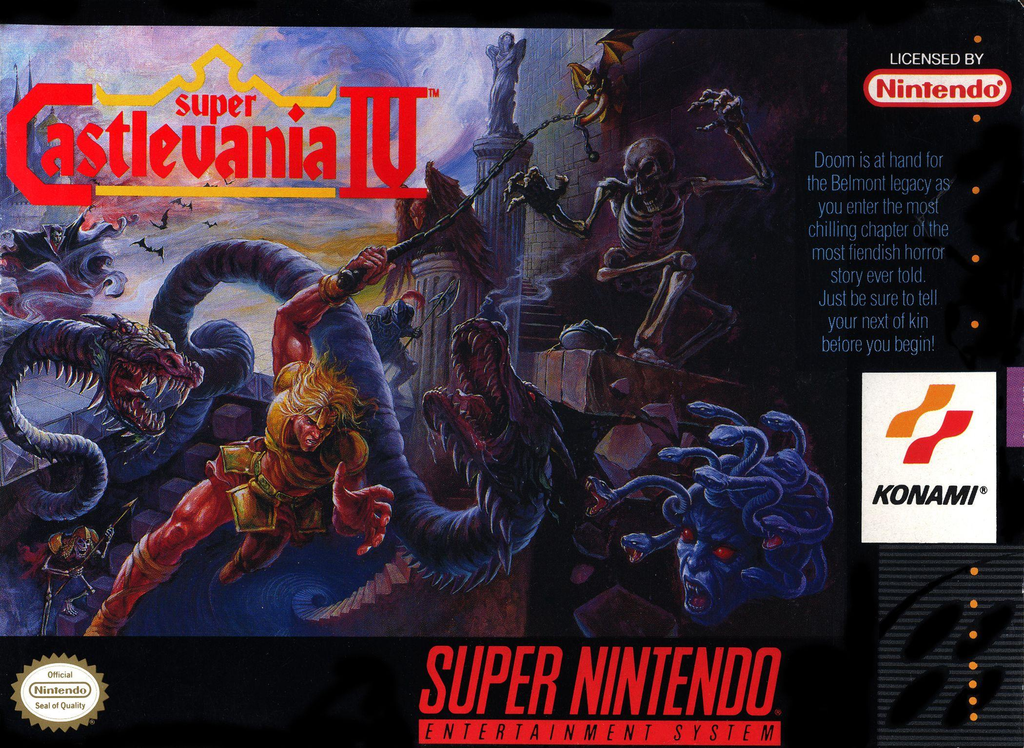
The combination of three elements became particularly important: more precise controls, a strong visual style, and the technical capabilities of the SNES. The game did not attempt to radically change the genre — instead, it refined the classic platformer.
Super Castlevania IV was re-released several times over the years. It appeared on the Virtual Console for Wii, Wii U, and New Nintendo 3DS, was included in the Super NES Classic Edition, and in 2019 became part of the Castlevania Anniversary Collection.
Super Castlevania IV became an example of how to properly bring an established series into a new generation. Konami did not abandon the foundations of Castlevania: Simon Belmont, the whip, Dracula's castle, monsters, and challenging platforming sections all remained in place.
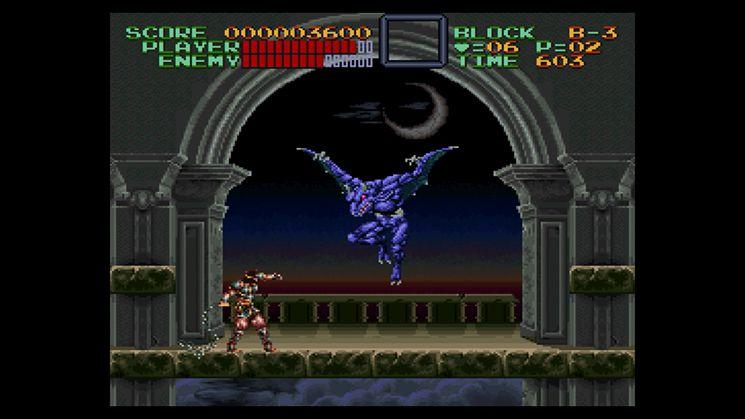
But thanks to the capabilities of the Super Famicom, all of this received a new scale. Eight-directional attacks, swinging with the whip, Mode 7 effects, detailed locations, music, and smoother controls made the game much more than a simple graphical upgrade of the NES classic.
That is why, decades after its release, Super Castlevania IV remains one of the key entries in classic Castlevania — a game that demonstrated what a gothic action adventure could be in the 16-bit era.
As a reminder, Need for Speed: Carbon — how EA tried to continue the success of Most Wanted.


