On October 6, 1995, Tactics Ogre: Let Us Cling Together was released in Japan on the Super Famicom — a tactical role-playing game developed by the Japanese studio Quest Corporation. The project was led by Yasumi Matsuno, who had previously worked on Ogre Battle: The March of the Black Queen. The new title represented a major step forward for the series: instead of a large-scale real-time strategy, the developers focused on turn-based combat, political drama, and player choices that directly impacted the narrative.
At launch, the Super Famicom was already in the late stages of its lifecycle, yet this did not prevent Quest from creating a technically and conceptually ambitious game. Tactics Ogre combined a complex character progression system, tactical battles on isometric maps, and a branching story. This exact combination eventually solidified it as one of the most important titles in the evolution of the tactical RPG genre.
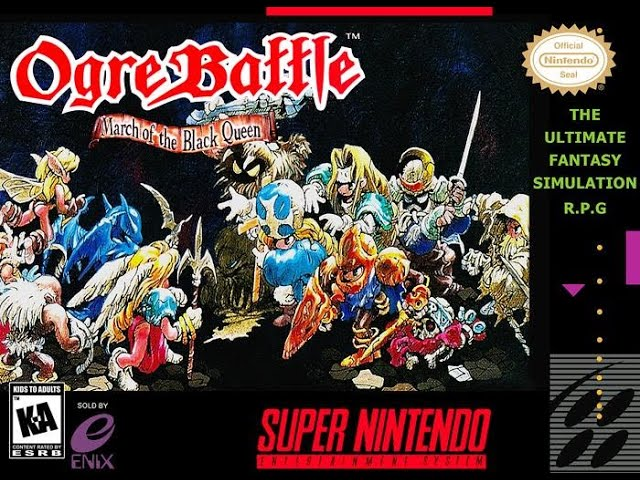
Prior to creating Tactics Ogre, the Quest team already had experience working on Ogre Battle: The March of the Black Queen, released in 1993. That game featured a large-scale strategic battle system where players managed units and gradually shifted the situation on the map. However, Matsuno and his team wanted to tell a more intimate and dramatic story, shifting focus from entire armies to individual characters.
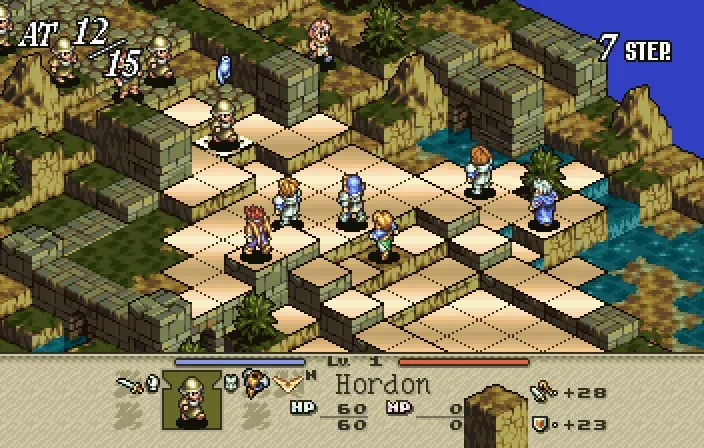
Consequently, Tactics Ogre took on a completely different structure. Instead of real-time combat, players were given turn-based battles on dedicated grid maps. Each character occupied an individual tile, and before attacking, players had to factor in enemy positioning, terrain elevation, weapon type, and character stats. This forced players to plan every turn rather than issuing general orders to entire units.
The system also allowed character progression through various job classes. A squad gradually evolved into a composition of specialized fighters with distinct roles, abilities, and gear. As a result, two players could complete the same campaign using entirely different tactical approaches.
One of Tactics Ogre's defining features was its story. Set in the fictional world of Valeria, three major factions vie for control of the island. Beneath the surface of a fantasy war lie themes of political manipulation, discrimination, power struggles, and revenge.
The protagonist is Denam Pavel, a young resident of Valeria who, alongside his sister Catiua and friend Vyce, strives to fight for the future of his people. However, Denam gradually finds himself entangled in a far broader conflict where right decisions practically do not exist.
The game deliberately rejects traditional divisions into purely good or evil characters. Each side in the conflict has its own motivations, and political decisions can lead to unsettling consequences. Because of this, Tactics Ogre was perceived far more seriously than many other role-playing games of its era.
One of Tactics Ogre's most significant innovations was its system of moral and narrative choices. At key moments in the campaign, players were presented with decisions that could alter the further development of the story.
These choices were far from decorative. They determined the path the narrative took, as well as who became Denam's ally and who turned into his adversary. Consequently, one player could complete the game with a completely different sequence of events and characters compared to another.
The game featured multiple story routes and endings, significantly boosting replay value. To experience alternative outcomes, players had to make different choices and effectively play through an alternative version of the war in Valeria.
For 1995, this approach was extraordinarily ambitious. Tactics Ogre effectively forced players to consider not only how to win a battle, but also at what cost that victory would be achieved.
The plot was only half of Tactics Ogre. The combat system demanded careful planning and a deep understanding of squad capabilities.
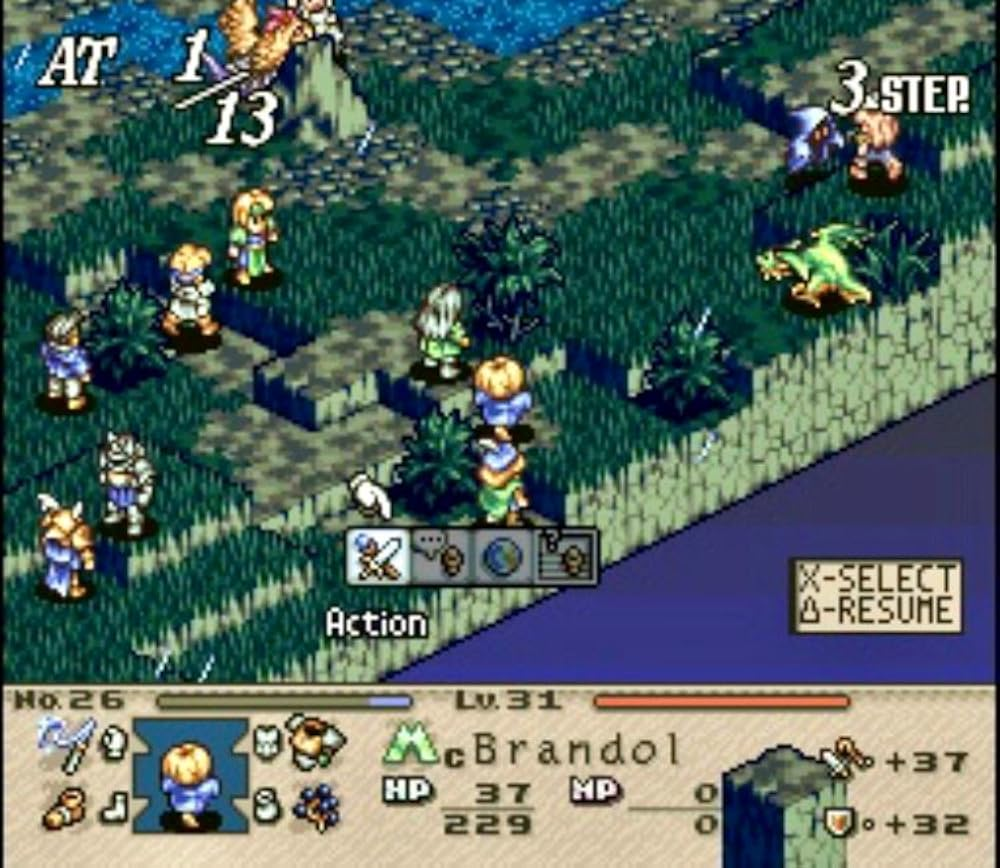
Battles took place on isometric grid maps with varying terrain heights. Position elevation, surface type, and character orientation influenced attack effectiveness. Archers, mages, knights, and other classes possessed distinct advantages, making victory dependent on proper role distribution.
Character progression was another vital element. Players could assemble custom squad compositions, experimenting with classes, weapons, and skills. This provided far greater freedom than simple character leveling.
Today, Tactics Ogre is often remembered alongside Final Fantasy Tactics, and a direct link exists between the two games. A portion of Quest's team later transitioned to Square, where they worked on Final Fantasy Tactics.
The most central figure was Yasumi Matsuno himself. After his work on Tactics Ogre, he joined Square and led the creation of Final Fantasy Tactics, which launched in 1997.

Thus, Tactics Ogre served as the foundation for many concepts that later achieved even greater popularity in Final Fantasy Tactics. Turn-based isometric combat, class systems, political intrigue, and morally ambiguous conflicts became defining hallmarks of both projects.
Notably, Tactics Ogre arrived on the Super Famicom two years before Final Fantasy Tactics. That is precisely why it is frequently cited as one of the titles that defined modern tactical RPGs.
The subtitle Let Us Cling Together has a unique musical origin. Yasumi Matsuno was a dedicated fan of the British rock band Queen, and the game's subtitle was inspired by their song "Teo Torriatte (Let Us Cling Together)."
This was no coincidence. The title of the series' first entry — Ogre Battle: The March of the Black Queen — was also tied to Queen's discography. Thus, musical references became a recurring tradition for the Ogre series.
Even subsequent projects led by or associated with Matsuno often featured similar cultural nods. For Tactics Ogre, this created a fascinating contrast: a serious political fantasy drama bearing a title inspired by a love song.
Tactics Ogre launched on the Super Famicom in Japan during a period when the industry's attention was shifting toward the next generation of consoles. Nevertheless, the game found its audience thanks to its compelling narrative and deep combat mechanics.
The project received high acclaim from Japanese media, with sales exceeding 500,000 copies in Japan. For a complex tactical RPG, this was a strong result, particularly given that it was not targeted at a mainstream audience.
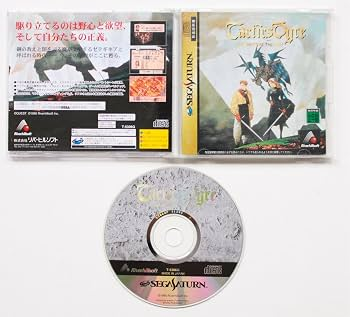
However, the original Super Famicom version did not receive an official Western release at the time. This meant that a vast majority of players in Europe and North America could not experience Tactics Ogre upon its initial release.
This situation later changed through ports and re-releases. The game was ported to the Sega Saturn and PlayStation, allowing Western audiences to gradually discover the franchise.
The success of the original Tactics Ogre continued in the years that followed. The game received several updated releases, with the most extensive reimagining being Tactics Ogre: Let Us Cling Together for the PSP in 2010.
Developers didn't simply port the old game to a new handheld. The PSP version featured updated graphics, additional story content, new features, and significantly overhauled mechanics, all while preserving the core foundation of the original project.
This PSP version became the springboard for the franchise's modern era. In 2022, Square Enix released Tactics Ogre: Reborn — a modernized edition that once again drew attention to the classic tactical RPG.
The influence of Tactics Ogre extended far beyond its own series. The game demonstrated that a tactical RPG could be more than just a sequence of battles between fantasy armies. It could deliver a mature political narrative, force players to question their own choices, and allow them to shape the destiny of its characters.
This is precisely why Tactics Ogre remains vital to the evolution of the genre. Its DNA is evident in Final Fantasy Tactics and numerous other tactical RPGs where narrative, moral agency, and strategic combat coalesce into a single unified system.
On October 6, 1995, Quest created a game that demanded far more from players than simple victory on the battlefield. Tactics Ogre forced players to consider every unit's positioning, the political fallout of their decisions, and whether a victory truly feels right when the cost of achieving it is devastatingly high.
Decades after its debut, the game remains one of the defining pillars of the tactical RPG genre. The story of Valeria has survived across multiple console generations, remakes, and remasters, but the core premise of Tactics Ogre remains unchanged: in war, a universally right choice rarely exists — sometimes players must define for themselves what victory truly means.
As a reminder, Enslaved: Odyssey to the West is a post-apocalyptic Journey to the West.


