On September 1, 1998, Unreal was released for Macintosh computers — several months after the release of the Windows version. This was not a new project, but a port of the same game that had already attracted the attention of PC players. The Macintosh version was ported by Westlake Interactive, while MacSoft served as the publisher.
Today, this date may seem secondary. But Unreal is important not only as a 1998 shooter. Alongside it, a technology entered the industry that would eventually become much bigger than the game itself — Unreal Engine.
By the late 90s, the first-person shooter genre was undergoing a real revolution. Doom, Quake, and Duke Nukem 3D had already shown how far it was possible to go in creating three-dimensional worlds. It was during this period that Epic MegaGames, which would later become Epic Games, was working on its own major FPS.
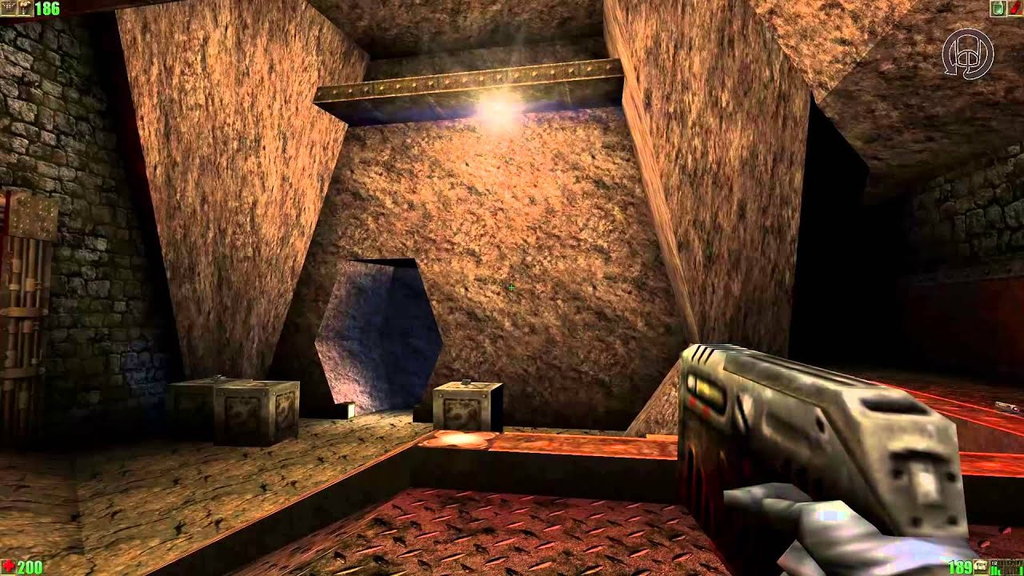
The developers wanted to create not just another shooter, but a world that players could explore. The game featured vast open spaces, complex lighting, water, shadows, detailed environments, and its own atmosphere. As a result, Unreal became a demonstration of what Epic's technology was capable of.
At the time of its release, Unreal impressed players primarily with its graphics. The game required a powerful computer by 1998 standards: even systems with Pentium II processors could experience performance issues. The Los Angeles Times called Unreal one of the year's most anticipated computer games and noted that it literally raised the technological bar for the genre.
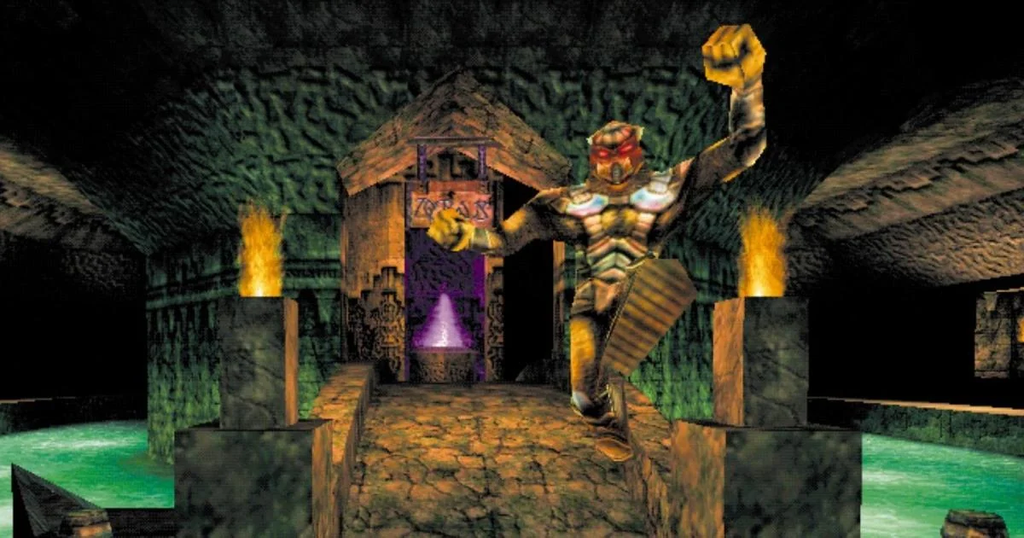
At the same time, the game was not simply a technological demonstration. The player found themselves on the planet Na Pali after a spaceship crash. Around them were abandoned structures, the mysterious Nali civilization, and aggressive Skaarj. Instead of constantly moving from one firefight to another, Unreal encouraged players to explore the surrounding world and gradually uncover its story.
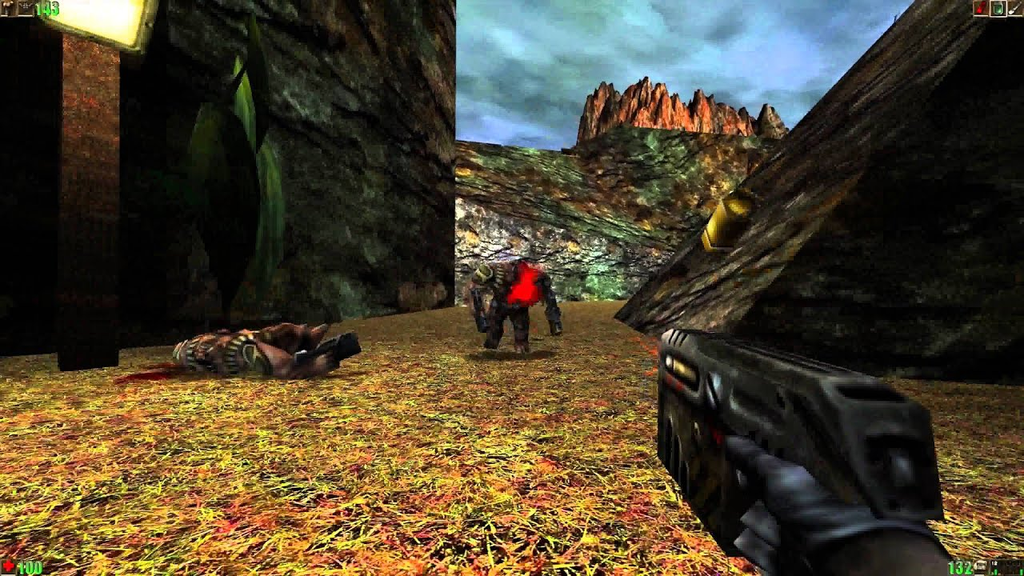
It was precisely the atmosphere that became one of the reasons the game was remembered. Critics praised its graphics, music, enemy behavior, atmosphere, and even its support for bots in multiplayer. At the same time, the online mode was criticized for problems with network play.
The most important result of Epic's work was not the game itself. Alongside the game, the company created Unreal Engine — a technological foundation that could be used not only for its own projects.
Even in 1998, journalists were paying attention to the potential of UnrealEd and the possibility of licensing the engine to other developers. At the time, there were already suggestions that the future of Unreal could be connected not only to sales of the game itself, but also to the development of the community and third-party projects.
And this became one of Epic's most important decisions. Unreal Engine began to be used in other games, while the technology itself gradually became a separate area of business.
In the United States, the game quickly became a commercial hit. It debuted at number three on PC Data, reached the top of the sales charts the following week, and by the end of July 1998 had sold more than 120,000 copies in the United States. In early August, GT Interactive announced that worldwide sales had exceeded 500,000 copies.
By September 1999, worldwide sales had exceeded 1 million copies, and by November 2002 they had reached approximately 1.5 million.
The game also received recognition from the press. In 1998, PC Gamer included Unreal on its list of the greatest computer games of all time, placing it at number 13.
Today, Unreal has a user rating of 8.8/10 on Metacritic, with the vast majority of ratings being positive.
The success of the first game was not the end of the story. The following year, Epic released Unreal: Return to Na Pali, and in 1999 came the game that made the franchise particularly important for multiplayer and the future of esports — Unreal Tournament.
It was Unreal Tournament that turned Unreal Engine into a foundation for fast competitive shooters. Deathmatch, Capture the Flag, and other modes became an integral part of the series' history.
Epic later released many more games set in the Unreal universe. Between 1998 and 2010, nine games in the Unreal franchise were released, including Unreal Tournament.
This is where the story becomes much bigger. The engine created for a single FPS gradually began to be used by third-party studios. Unreal Engine stopped being simply the technology behind Unreal and became a universal tool for creating video games.
Over time, Unreal Engine 2, Unreal Engine 3, Unreal Engine 4, and Unreal Engine 5 were released. The technology went far beyond a single genre and even beyond the video game industry itself. Today, Unreal Engine is used for games, film, television, virtual production, and other fields.
And this is the main paradox of the history of Unreal. A game that was trying to compete with Quake in 1998 eventually became the foundation of a technology used by thousands of other projects.
Unreal was not the first 3D game and did not invent the FPS genre. But it showed how important technology, atmosphere, and tools for creating new worlds could be.
And the Macintosh release on September 1, 1998, became one of the early steps in the long history of a game that would eventually give rise to one of the industry's most famous technology platforms.
Unreal began as an ambitious shooter from Epic MegaGames. Unreal Engine became its greatest legacy.
And today, when we see the name Unreal Engine, it is worth remembering: it all began with that same game which, in 1998, tried to show what the future of video games could look like.
As a reminder, Command & Conquer — the game that helped define what RTS would become.


