Today’s article was written by Iryna Barysheva, publisher of Players. In her opinion piece, she reflects on why society increasingly judges people by their appearance, forgetting about their achievements, strength of character, and actions.
He became a world champion. The internet discussed his face.
Brandon McNulty is 28 years old. In September 2026, the American cyclist achieved something most professional athletes can only dream of: he won the World Road Cycling Championship. Nearly 274 kilometers of an incredibly demanding race. More than six hours on a bicycle. Several dozen kilometers before the finish line, McNulty attacked, broke away from the strongest cyclists on the planet, and crossed the finish line first.
You would think, what should the internet be talking about? His incredible endurance. His preparation. His strength of character. The fact that a person can endure hours of physical pain for a single opportunity to become the best in the world. But a significant portion of internet users noticed something else. His face.
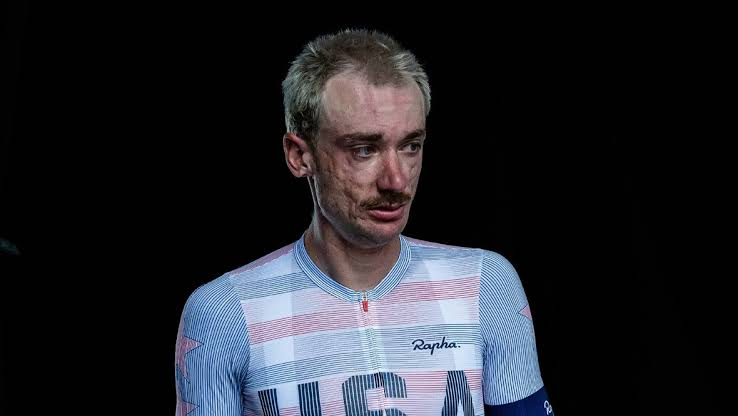
“Is he really 28?”
“He looks 45.”
Jokes, memes, comparisons to video game characters. And there is something far more disturbing about this story than just another wave of internet trolling.
We are gradually beginning to value the packaging more than what is inside.
Social media has accustomed us to a strange set of standards. Youth is supposed to look a certain way. Women are supposed to look a certain way. Men, too. A successful person is expected to be attractive, fit, photogenic, and preferably look good in a fifteen-second vertical video. And if someone does not fit that image, the internet notices immediately. Sometimes before it notices their achievements.
This is especially evident in sports. A professional athlete's body is not built for Instagram. It is built for performance. A cyclist needs their body to cover nearly 274 kilometers faster than everyone else. A powerlifter needs theirs to lift weights most people could not even move. A fighter needs theirs to withstand a punch. An esports player needs their body and mind to maintain reaction speed, concentration, and the ability to make decisions under enormous pressure for hours.
Yet viewers increasingly focus not on what a person is capable of doing, but on how closely that person matches a visual standard.
Ukrainian athlete Anna Kurkurina is an absolute world champion in powerlifting, a multiple record holder, and one of Ukraine's most recognizable strength athletes. For years, her appearance has been the subject of discussions and ridicule. Shoulders that are too broad. Too much muscle. “She looks like a man.”
But amid all the conversations about what Kurkurina looks like, it somehow becomes remarkably easy to overlook far more important information. Here is a woman who became a world champion three times and set numerous sporting records. And after the beginning of the full-scale war, her strength found an entirely different purpose.
Kurkurina remained in Ukraine and has been rescuing animals. She evacuates dogs and cats from dangerous areas, helps injured animals, feeds strays, and works with volunteers and animal shelters. In 2026, she rescued three dogs from a flooded shelter in Kropyvnytskyi. All three stayed with her.

It creates a remarkable paradox. You can be a world champion. You can set records. You can travel to places others are desperately trying to leave, just to save an animal. And there will still be someone who looks at a photograph and writes: “She looks like a man.”
And that raises a simple question.
At what point did we decide that this was the most interesting thing we could say about this person?
Anna Kurkurina is far from the only example. Serena Williams became one of the greatest tennis players in history, yet for decades, alongside discussions of her sporting achievements, people debated her muscles, her figure, and how closely her body matched traditional ideas of femininity.
Singer Lizzo can win a music award, and thousands of comments will still focus on her weight. An actress can deliver a brilliant performance, and the internet discusses how much she has aged. An athlete can win a world championship, and instead of the moment of victory going viral, it is a photograph of his face.
We have reached a remarkable point: an achievement takes years, but it can be dismissed with a single comment written in five seconds.
That is exactly why this issue directly concerns esports. We are used to thinking that things should be different here. After all, a player's performance is not determined by the size of their biceps or their appearance. But open the comments under photographs of professional players.
“Fat.”
“Ugly.”
“Why does he look like that?”
“What's wrong with her face?”
“He looks 40 at 25.”
The audience is often particularly cruel toward women in esports and streaming. Men are sometimes still allowed to simply play well. Women, far too often, are expected to play well, look good, dress appropriately, be feminine enough but not too sexual, attractive but not provocative.
And somehow, a person is expected to manage all of this while actually trying to be a professional in their discipline.
Perhaps the problem is not even beauty itself. People have always paid attention to appearance. The problem is something else: today, appearance has become the quickest way to pass judgment on someone. We see a photograph before we learn the story. A face before the result. A body before the character. Signs of aging before achievements.
Social media algorithms only reinforce this habit: an unusual appearance provokes a reaction, reactions generate comments, and comments increase reach. As a result, a photograph of someone's face can become more “interesting” to an algorithm than the years of hard work that led that person to a world championship title.
But perhaps sometimes it is worth stopping before writing another clever remark. The person in the photograph may look older than their age. A woman may be too muscular for someone's idea of femininity. An esports player may not look like a model.
But the question is not whether we like their face. The question is something else:
What has this person accomplished?
What have they overcome?
Who have they helped?
What have they left behind?
Brandon McNulty rode nearly 274 kilometers and became a world champion. Anna Kurkurina became a world champion, set sporting records, and today uses her fame and strength to rescue animals during the war.
And if, after all of that, the first things we are capable of noticing are his wrinkles and her muscles, perhaps the problem really is not their appearance.
Perhaps the problem is that we ourselves have forgotten where to look.
As a reminder, Konami has tripled the prize pool for eFootball Championship 2027 and announced a major expansion of the tournament.


