On August 19, 2014, Blizzard Entertainment released Diablo III: Reaper of Souls – Ultimate Evil Edition for PlayStation 4, Xbox One, PlayStation 3, and Xbox 360. This was not just another re-release of Diablo III, but actually an updated and significantly expanded version of the game that combined the original campaign and the massive Reaper of Souls expansion in one package.
For console owners, the release was of special significance. Diablo III appeared on PlayStation 4 and Xbox One for the first time, while PlayStation 3 and Xbox 360 owners received the opportunity to continue the familiar adventure with all the key innovations of Reaper of Souls.
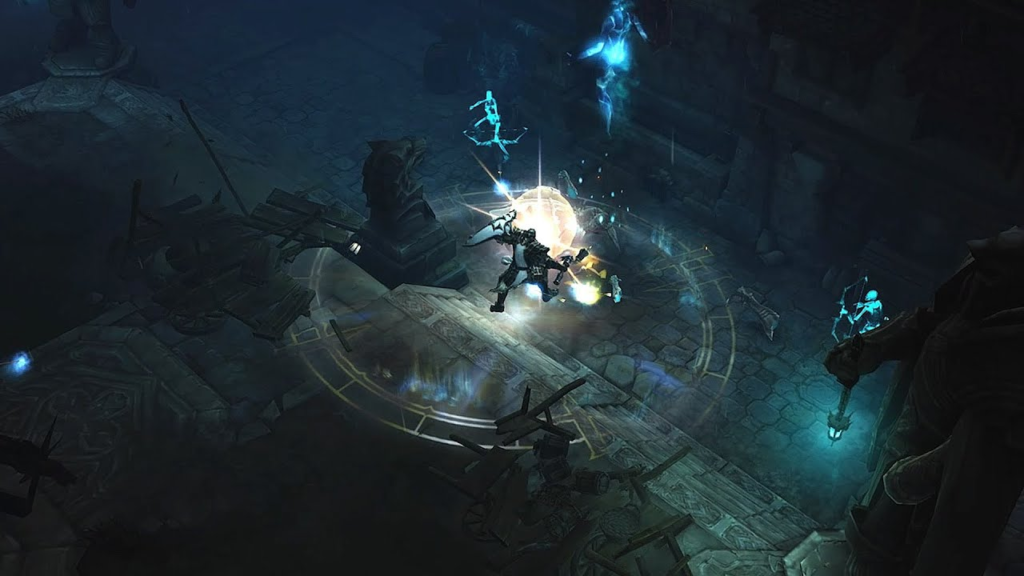
By the time Ultimate Evil Edition was released, Diablo III had already traveled a difficult path. The original game debuted on PC back in 2012, and its early years were accompanied by criticism over the loot system, auction house, and lack of endgame content diversity.
The situation changed significantly with the release of Reaper of Souls. Blizzard reworked the loot system, added new progression mechanics, and placed a much greater emphasis on what is at the heart of Diablo — the constant search for stronger gear and replaying content.
It was this updated version that console players received as part of the Ultimate Evil Edition.
One of the main reasons to purchase Ultimate Evil Edition was the Reaper of Souls expansion, which continued the story after the events of Diablo III.
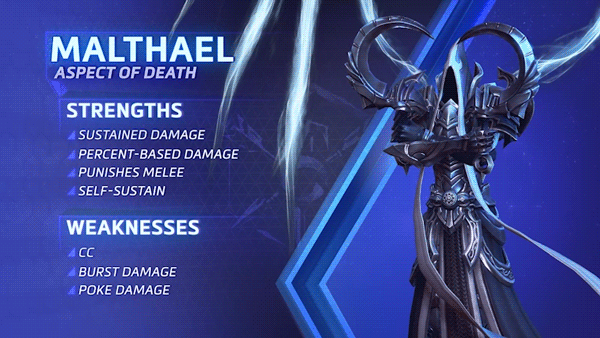
Players faced Malthael — the Angel of Death, who became the main antagonist of the new fifth act. The events moved to Westmarch, and the game itself received new locations, enemies, items, and story quests.
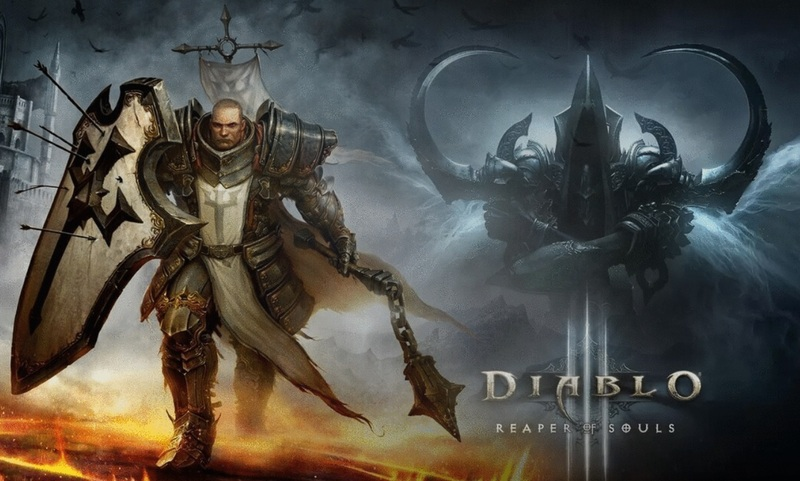
Along with the new story chapter, Blizzard introduced a sixth class — the Crusader. He became a kind of heavily armored warrior focused on melee combat, defense, and powerful holy abilities. Thus, the total number of classes in Ultimate Evil Edition grew to six: Barbarian, Witch Doctor, Demon Hunter, Monk, Wizard, and Crusader.
Perhaps the most important innovation for long-term play was Adventure Mode.
Instead of replaying the story campaign, players could freely move around Sanctuary, complete random quests, and hunt for rewards. One of the key mechanics was Bounties — random targets, for the completion of which heroes received rewards.
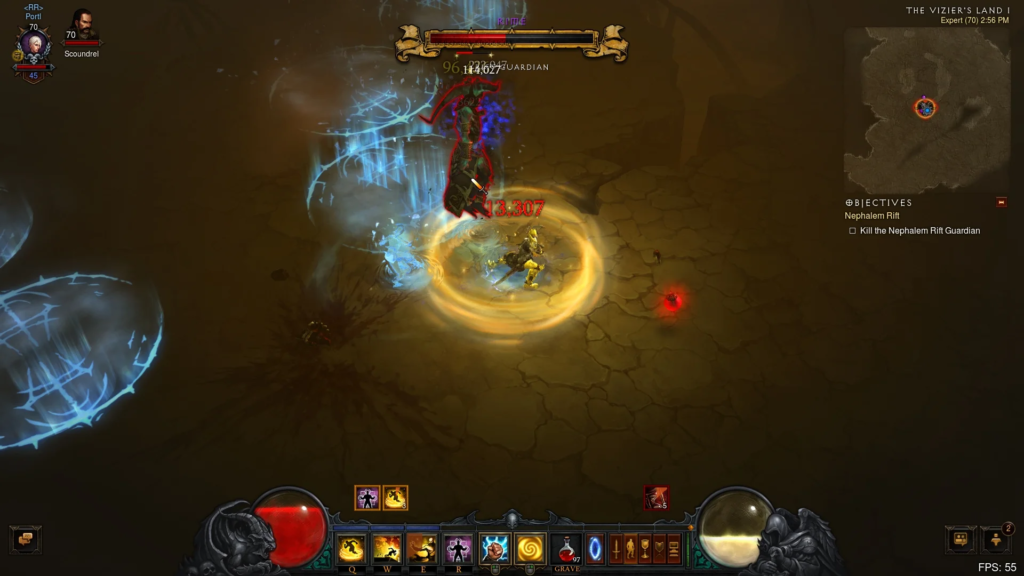
Even more important were Nephalem Rifts — randomly generated dungeons created specifically for endless replayability and loot hunting. Effectively, Blizzard built the new foundation of Diablo III's endgame around them.
To this were added an increase in the level cap to 70, new abilities, an expanded Paragon system, and a new artisan — the Mystic, who allowed players to alter item stats and engage in transmogrification.
A distinct advantage of Ultimate Evil Edition was co-op. The game supported up to four players, and the console version allowed players to traverse Sanctuary both online and locally on a single screen.
For Diablo III, this felt especially natural: one player could play as a Barbarian, another as a Crusader, a third as a Demon Hunter, and a fourth as a Wizard, together turning the screen into a chaotic battlefield with dozens of enemies and a huge amount of legendary loot.
At the same time, owners of previous consoles were not left behind. Blizzard provided the ability to transfer progress from the PS3 and Xbox 360 versions to PS4 and Xbox One.
It didn't go without exclusive content either. The PlayStation 3 and PlayStation 4 versions received a special The Last of Us Nephalem Rift, created in collaboration between Blizzard and Naughty Dog. It featured themes from The Last of Us, including Infected and the characteristic yellow spore effect.
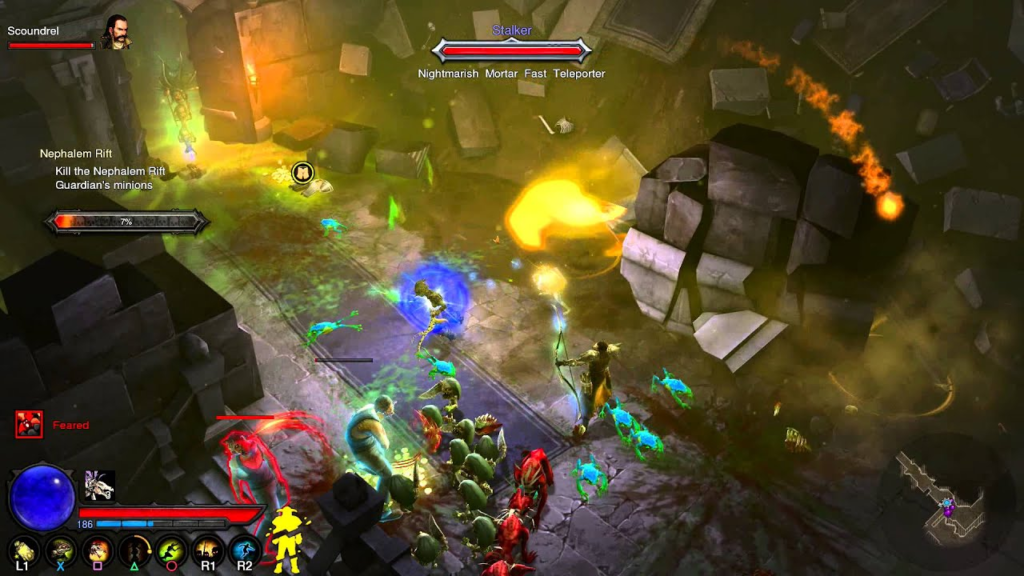
PlayStation players also received the Guise of the Colossi transmogrification set, inspired by Shadow of the Colossus.
At the time of release, Ultimate Evil Edition was effectively perceived as a much more complete version of Diablo III. Critics particularly highlighted Adventure Mode, the new loot system, co-op, and the huge amount of content.
On Metacritic, the PS4 version scored 90 points out of 100, and a number of outlets gave the game top scores.
Interestingly, it was the console release that helped permanently cement Diablo III's reputation as an excellent co-op action RPG. On PS4 and Xbox One, the game got a second life, and its mechanics were much better suited for long evening sessions with friends.
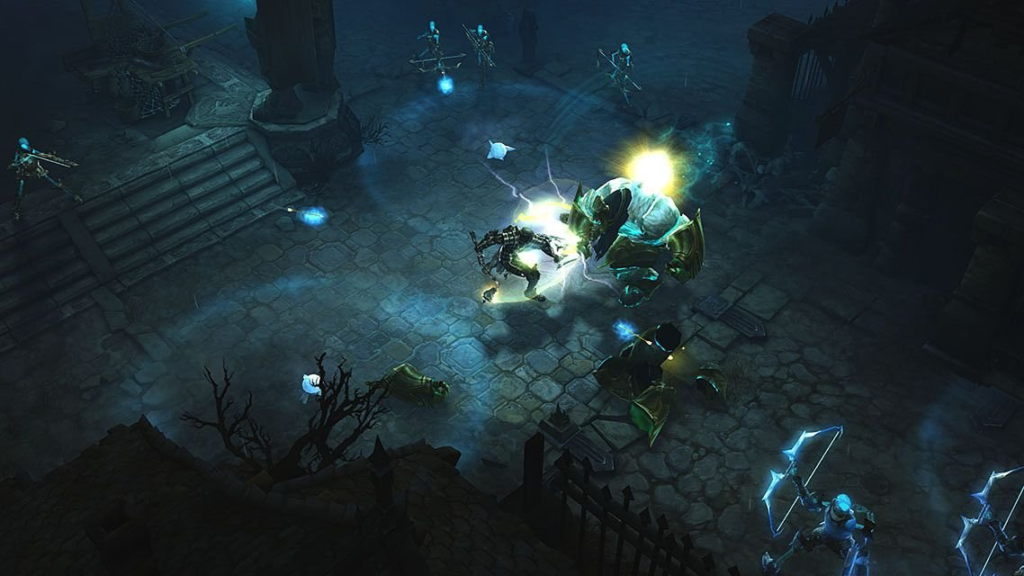
August 19, 2014, became a kind of reboot point for Diablo III on consoles. Blizzard took the original game, expanded it with Reaper of Souls, reworked mechanics, a new class, Act V, and a full-fledged endgame — and released it all as a single package.
As a result, Ultimate Evil Edition became for many players the very version of Diablo III that the game should have been from the start.
Years after its release, Diablo III continued to remain one of the most famous action RPGs of its generation, and Ultimate Evil Edition showed how much a well-crafted expansion can change the perception of an entire game.
August 19, 2014 — the day Diablo III finalized the version that millions of players remembered as one of the best console action RPGs of its generation.
As a reminder, "Mortal Kombat": How the game conquered the big screen.


