On September 7, 2018, Marvel’s Spider-Man was released on PlayStation 4 — a game that became one of the most notable superhero projects of its generation. Today marks its 8th anniversary.
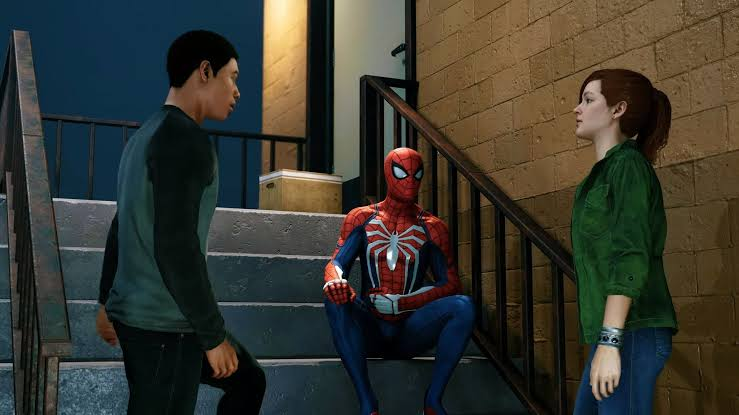
At the time of release, very much was expected from Insomniac Games. Spider-Man already had a huge history in video games, but far from every adaptation lived up to the popularity of the character himself. The studio had to prove that Spider-Man could get not just another game based on comic books, but a large, standalone gaming universe. And Insomniac succeeded. The history of Marvel’s Spider-Man began long before release. For Insomniac, this was a special project: for the first time in its 22-year history, the studio worked with an intellectual property that did not belong to it. The partnership of Insomniac, Marvel Games, and PlayStation was intended to create a new version of Spider-Man that would be familiar to fans, but would not copy comic books or movies. One of the main principles was the desire not to retell Peter Parker’s origin story. The player immediately received an already experienced Spider-Man who had been protecting New York for years. This allowed the developers to focus not on how Peter became Spider-Man, but on what kind of person he is after many years of living a double life. Marvel also involved well-known comic book writers — in particular Dan Slott and Christos Gage — in the scriptwriting process. The Insomniac team strove to create its own Spider-Verse, while at the same time preserving the character's key traits.
One of the most important features of the game was Peter's story itself. Insomniac did not want to make an adventure where the main character simply puts on a suit and goes off to beat up criminals. At the center of the plot was a problem familiar to Spider-Man fans for decades: Peter cannot simultaneously be the ideal superhero and the ideal human. He has a job, friends, relationships, scientific projects, and personal problems. And in parallel — responsibility for millions of New York residents. It was the collision of these two worlds that became the foundation of the story. Creative Director Bryan Intihar shared that early on, the team formulated a simple idea for themselves: the best Spider-Man stories arise when the world of Peter Parker collides with the world of Spider-Man.
However, for many, the main star of the game was not even the plot. It was New York. Insomniac created a massive version of Manhattan where Spider-Man can move almost continuously between buildings, streets, and landmarks. The city was not just a backdrop — it became the basis of the gameplay. The developers divided the world into roughly 800 sectors measuring 128 by 128 meters, which were loaded and unloaded as the hero moved. At Spider-Man's top speed, the game could load roughly one new sector per second. This allowed them to accomplish what is most important for Spider-Man: to give the player a sense of freedom while soaring above the city.
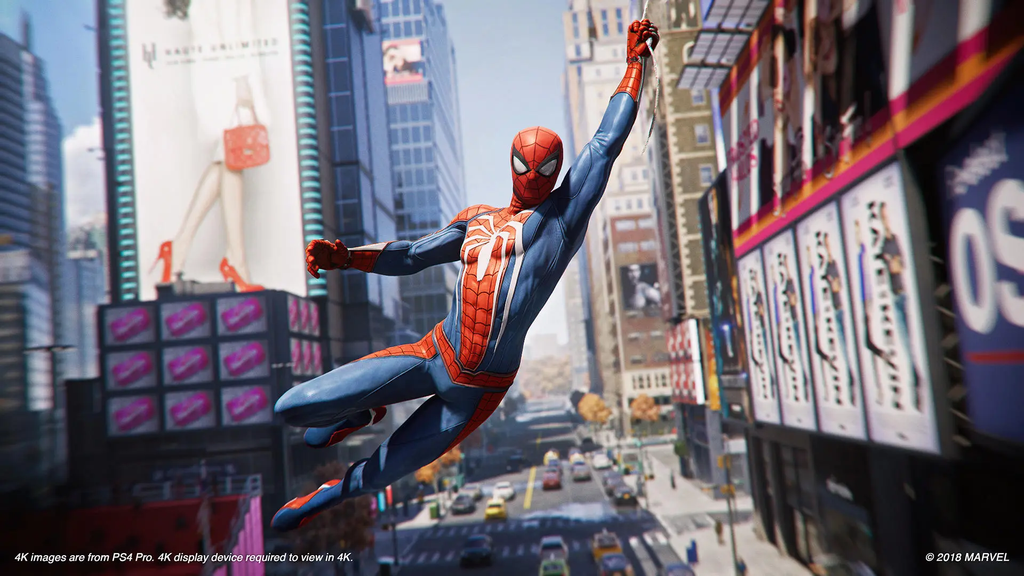
If Insomniac had failed the movement mechanics, the whole game could have lost its purpose. Therefore, web-swinging became one of the first elements the team began working on seriously. The developers did not want Spider-Man to simply "fly" over the city. The webs had to interact with New York's architecture. Every building received special anchor points to which Spider-Man could attach webs. The game selected the appropriate points during movement so that the hero maintained speed and kept moving in the desired direction. At the same time, Insomniac deliberately did not attempt to create completely realistic physics. The goal was different — to make movement feel the way you imagine it when thinking about Spider-Man. That is why the camera, animations, field of view, and physics work together, creating a feeling of incredible speed. And that is one of the reasons why, even years later, simply moving around New York in Marvel’s Spider-Man remains enjoyable.
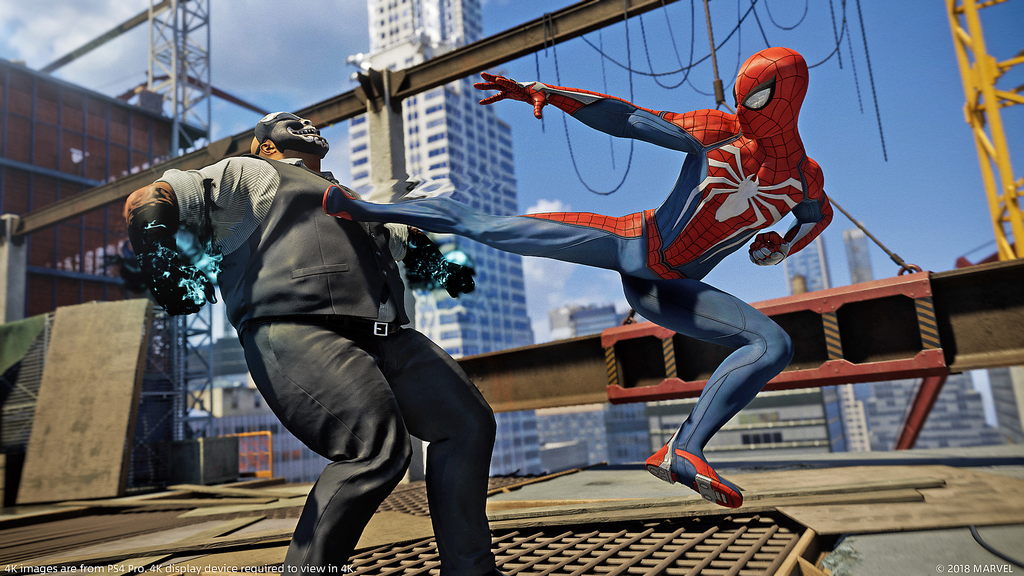
Insomniac also reimagined combat. Spider-Man was not supposed to fight like an ordinary soldier. He is constantly moving, jumping, using webs, the environment, and his own abilities. As a result, the fights became a kind of mixture of acrobatics and improvisation. Peter can launch enemies into the air, pull them in with webs, throw environmental objects, use gadgets, and literally turn the arena into his own web. This suited the character's nature well: Spider-Man is not just strong — he is fast, resourceful, and constantly improvising.
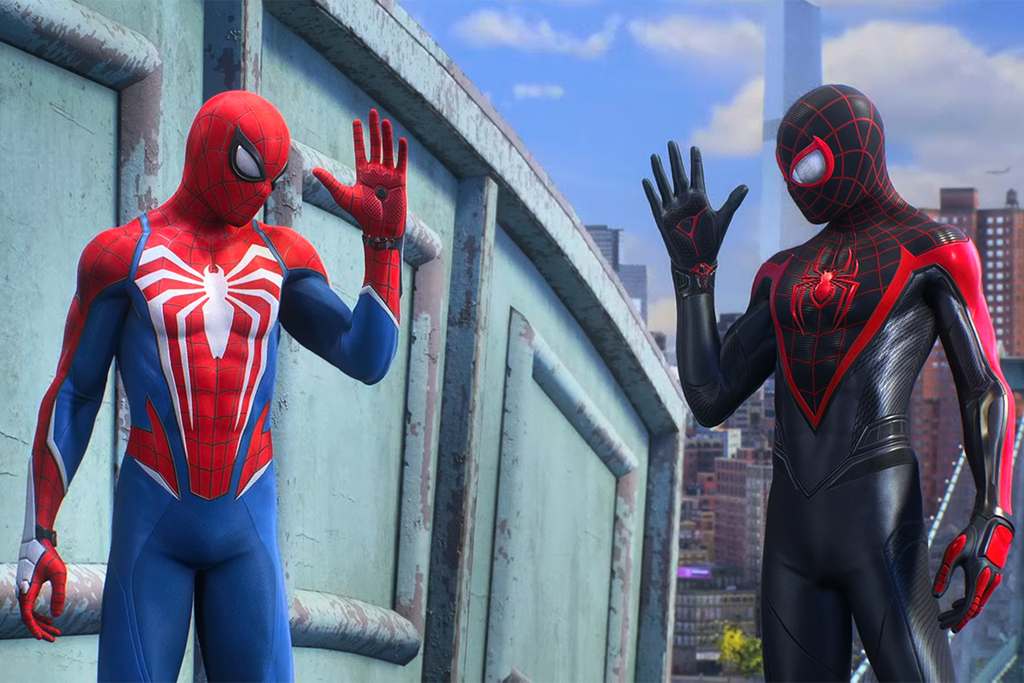
Another important decision was the creation of a completely new universe. This is not an adaptation of Tom Holland's, Andrew Garfield's, or Tobey Maguire's films, nor a retelling of a specific comic book run. This is Insomniac's own story. Therefore, the team was free to work with characters, their relationships, and events. Characters familiar to fans appeared in the game — from Mary Jane and Miles Morales to Doctor Otto Octavius, Norman Osborn, Fisk, Electro, Vulture, Scorpion, and others. At the same time, the developers modified familiar images and created their own interpretations of the heroes.
Visually, Marvel’s Spider-Man was one of PlayStation 4's showcase games. Insomniac shifted from the cartoonish style of Ratchet & Clank to a significantly more realistic visual style. The team separately improved rendering technologies for skin, hair, and eyes, as well as the facial animation system. Tens of thousands of vertices were used for character models in cutscenes, allowing even small changes in facial expressions to be conveyed. And on PS4 Pro, the game used temporal injection technology, which allowed forming images in 4K output without needing to render every pixel in full resolution every frame.
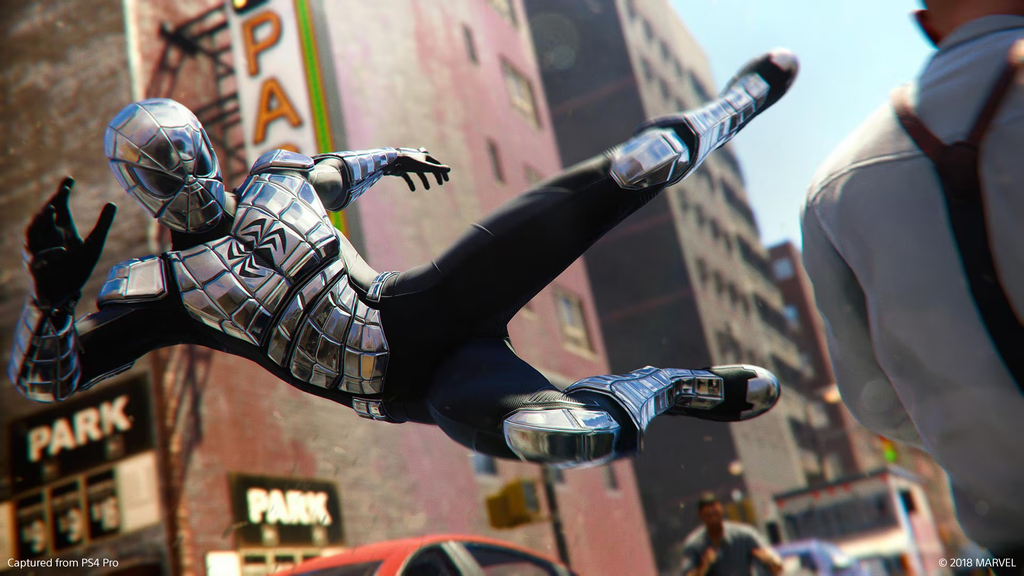
A special fan favorite was the suits. Insomniac did not simply offer the ability to change the hero's appearance. Suits became a way to pay homage to decades of Spider-Man history. Various versions of the suit from comic books, movies, and original Insomniac designs appeared in the game. But the most important became the Advanced Suit, created specifically for this game. The white spider on the chest and arms initially sparked debate among fans, but after release it became one of the symbols of this specific version of Spider-Man.
There was plenty to do in the open world even after finishing the main tasks. One could stop crimes, find collectibles, complete challenges, search for Peter's backpacks, photograph landmarks, and gradually unlock new suits and abilities. Not all side activities were equally interesting — the repetitive nature of some tasks was one of the points of criticism for the game. But the important point was that most activities allowed the player to return again to the game's main pleasure: simply being Spider-Man.
Upon release, Marvel’s Spider-Man received very strong reviews. On Metacritic, the PS4 version has 87/100 based on 116 critical reviews, and the user score stands at 8.7/10. GameSpot gave the game a 9/10, highlighting scale, combat system, city traversal, and story among the main strengths. Critics particularly praised how well the game conveys the feeling of the character himself. Webbing, acrobatics, combat, and open world worked not separately, but as a single system. At the same time, there were also criticisms. Most often, critics pointed out the repetitive nature of some open-world activities, certain formulaic tasks, and the fact that part of the secondary content did not live up to the level of the main story. In other words, Spider-Man was not a perfect game — but its core mechanics worked so well that many shortcomings faded into the background.
The game received dozens of nominations and awards. At the Game Critics Awards 2018, it won in the Best Console Game and Best Action/Adventure Game categories. At The Game Awards 2018, Marvel’s Spider-Man received nominations including for game direction, narrative, music, audio design, performance, and best action/adventure game. Yuri Lowenthal, who voiced Peter Parker and Spider-Man, also received a nomination for his performance. At the D.I.C.E. Awards, the game received eleven nominations and won in the Outstanding Achievement in Animation category.
Sales were no less impressive. In its first three days after release, Marvel’s Spider-Man sold 3.3 million copies, setting a record at the time for the fastest launch among PlayStation exclusives. By August 2019, Sony reported over 13.2 million copies sold. Later, Guinness World Records recorded over 20 million copies as of November 2020, naming the game the best-selling PS4 exclusive game. For a superhero project, this was a huge result.
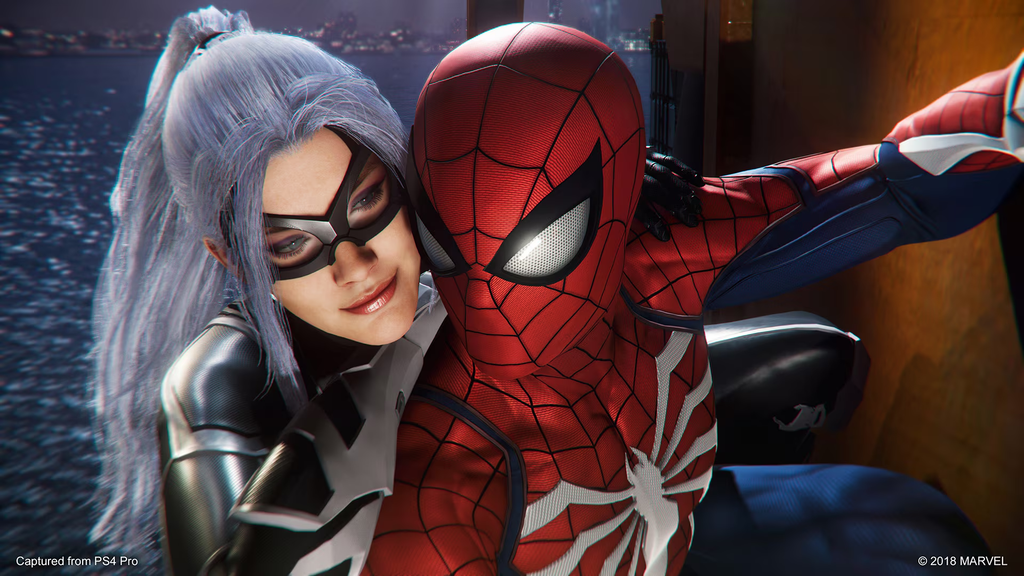
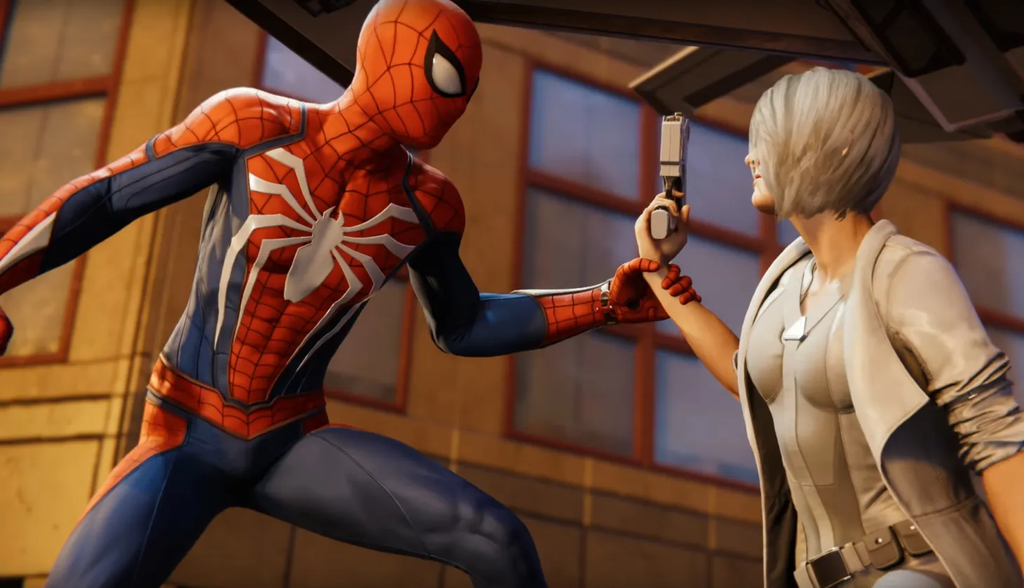
Insomniac continued to develop its own Spider-Man universe. In 2018, the story DLC The City That Never Sleeps was released, consisting of three parts: The Heist, Turf Wars, and Silver Lining. The first chapter was dedicated to the return of Black Cat, the second to the conflict with Hammerhead, and the final one brought back Silver Sable. The DLCs were released from October to December 2018. Later, this version of Spider-Man received a continuation in the form of Marvel’s Spider-Man: Miles Morales, and subsequently Marvel’s Spider-Man 2. Thus, the 2018 game became not just an individual successful project, but the foundation of an entire series.
Dozens of reasons can be named why Marvel’s Spider-Man is still remembered. The game looked great for its generation, had a strong cast, offered a huge New York, provided dozens of suits, large-scale battles, and cinematic scenes. But most importantly — Insomniac realized that Spider-Man shouldn't just be a character in a game. He had to be a way of playing. You don't just control Peter Parker — you constantly move the way you think Spider-Man should move. You don't just travel through an open world — you fly above New York. You don't just hit enemies — you improvise in combat. And even after completing the story, you could simply climb to the tallest building, look at the city, take a photo, and jump down again.
That became Insomniac's main victory. On September 7, 2018, the studio did not just release another Spider-Man game. It created its own version of the hero, which later became the foundation for an entire gaming franchise. And eight years later, Marvel’s Spider-Man remains one of the most important superhero games of the last decade — a game that showed how well a video game can convey the exact feeling of being Spider-Man.
As a reminder, September 6, 2011 — Warhammer 40,000: Space Marine Released: How Relic Turned Strategy into Brutal Action.


