Competitive video games often cause an accelerated heart rate, sweaty palms, and a feeling of complete exhaustion. However, a systematic review of scientific studies proves that physical energy expenditure during gameplay increases only minimally, and fatigue is the result of intense emotional and mental strain rather than actual physical exertion.
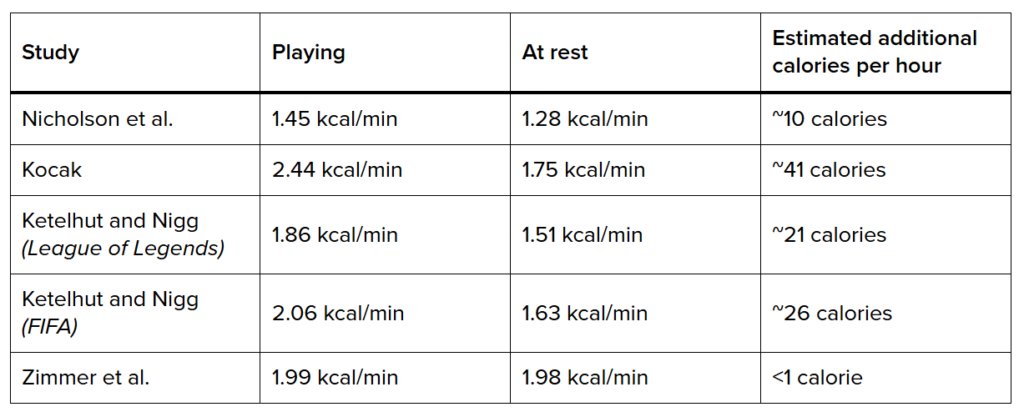
Total energy expenditure while playing esports titles ranges from 1.3 to 2.5 kcal per minute, which is equivalent to 78–150 kcal per hour. However, the body would use most of this energy for basic functioning even at complete rest. One study involving players from the top 10% in popular games (Counter-Strike: Global Offensive, VALORANT, League of Legends) showed that the gameplay itself adds only about 10 extra kcal per hour to the basal metabolism. A comparison of figures from various scientific papers regarding the difference between resting state and gameplay is presented in the table.
The phenomenon of post-match exhaustion is explained by the nervous system's reaction to stress. During a game, the brain actively processes visual information and makes decisions, which activates the sympathetic nervous system (the "fight or flight" response). There have been recorded cases where a player's heart rate increased from 85 to 137 beats per minute within the first 10 minutes of a match. Fitness trackers often mistakenly interpret such a heart rate as a cardio workout, even though the body's actual oxygen consumption barely changes, and the muscles remain at rest.
Accurate measurement of burned calories is conducted using indirect calorimetry — the analysis of consumed oxygen and exhaled carbon dioxide through special masks. This method confirms that physical exertion during esports cannot be compared even to a light session on a stationary bike at similar heart rate levels.
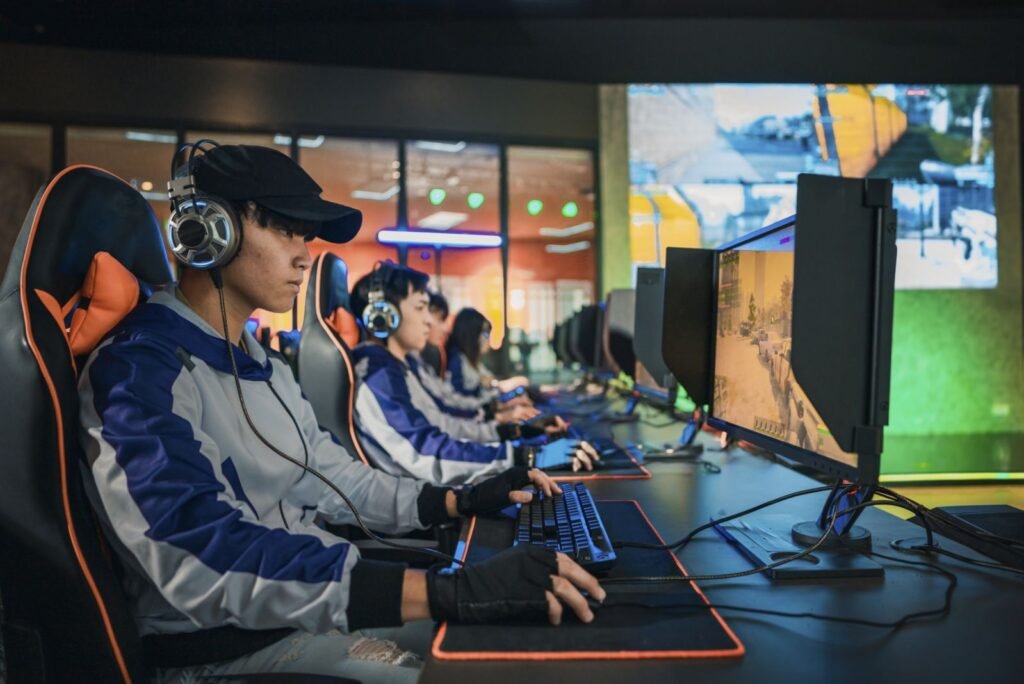
Researchers emphasize that the slight calorie burn during gaming sessions does not compensate for the harm of a sedentary lifestyle. Esports athletes typically walk half as many steps per day compared to people who are not into video games, and they have a higher body fat percentage.
At the same time, physical exercises away from the computer can significantly improve gaming performance. Experiments prove that high-intensity interval training (HIIT) programs positively affect gamers' reaction speed, shooting accuracy, decision-making, and sleep quality. Accordingly, esports remains a sedentary activity, and to achieve the best results and maintain health, players need real physical exertion.
As a Reminder, MLBB Retains Viewership Lead at EWC 2026, While League of Legends Demonstrates Record Growth


