On September 24, 1993, Myst, an adventure puzzle game from the small American studio Cyan, founded by brothers Rand and Robyn Miller, was released on Macintosh. At the time of its release, the game looked completely different from most popular projects: instead of fast-paced action, it offered players a mysterious island, challenging puzzles, exploration, and a story that had to be gradually uncovered on their own.

The history of Cyan began back in 1987. The Miller brothers founded the company with the idea of creating unusual interactive programs for children. Their first projects were The Manhole, Cosmic Osmo, and Spelunx. Cyan gradually experimented with how to turn a computer into a space for exploration, where the user does not simply complete tasks but discovers the world themselves. This approach eventually became the foundation of Myst.
By the time they began creating Myst, the brothers already had experience working with interactive worlds, but the new game was intended to be much more ambitious. Cyan decided to create an adventure aimed not at children, but at an adult audience. The player found themselves on the mysterious island of Myst with practically no explanations and had to explore the surrounding world on their own, find mechanisms, read notes, and solve puzzles.
One of Myst's main features was its presentation. Instead of the hand-drawn sprites that were common at the time, the team created a huge number of pre-rendered images that formed the game's locations. According to Cyan's official website, the original Myst contained around 2,500 such images, approximately 40 minutes of original music, and more than an hour of video.
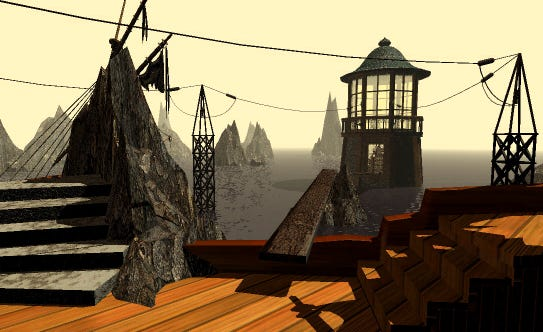
For 1993, this was particularly important because of the emergence of CD-ROM. The new format could store significantly more data than ordinary floppy disks, but at the time CD drives were still not standard equipment in every home computer. Myst effectively became one of the games that demonstrated why users needed CD-ROM in the first place.
On September 24, 1993, Myst debuted specifically on Macintosh. Its initial sales took place within the relatively small community of users of the platform, but the game quickly began spreading through recommendations from players themselves. According to historical materials, around 200,000 copies of the Macintosh version were sold during its first six months — an extraordinary result for the market of that time.
The next major step was the Windows version, which was released in March 1994. The much larger PC audience turned Myst into a genuine phenomenon. By the end of 1994, the game had sold more than 500,000 copies, and in the spring of 1995 it surpassed the one-million mark.
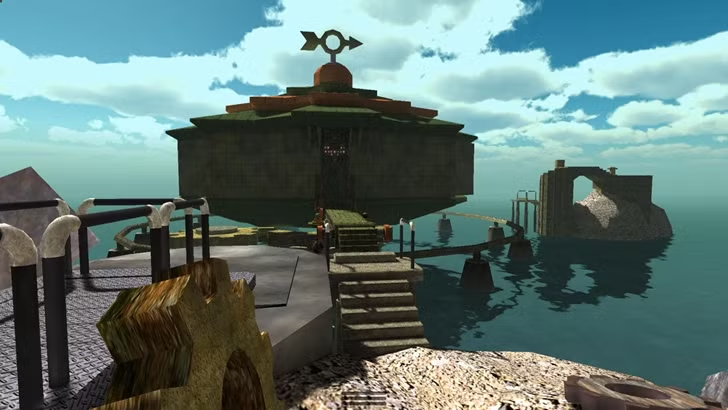
Myst's success was unusual also because the game did not fit the traditional idea of a mainstream hit. There was no constant action or competition with other players. The core of the experience was exploration, observation, and logic. Players had to carefully study their surroundings and draw conclusions on their own.
This particular feature helped Myst reach far beyond the traditional audience of computer games. The Strong National Museum of Play notes that the project attracted ordinary home computer users as well, including people who had not previously been part of the typical video game audience.
Myst gradually became one of the main symbols of the multimedia PC era. Cyan states that the game quickly became the best-selling PC game of its time and held that status until the late 1990s. According to The Strong, Myst ultimately sold around six million copies worldwide.
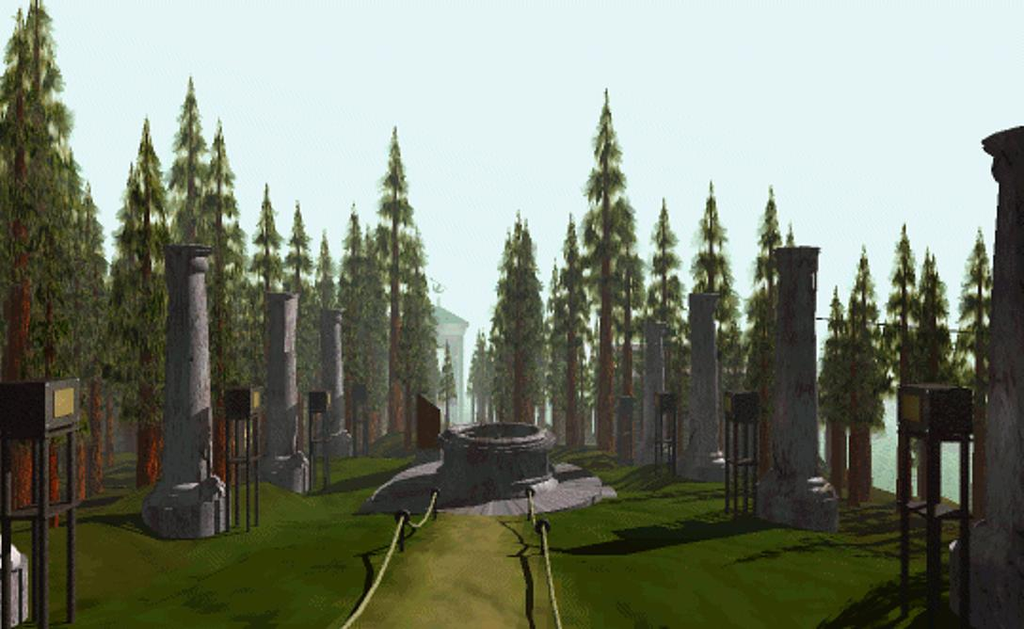
The game's impact was so significant that Myst, along with The 7th Guest, is often described as one of the major projects that helped popularize CD-ROM drives. It showed the industry that the new medium could be used not simply to add video clips, but to create much larger and more detailed game worlds.
The success of Myst also transformed Cyan itself. The company gained the resources to expand, while its next major project, Riven, became a continuation of the story and another technical experiment. At the same time, Myst developed into a cultural phenomenon of its own — with books, sequels, numerous ports, and remakes.
Today, Myst is considered one of the key games in the history of the adventure genre. Cyan describes it as a project that effectively created an entire direction and inspired dozens of imitators. Its greatest achievement was not only its sales: Myst showed that a computer game could make a person stop, explore, read, think, and independently piece together a story from fragments of the world around them.
On September 24, 1993, Myst began as an ambitious experiment by the small Cyan studio on Macintosh. But within just a few years, it became one of the most successful games of the decade and a symbol of the transition of computer games into the CD-ROM era.
As a reminder, How a Kyoto craftsman founded Nintendo: the story of the company that started with playing cards.


